
Your passport may not be expired, but that does not always mean it is safe to use for travel.
Passport damage is different from passport age.
A passport can be current and still create a problem if an airline, scanner, or border officer cannot trust it as a usable travel document. Water damage, torn pages, peeling laminate, unreadable details, damaged machine-readable lines, or problems with the photo page can make the passport harder to verify.
That is why the real question is not just:
“Is my passport still valid?”
It is:
“Will this passport be accepted when someone checks it?”
This guide explains whether you can travel with a damaged passport, what types of damage are most risky, when minor wear may be less concerning, and what to do before travel if your passport looks questionable.
⚡ Quick Answer
Can you travel with a damaged passport?
Maybe, but it depends on the type and location of the damage. Minor wear may be accepted if the passport is readable, intact, scannable, and does not look altered. But water damage, torn or missing pages, peeling laminate, unreadable details, chip problems, or damage to the photo page can make the passport risky for travel.
If an airline cannot verify the passport or believes the destination may reject it, you could be denied boarding before the trip begins. A passport does not only need to be unexpired. It needs to be accepted as usable travel identification.
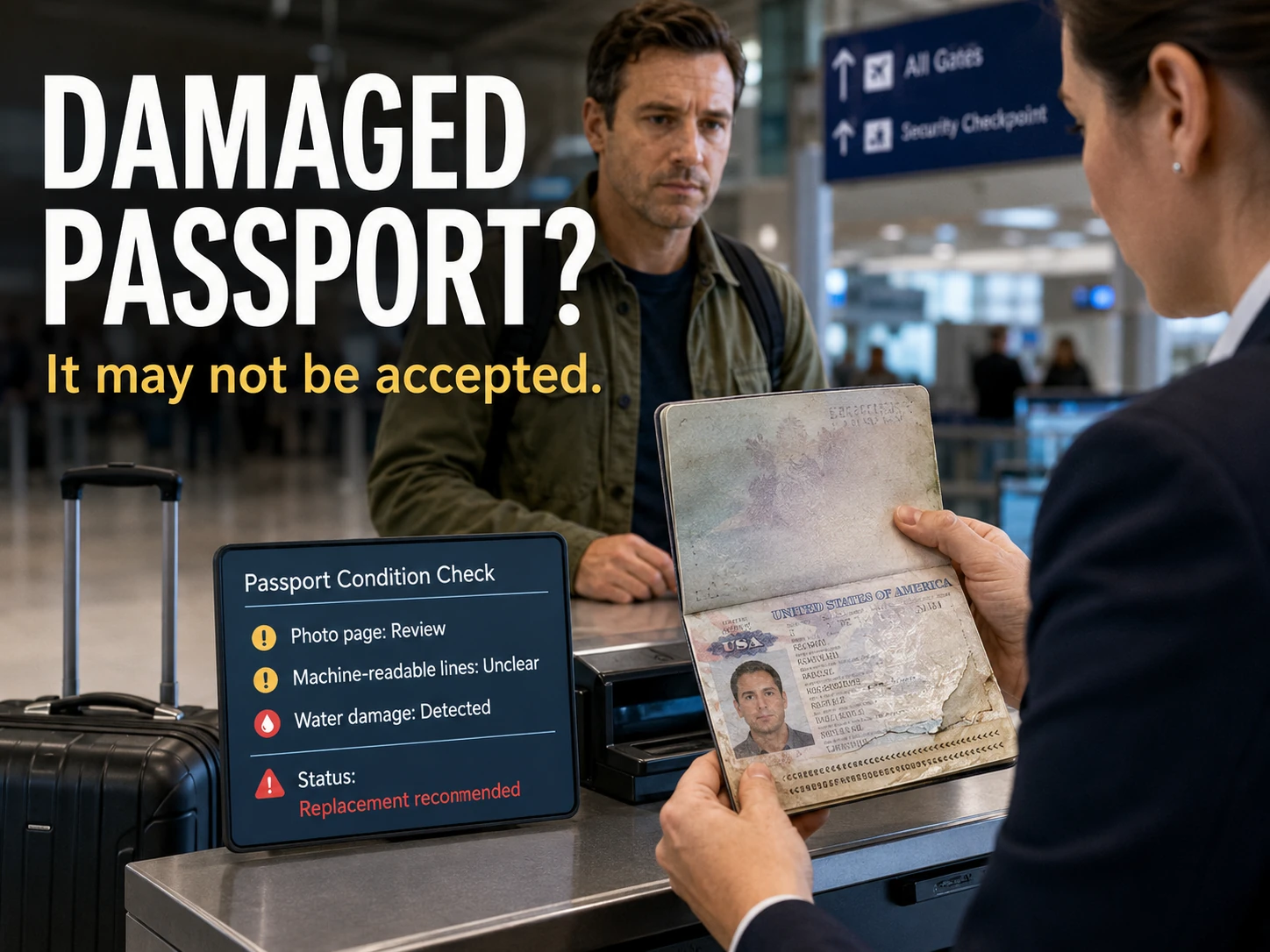
System Insight
Passport damage is judged by usability, not expiration alone.
- An unexpired passport can still be risky. If the document cannot be clearly verified, it may not be accepted for travel.
- The photo page matters most. Damage near your photo, name, passport number, expiration date, or machine-readable lines creates higher risk.
- Water damage is more serious than normal wear. Warped pages, stains, faded ink, or swollen pages can make the document harder to trust.
- Airlines may stop the trip before departure. If the airline believes the destination may reject the passport, you may be denied boarding.
What Counts as a Damaged Passport?
A damaged passport is not just a passport that looks old.
The risk usually starts when the damage affects whether the document can be read, scanned, trusted, or matched to you. That includes damage to the photo page, personal details, machine-readable lines, passport chip, pages, binding, or security features.
Minor wear may not matter if everything is clear and intact. But water damage, torn pages, peeling laminate, unreadable information, or signs of repair can make the passport look unreliable or altered.
That is where the travel risk begins.
Passport Damage Comparison
Minor Wear vs. Serious Passport Damage
Not every mark on a passport creates the same risk. The issue is whether the damage is cosmetic — or whether it affects identity, security features, scanning, or trust in the document.
Normal wear
These issues may be acceptable if all passport information is clear, readable, and intact:
- Slightly bent cover
- Light page fanning
- Normal wear from regular use
- Small marks away from the photo page
- Minor corner wear
- Pages still attached and readable
Serious damage
These issues are more likely to create problems at check-in or immigration:
- Water damage or swollen pages
- Torn, loose, or missing pages
- Peeling laminate on the photo page
- Stains near your photo or personal details
- Unreadable passport number or expiration date
- Damaged machine-readable lines or chip
- Tape, glue, or attempted repairs
When a Damaged Passport Becomes a Travel Risk
A passport does not only prove that it has not expired. It also has to confirm your identity clearly.
That means the issue is not whether the passport looks “mostly okay” to you. The issue is whether an airline agent, passport scanner, or border officer can verify it.
Damage becomes a travel risk when it affects the photo page, personal details, machine-readable lines, passport chip, binding, pages, or the appearance of tampering.
Minor wear may be accepted if the passport is readable, intact, and scannable. But the risk increases when the damage makes the document look unreliable, altered, incomplete, or difficult to verify.
“Slightly damaged” is not about how it looks to you. It is about whether the airline or border authority is willing to accept the document.
Traveler Risk
A damaged passport can turn a valid trip into a denied boarding problem.
The biggest risk is assuming an unexpired passport will be accepted because it is still technically valid. If the damage makes the document difficult to scan, read, verify, or trust, the airline may deny boarding before the trip begins.
Check the Fine Print
Not Sure Whether Your Passport Damage Is a Travel Risk?
Use the Travel Fine Print Risk Checker to narrow whether your issue is passport damage, passport validity, denied boarding risk, travel insurance uncertainty, or another document problem.
Before You Risk the Airport Decision
The Risk Checker can help you identify the type of document problem, but the safest decision usually happens before check-in.
Passport damage is difficult because the final call may not be made until someone scans or inspects the document. By then, your flight, hotel, tour, or other prepaid plans may already be at risk.
Use the action step below to decide whether the passport is safe to rely on — or whether replacement is the better move before travel day.
Action Step
Inspect the passport like an airline or border officer would.
Do not decide based only on whether the passport looks “good enough” to you. Check whether the document is readable, intact, scannable, and free of damage that could make it look altered or unreliable.
Quick win: If you are asking, “Will they notice this?” check replacement options before you risk the airport decision.
Before You Travel
Check the Documents Before the Airline Does
Use the Travel Documents Checklist to review passport condition, passport validity, ticket names, visas, travel authorizations, insurance documents, and other details before check-in.
When to Replace a Damaged Passport Before Travel
If your passport looks seriously damaged, replacing it is usually safer than hoping the airline accepts it.
The challenge is timing.
If your trip is still weeks away, you may have enough time to replace the passport through the normal process. If your trip is soon, you may need urgent or expedited passport options.
The risk is that the damage may not become a problem until check-in. By then, the airline may not be able to make a judgment call in your favor. If the document looks questionable, the safer operational decision may be to deny boarding rather than send you to a country that could refuse entry.
Do not assume travel insurance will automatically fix the loss either. Claim outcomes depend on the policy’s covered reasons, documentation, and exclusions.
If you are asking, “Will they notice this?” the better question is:
“What happens if they do?”
Travel Fine Print Takeaway
A passport has to be usable, not just unexpired.
Minor wear may not stop travel, but damage that affects the photo page, pages, binding, chip, machine-readable lines, or security features can make the passport risky. If the document looks questionable, replace it before the airport makes the decision for you.
❓Frequently Asked Questions
These questions explain when passport damage may be minor and when it can create a boarding or entry risk.
Will an airline accept a damaged passport?
Maybe, but it depends on the damage. An airline may accept minor wear if the passport is readable, intact, scannable, and does not look altered. But water damage, torn pages, peeling laminate, unreadable details, photo page damage, chip problems, or signs of repair can lead to denied boarding.
If the airline believes the passport may be rejected by the destination country, it may stop the trip before departure.
What counts as a damaged passport?
A passport may be risky if it has water damage, torn or missing pages, unreadable information, peeling laminate, a detached cover, damaged binding, damaged machine-readable lines, chip problems, or signs of alteration.
Can water damage make a passport invalid for travel?
Yes. Water damage can warp pages, blur ink, damage security features, or make the passport harder to scan. Even if it looks mostly usable, water damage can still raise questions at check-in or immigration.
Should I tape or repair a torn passport page?
No. Do not tape, glue, laminate, or repair a passport yourself. Homemade repairs can make the document look altered, which may create a bigger problem than the original damage.
What should I do if my passport is damaged right before travel?
Check the photo page, machine-readable lines, pages, and binding immediately. If the damage affects readability or makes the passport look questionable, look into urgent replacement options before going to the airport.
Bottom Line
A damaged passport is not just a cosmetic issue.
If the damage affects the photo page, pages, binding, chip, machine-readable lines, or security features, the passport may not be accepted for travel — even if it has not expired.
The airline is not only checking whether you have a passport. It is deciding whether the document is likely to clear the destination’s entry requirements.
If that answer is uncertain, the trip can stop at check-in.
The safest rule is simple: if the passport looks questionable to you, do not assume it will look acceptable to the airline.
Related Guides
Passport and Document Rules
- Why Some Travelers Are Denied Boarding — Even With a Valid Passport
Why having a passport is not always enough to board. - Why Some Countries Require 6 Months of Passport Validity
Why an unexpired passport may still not be valid enough. - Passport Card vs Passport Book: Which One Do You Need for Travel?
When a card works — and when only a passport book is enough. - Can You Use an AI Passport Photo? What Travelers Should Know Before Submitting One
Why formatting a photo is different from changing your appearance.
Timing, Fixes, and Insurance
- Are Passport Expediting Services Worth It? What to Know Before You Pay
What private expeditors can and cannot do. - Does Travel Insurance Cover Passport Problems?
When passport issues may or may not be covered. - Does Travel Insurance Cover Forgetting Your Passport?
Why forgetting a passport is different from losing one. - Why Travel Insurance Claims Get Denied — And What to Check Next
Common claim problems before you rely on coverage.