
You arrive at the airport with a valid passport, ready to board your flight, only to be told you cannot travel.
That feels impossible at first. For many travelers, a valid passport seems like the document that should guarantee international travel.
But airlines do not only check whether your passport is unexpired. They check whether you meet the entry and transit requirements for the trip you are trying to take.
That can include passport validity windows, visas, electronic travel authorizations, transit rules, name matching, onward travel requirements, and other destination-specific rules.
The real question is not just:
“Is my passport valid?”
It is:
“Do all of my travel documents clear the rules for this exact itinerary?”
This guide explains why travelers can be denied boarding even with a valid passport, what airlines are checking, and what to review before you get to the airport.
Quick Answer
Can you be denied boarding with a valid passport?
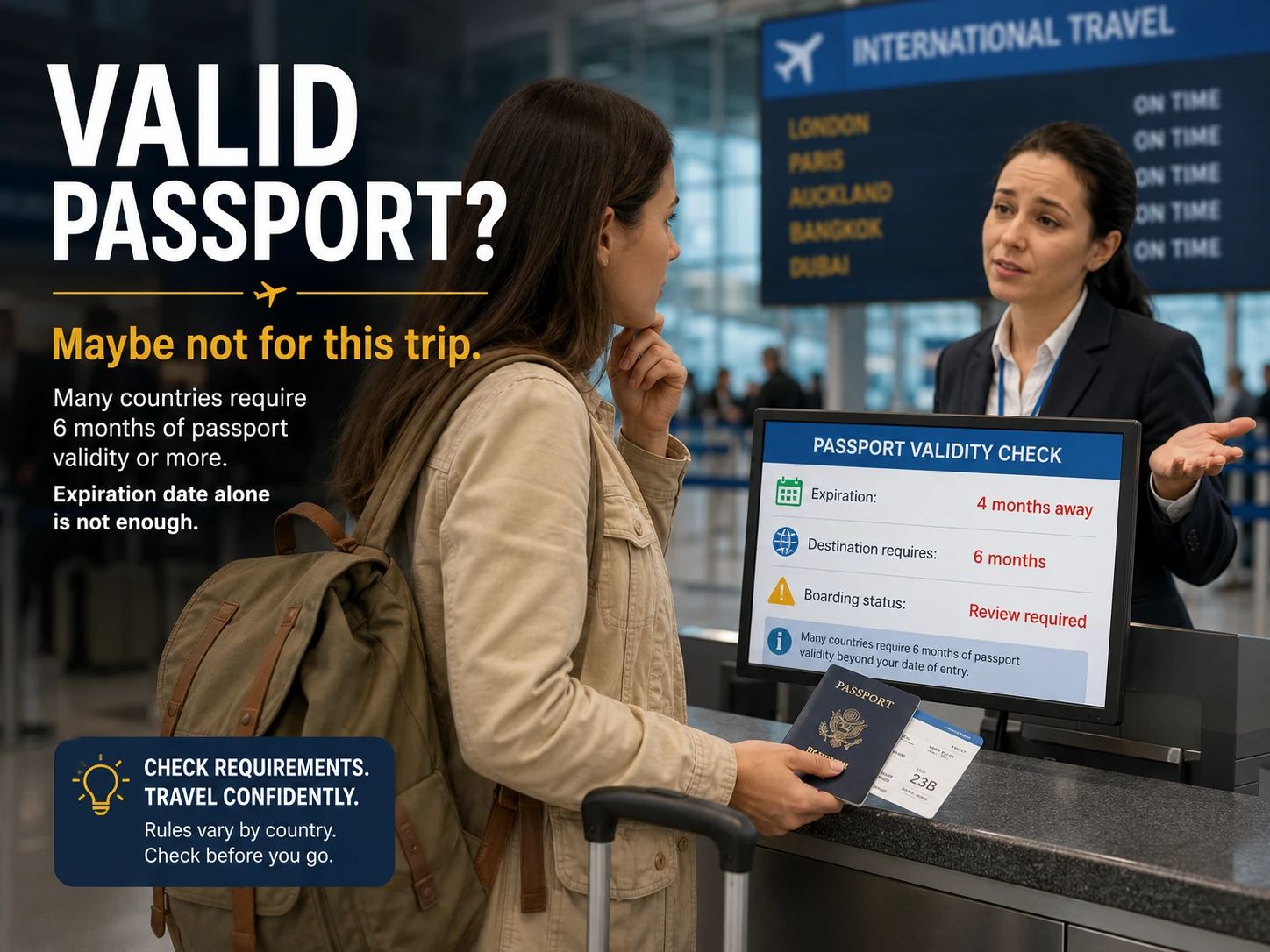
Yes. A valid passport does not guarantee you are cleared to board. Airlines also check destination entry rules, passport-validity windows, visas, electronic travel authorizations, transit requirements, and whether your traveler details match your documents.
If any required document is missing, expired, mismatched, or not valid for the itinerary, the airline may deny boarding before you leave. Boarding is based on meeting every requirement for the trip, not just having an unexpired passport.
System Insight
Boarding is based on eligibility for the itinerary, not just possession of a passport.
- A valid passport is only the starting point. Airlines also check whether the passport works for the destination and route.
- Entry rules are destination-specific. Visa rules, travel authorizations, passport-validity windows, transit rules, and onward-travel requirements can all matter.
- Airlines enforce the rules before departure. If the system does not clear your documents, you may not receive a boarding pass.
- The issue may not be fixable at the airport. Missing authorizations, validity problems, and document mismatches often require action before travel day.
Boarding Eligibility
Valid Passport, Eligible to Travel, and Cleared to Board Are Not the Same Thing
A passport may prove who you are, but boarding depends on whether every document and requirement lines up for the exact trip you are taking.
Valid passport
Your passport is unexpired and identifies you, but it may not satisfy destination-specific rules by itself.
Eligible to travel
Your passport, visa, ETA, validity window, transit rules, and traveler details meet the requirements for the itinerary.
Cleared to board
The airline verifies your documents at check-in and the system allows your boarding pass to be issued.
Why Airlines Can Deny Boarding Before You Travel
Airlines do not just check whether you have a passport. They check whether your documents appear to meet the entry and transit requirements for your destination.
That process may compare your passport, nationality, route, destination, visa or travel authorization status, passport-validity window, and ticket details against country-specific rules.
If something is missing, expired, mismatched, or unclear, the airline may deny boarding before the flight leaves.
That can feel harsh, but the airline is trying to avoid transporting a passenger who may be refused entry on arrival. If that happens, the airline may face fines, penalties, and the cost of returning the traveler.
So the decision is not based on whether your passport looks valid by itself. It is based on whether your documents clear the rules for the whole itinerary.
What Can Trigger Denied Boarding With a Valid Passport
Denied boarding usually happens because something about your documents does not match the requirements for the trip.
Common triggers include insufficient passport validity, a missing visa or electronic travel authorization, a ticket or passport detail mismatch, a damaged or unreadable passport, or a transit requirement you did not realize applied.
The issue may not be that you lack documents entirely. The issue is that the documents you have do not fully satisfy the rules for the route.
When Denied Boarding Is More Likely
Denied boarding is more likely when the trip has more document variables.
That includes international trips with strict entry rules, destinations that require visas or electronic travel authorizations, passports close to expiration, multi-country itineraries, and routes with transit stops that have their own requirements.
It is also more likely when travelers book quickly, rely on old information, assume rules are the same as a previous trip, or do not realize the airline will check requirements before departure.
The risk is lower when your passport has significant remaining validity, your visa or authorization is already approved, your ticket details match your passport exactly, and your itinerary has simple entry rules.
The more complicated the route, the more important it is to verify the requirements before the airport does.
Traveler Risk
A valid passport can create a false sense of security.
The biggest risk is assuming the passport alone clears you to travel. If a visa, travel authorization, validity window, transit rule, ticket detail, or document condition does not match the requirement, the airline may deny boarding before your trip begins.
Check the Fine Print
Not Sure Why a Valid Passport Might Not Be Enough?
Use the Travel Fine Print Risk Checker to narrow whether your issue is a passport validity rule, visa requirement, travel authorization, damaged document, insurance question, or another boarding risk.
Before You Get to the Airport
The Risk Checker can help you spot the type of problem, but the real protection happens before check-in.
Denied boarding is often caused by one missing rule, one document mismatch, or one requirement the traveler did not know applied to the itinerary.
Use the action step below as the pre-travel check before the airline system does it for you.
Action Step
Check your boarding eligibility before travel day.
Before traveling internationally, confirm that your documents meet every requirement for your destination, transit points, and itinerary — not just that your passport is unexpired.
Quick win: Check official entry requirements before paying for non-refundable international travel.
Before You Travel
Check the Documents Before the Airline Does
Use the Travel Documents Checklist to review passport validity, visa rules, travel authorizations, ticket names, transit requirements, insurance documents, and other details before check-in.
Why Airlines Enforce These Rules So Strictly
Airlines are trying to avoid transporting a traveler who may be refused entry on arrival.
If an airline carries a passenger who does not meet destination requirements, it may face fines, penalties, and the cost of returning that passenger. That is why document checks happen before departure.
This is also why airport staff may have limited flexibility. If a required visa, authorization, validity window, transit document, or matching detail is missing, the airline may deny boarding rather than risk a problem after arrival.
The airline is not deciding whether you might be allowed in. It is checking whether your documents clearly satisfy the rules before the flight leaves.
Travel Fine Print Takeaway
A valid passport is not the same as being cleared to board.
Your passport may be valid, but the airline still has to verify that you meet the destination, transit, visa, authorization, validity, and document-matching rules for the trip. Boarding depends on the full set of requirements, not one document by itself.
❓Frequently Asked Questions
These questions explain why a valid passport may still not be enough to board an international flight.
Can you really be denied boarding with a valid passport?
Yes. A passport can be unexpired but still fail a destination rule, passport-validity window, visa requirement, travel authorization requirement, transit rule, or document-matching check. Airlines verify these requirements before boarding.
What is the most common reason this happens?
Common reasons include insufficient passport validity, missing visas or electronic travel authorizations, ticket details that do not match the passport, damaged documents, and transit requirements the traveler did not realize applied.
Do airlines or immigration make the final decision?
Airlines decide whether to board you before departure based on whether your documents appear to meet destination and transit requirements. Immigration authorities make the final entry decision after arrival, but airlines act first to avoid carrying travelers who may be refused entry.
Can transit countries cause problems even if I do not leave the airport?
Yes. Some countries have visa, authorization, or document requirements for transit passengers. If your route includes a connection through a country with its own rules, those requirements may be checked before your first flight.
Can denied boarding issues be fixed at the airport?
Often no. Missing visas, incorrect travel authorizations, insufficient passport validity, and major document mismatches usually cannot be fixed at check-in. That is why these issues can result in denied boarding instead of a simple delay.
Bottom Line
A valid passport is not a guarantee of travel. It is only the starting point.
Boarding depends on whether your documents meet the requirements for your destination, route, transit points, and traveler details. If something is missing, expired, mismatched, damaged, or not valid for the itinerary, the airline may deny boarding before your trip begins.
That can feel surprising because the passport itself may look valid. But the real test is not whether you have a passport.
It is whether every requirement tied to that passport clears for the trip you are taking.
Before you book or fly internationally, check destination rules, transit rules, passport validity, visa or authorization requirements, and name matching. The airport is usually the worst place to discover that a valid passport was not enough.
Related Guides
Passport and Document Rules
- Why Some Countries Require 6 Months of Passport Validity
Why an unexpired passport may still not be valid enough. - Can You Travel With a Damaged Passport? What to Know Before You Fly
When passport condition can affect boarding or entry. - Passport Card vs Passport Book: Which One Do You Need for Travel?
When a card works — and when only a passport book is enough. - Can You Use an AI Passport Photo? What Travelers Should Know Before Submitting One
Why formatting a photo is different from changing your appearance.
Passport Timing and Insurance
- Are Passport Expediting Services Worth It? What to Know Before You Pay
What private expeditors can and cannot do. - Does Travel Insurance Cover Passport Problems?
When passport issues may or may not be covered. - Does Travel Insurance Cover Forgetting Your Passport?
Why forgetting a passport is different from losing one. - Why Travel Insurance Claims Get Denied — And What to Check Next
Common claim problems before you rely on coverage.