
ou missed a flight, might miss one, or realized you may not make it to the airport in time.
Now you want to know what happens next.
Will the airline rebook you? Can you still use your return flight? Will the rest of your itinerary be canceled?
The answer depends on why you missed the flight, whether your flights are on one linked ticket, and how quickly you contact the airline.
The real question is not just:
“What happens if I miss my flight?”
It is:
“Will the airline protect the rest of my trip — or cancel the remaining flights on my ticket?”
If this just happened, contact the airline immediately and ask whether the remaining flights are still active before assuming your connection, onward flight, or return trip is safe.
This guide explains what can happen after a missed flight, why missing one segment can affect the rest of your itinerary, and what to do before the rest of your trip disappears from the system.
Quick Answer
What Happens If You Miss Your Flight?
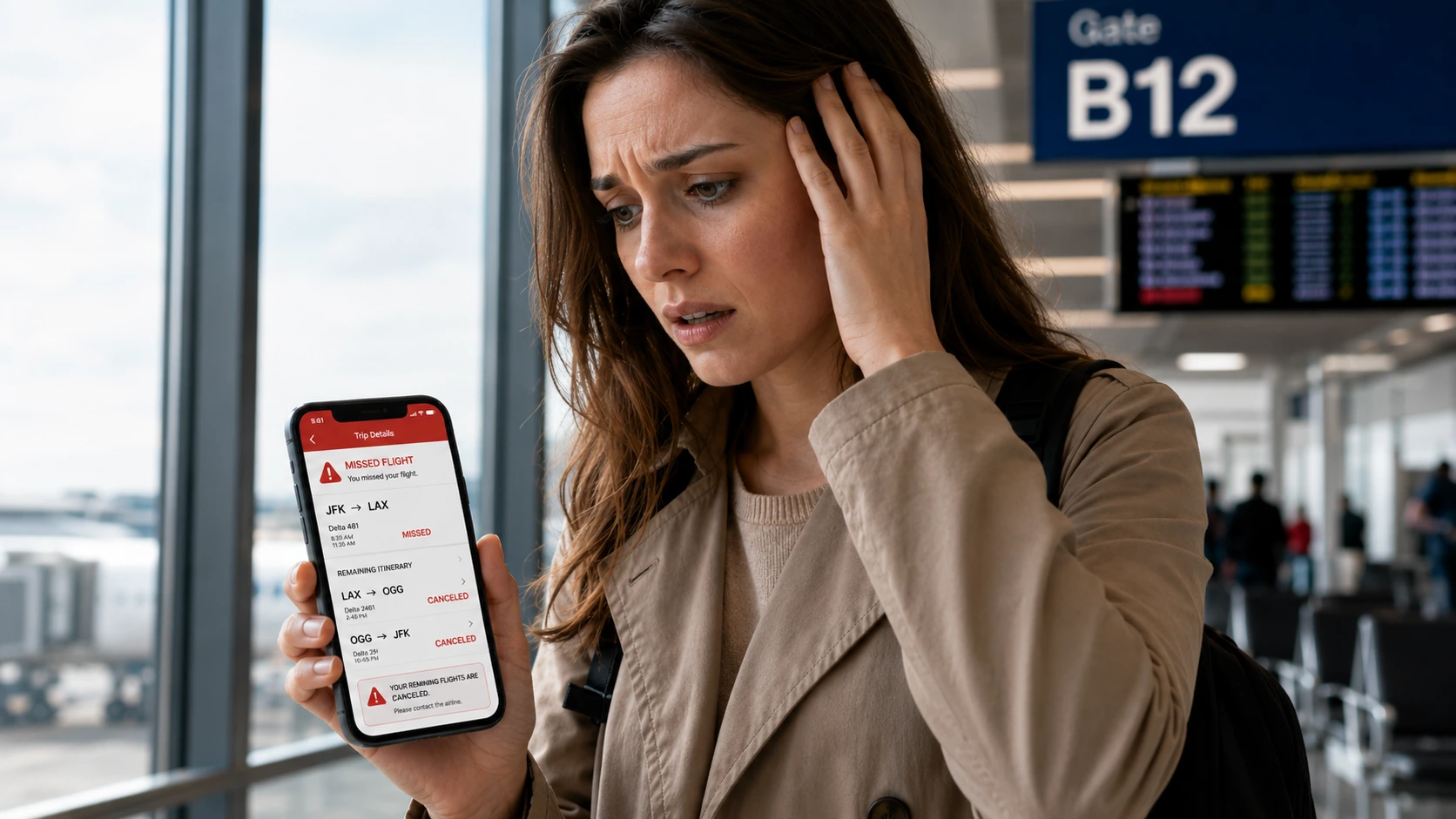
Yes. If your flights are on one linked itinerary, missing or skipping one segment can cause the airline to cancel the remaining flights automatically. This can include your connection, onward flight, or return trip.
Airlines usually require flights to be used in the order they were ticketed. If you miss the first flight, skip a connection, or no-show for one segment without changing the ticket, the rest of the itinerary may no longer be valid. Contact the airline immediately, ask whether your remaining flights are protected, and ask about same-day rebooking or standby options if you recently missed the flight.
Can You Reschedule If You Miss Your Flight?
Some airlines may let you reschedule, rebook, standby, or use a same-day missed-flight option if you contact them quickly. But it depends on the airline, fare type, availability, timing, airport, and whether the missed flight was your fault or caused by an airline delay.
If you simply no-show without contacting the airline, your options may be more limited. On a linked itinerary, the airline may also cancel the remaining flights if one segment is missed or skipped.
The fastest move is to contact the airline before or immediately after the missed flight and ask what options exist before the rest of the itinerary is affected.
How Airlines Enforce Ticket Sequence Rules
Airlines do not always treat each flight on your booking as a separate trip.
When multiple flights are issued on one ticket, the airline usually treats them as one linked itinerary. Each flight segment is expected to be used in the order it was booked.
If you miss the first flight, skip a connection, or no-show for one segment, the airline’s system may treat the ticket sequence as broken.
Once that happens, the remaining flights may be canceled automatically.
That can include your next connection, onward flight, or return flight — even if you still plan to travel.
This is why missing one flight can create a much bigger problem than simply needing a new seat on the next departure.
System Insight
The airline system reads your ticket in sequence.
A linked itinerary is usually expected to be flown in the order it was ticketed. If one segment is missed, skipped, or left unused, the airline system may treat the remaining flights as invalid and cancel them automatically.
That is why a missed outbound flight can affect a return flight days later, even though the return may feel like a separate trip to the traveler.
Used as Ticketed vs. Skipped Segment
Airline tickets are usually built around the idea that each flight segment will be flown in order.
That is why there is a big difference between using a ticket as booked and leaving one segment unused.
After the cards, use this bridge:
This is why the biggest risk is not always the missed flight itself.
The bigger problem may be what happens to the flights still left on the ticket.
How Tickets Are Enforced
Used in Sequence
Used as Ticketed
- Each flight is taken in the original order.
- The itinerary remains valid for the full journey.
- Connections and return flights usually stay active.
- The airline system sees the ticket as being used as booked.
What this means: the rest of the itinerary usually remains intact.
Sequence Broken
Skipped or Missed Segment
- One flight is missed, skipped, or left unused.
- The ticket sequence may be considered broken.
- Remaining flights may be canceled automatically.
- Return or onward travel may no longer be valid.
What this means: you may need the airline to rebook, reinstate, or reissue the ticket.
When You’re Most Likely to Lose the Rest of Your Booking
Missing a flight does not always cancel everything, but some situations are much riskier than others.
The risk is highest when all flights are connected under one ticket and one segment is missed, skipped, or left unused. That is especially true if you miss the first flight on a round trip, skip a connecting flight, or fail to contact the airline before the missed segment is recorded as a no-show.
Airline systems usually enforce the ticket sequence based on how the itinerary was issued. If the sequence is broken, the remaining flights may be canceled automatically.
That can include your next connection, onward flight, or return flight.
Traveler Risk
Missing the outbound flight can put the return flight at risk.
The risky assumption is believing each flight on one ticket stands alone. If you miss or skip one segment, the airline may cancel the remaining flights, including your return, because the itinerary was not used in the required order.
The safest move is to find out what type of flight problem you are dealing with before assuming the rest of the itinerary is still safe.
Once the system cancels the remaining flights, fixing the problem may require rebooking, paying a fare difference, or asking the airline to reinstate the ticket — and that is not always guaranteed.
Check the Fine Print
Not sure if your remaining flights are at risk?
Use the Travel Fine Print Risk Checker to narrow whether your issue is a missed flight, skipped segment, separate ticket, airline delay, rebooking problem, refund rule, or another flight policy that could affect the rest of your trip.
What To Do If You Miss or Might Miss a Flight
If you might miss a flight, act before the airline marks the segment as unused.
The sooner you contact the airline, the better chance you have of preserving the rest of the itinerary, changing the ticket, or understanding whether your return flight is still active.
Some airlines may offer same-day missed-flight, standby, or “flat tire” style options when you act quickly, but these policies vary by airline, fare type, airport, and timing. Do not assume the option applies automatically.
Do not assume the remaining flights are safe just because they still appear in your app. Airline systems can update after the missed segment is processed.
Action Step
Protect the rest of your itinerary before the ticket sequence breaks.
If you miss or might miss a flight on a linked itinerary, focus first on whether your remaining flights are still active. Timing matters because the system may cancel future segments once one flight is missed or skipped.
- Contact the airline before the missed flight is marked as a no-show.
- Ask whether the rest of your itinerary is still active.
- Confirm whether your return flight remains valid.
- Do not skip a segment intentionally without checking the ticket rules.
- Ask about same-day change, standby, rebooking, or ticket reissue options.
- Keep records if a delay, cancellation, or airline issue caused the missed flight.
- Check whether your flights are on one ticket or separate tickets.
- Get confirmation in writing if the airline says remaining flights are protected.
The goal is not just to get on another flight. It is to make sure the rest of the booking does not disappear while you are trying to fix the missed segment.
Why Airlines Cancel Remaining Flights After a Missed Segment
Airlines cancel remaining flights after a missed segment because many tickets are priced and controlled as one sequence, not as separate standalone flights.
When a passenger misses or skips a segment, the airline system may treat the ticket as no longer being used as issued.
This rule also helps airlines prevent intentional segment skipping, where a traveler books a cheaper itinerary but only plans to use part of it.
That does not mean every missed flight is treated the same way.
If the airline caused the delay, missed connection, or disruption, the airline may be responsible for rebooking you. If you arrived late, skipped a flight, or no-showed without contacting the airline, your options may be much more limited.
The important distinction is whether the missed flight was caused by the airline or by the traveler.
Why the Missed Flight Matters
Keep this section and the Important Distinction block. It is important for SERP alignment because the results separate traveler no-show situations from airline-caused cancellations or delays.
Use this lead-in:
A missed flight is not always treated the same way.
If the airline caused the missed connection because of a delay, cancellation, schedule change, or operational issue, the airline may have more responsibility to help rebook you.
If you missed the flight because you arrived late, skipped a segment, or decided not to take one part of the itinerary, the airline may treat the remaining ticket differently.
That distinction matters because the same result — a missed flight — can lead to very different outcomes.
Important Distinction
Airline-caused and traveler-caused missed flights are not treated the same way.
If the airline caused the missed connection, rebooking protection may apply. If the traveler missed, skipped, or no-showed a segment, the airline may enforce the ticket sequence and cancel the remaining flights.
Before assuming the return flight is safe, confirm whether the missed segment was caused by the airline, the traveler, or a separate-ticket connection.
Missed Flight vs. Airline-Canceled Flight
A missed flight and an airline-canceled flight are not the same problem.
If you miss your flight because you arrive late, skip a segment, or no-show for part of the ticket, the airline may apply its missed-flight or no-show rules. Refunds are usually limited by the fare rules.
If the airline cancels your flight or significantly changes it and you do not accept rebooking or another form of compensation, refund rights may apply. DOT rules focus on situations where the airline cancels or significantly changes the flight, not situations where the traveler simply misses a flight.
That distinction matters before you ask for a refund, credit, rebooking, or reinstatement.
What Happens If the Airline Cancels the Rest of Your Booking
Once the remaining flights are canceled, your options may become more limited.
The airline may require you to rebook, pay a fare difference, use a travel credit, or buy a new ticket. In some cases, the airline may be able to reinstate the remaining flights, but that depends on timing, ticket rules, availability, and why the segment was missed.
The most important thing is to confirm the status of the remaining itinerary before assuming it is still active.
Do not wait until the return flight to find out the ticket was canceled days earlier.
Booking Status Check
What to confirm after a missed flight
- Whether the remaining flights are still active.
- Whether the return flight is still valid.
- Whether the missed flight was recorded as a no-show.
- Whether the airline can reinstate the remaining itinerary.
- Whether rebooking requires a fare difference or new ticket.
- Whether a delay or cancellation caused the missed segment.
- Whether separate tickets are involved.
- Whether you received written confirmation of the next steps.
The app may not tell the full story right away. Confirm the remaining itinerary directly with the airline before relying on the next flight.
Travel Fine Print Takeaway
A missed flight can affect more than the flight you missed. If your flights are linked on one ticket, confirm the status of your remaining itinerary before assuming your connection, onward flight, or return trip is still active.
❓Frequently Asked Questions
These questions cover what travelers usually need to know after missing a flight, missing the first flight of a round trip, or worrying that the rest of the itinerary may be canceled.
What happens if you miss your flight?
If you miss your flight, the airline may mark you as a no-show, offer rebooking or standby options, or require you to buy a new ticket. If your flights are on one linked itinerary, missing one segment may also cause the airline to cancel the remaining flights on the ticket.
Contact the airline as soon as possible. The faster you act, the better chance you have of rebooking, protecting the rest of your itinerary, or confirming whether your return flight is still active.
Can you reschedule if you miss your flight?
Sometimes. Some airlines may allow same-day rebooking, standby, or missed-flight options if you contact them quickly. Your options depend on the airline, fare type, timing, airport, seat availability, and why you missed the flight.
If you simply no-show without contacting the airline, your options may be more limited. On a linked itinerary, the airline may also cancel later flights once the missed segment is processed.
What happens if you miss the first flight of a round trip?
If your outbound and return flights are part of the same round-trip ticket, missing the first flight may cause the airline to cancel the remaining segments automatically. That can include your return flight, even if it is scheduled days later.
Do not assume the return flight is still valid just because it appears in your app. Confirm directly with the airline and ask whether the remaining itinerary is still active.
Can you still use your return flight if you miss the outbound flight?
Usually not if the outbound and return are part of the same linked round-trip ticket. Airlines generally require flights to be used in the order they were ticketed.
If you miss the outbound flight, the return may be canceled unless the airline changes, reinstates, or reissues the ticket. Contact the airline before relying on the return flight.
Will the airline rebook you if you miss a flight?
It depends on why you missed the flight. If the airline caused the missed connection through a delay, cancellation, schedule change, or operational issue, the airline may have more responsibility to rebook you.
If you arrived late, skipped a segment, or no-showed for a flight, your options may depend on the fare rules, availability, and whether the airline is willing to reinstate or reissue the ticket.
What is the flat tire rule for a missed flight?
The “flat tire rule” is an informal term travelers use for airline policies that may allow a passenger who arrives shortly after a missed flight to be rebooked on standby or with reduced penalties.
It is not a universal legal right. Whether it applies depends on the airline, fare type, timing, airport, and agent discretion. If you recently missed a flight, ask the airline immediately whether any same-day missed-flight or standby option applies.
Does this rule apply to separate tickets?
Separate tickets work differently. If the missed flight and later flight are on separate bookings, one airline may not automatically cancel the other ticket.
But separate tickets create a different risk: if a delay causes you to miss the next flight, the second airline may not be responsible for rebooking you. That is why separate-ticket connections need extra caution.
Bottom Line
Missing a flight can create a bigger problem than the flight you missed.
If your flights are linked on one ticket, the airline may require each segment to be used in order. Missing, skipping, or no-showing for one segment can cause the remaining itinerary to be canceled automatically.
That can include your connection, onward flight, or return trip.
The safest move is to contact the airline as soon as you know you may miss a flight. Ask whether the remaining flights are still active, whether your return is protected, and whether any same-day missed-flight or standby option applies.
If the airline caused the missed connection, your rebooking or refund options may be different. If you missed the flight because you arrived late, skipped a segment, or did not notify the airline, your options may be more limited.
Before you rely on the next flight, confirm the status of the remaining itinerary directly with the airline.
Related Guides
If you are trying to understand missed flights, rebooking rules, or airline responsibility, these related guides may help: