
Airline No-Show and Ticket Rules
Missed Your Flight? When Airlines Cancel the Rest of Your Ticket
Missing a flight can create a bigger problem than finding another departure. On a ticket with multiple flight segments, a missed or skipped flight can put your connection, onward journey, and even your return at risk. The critical step is to find out whether the airline still considers the rest of your ticket valid.
The decision: Did you miss a segment through your own late arrival or a deliberate change of plans, or was it an airline-caused missed connection? Is the rest of your trip on the same ticket? Those details determine your next move.
This guide consolidates our first-leg and missed-flight guidance, explaining airline ticket sequence, no-show rules, return-flight risk, rebooking options, and why a protected missed connection is treated differently.

Quick Answer
What happens if you miss your flight — can the airline cancel your return?
Yes, it can. On a linked ticket, airlines generally require flight segments to be used in the order issued. If you miss or skip a segment without arranging a ticket change, the carrier may mark you as a no-show and cancel later flights, including your return.
Act before departure whenever possible: contact the airline, explain what happened, ask whether subsequent segments are still active, and request a protected rebooking or ticket change. If an earlier flight operated by the airline caused you to miss a connection, your options can be substantially different.
Decision in 30 Seconds
What kind of missed-flight problem do you have?
These situations can look similar at the airport, but they are not treated the same way under airline policies.
| Situation | What is at risk | Your first move |
|---|---|---|
| Missed the first flight | Later outbound segments and the return on the same ticket may be canceled. | Call immediately and ask the airline to preserve or reissue all remaining segments. |
| Skipped a segment intentionally | The ticket may no longer be valid in its original sequence. | Request an approved itinerary change before skipping any flight. |
| Airline delay caused a missed connection | Travel is disrupted, but a same-ticket connection is normally protected. | Ask the airline to rebook you to the final destination; verify onward flights and baggage. |
| Separately booked onward flight | The second airline may treat you as a no-show without protecting the connection. | Contact the second carrier before departure about rebooking and preserving later flights. |
The Rule Behind It
Airline tickets are generally meant to be flown in sequence.
A trip with several segments is often sold and issued as a single ticket, not as independent coupons you can use in any order. The airline expects you to fly the first segment before the second, and so on. Missing one flight without changing the ticket may cause subsequent segments to be treated as unusable or canceled.
This is why buying a ticket is not the same as buying unconditional access to each flight listed on it. The fare, route, and remaining ticket value are governed by the contract and applicable rules.
Ticket sequence is different from separate reservations.
If your outbound and return are issued as two genuinely separate tickets, missing one does not automatically invalidate the other. But separate tickets also lack some connection protections. If the outbound and return form one ticket, missing the outbound can affect the return.
The First-Leg Trap
What happens when you miss—or intentionally skip—the first flight?
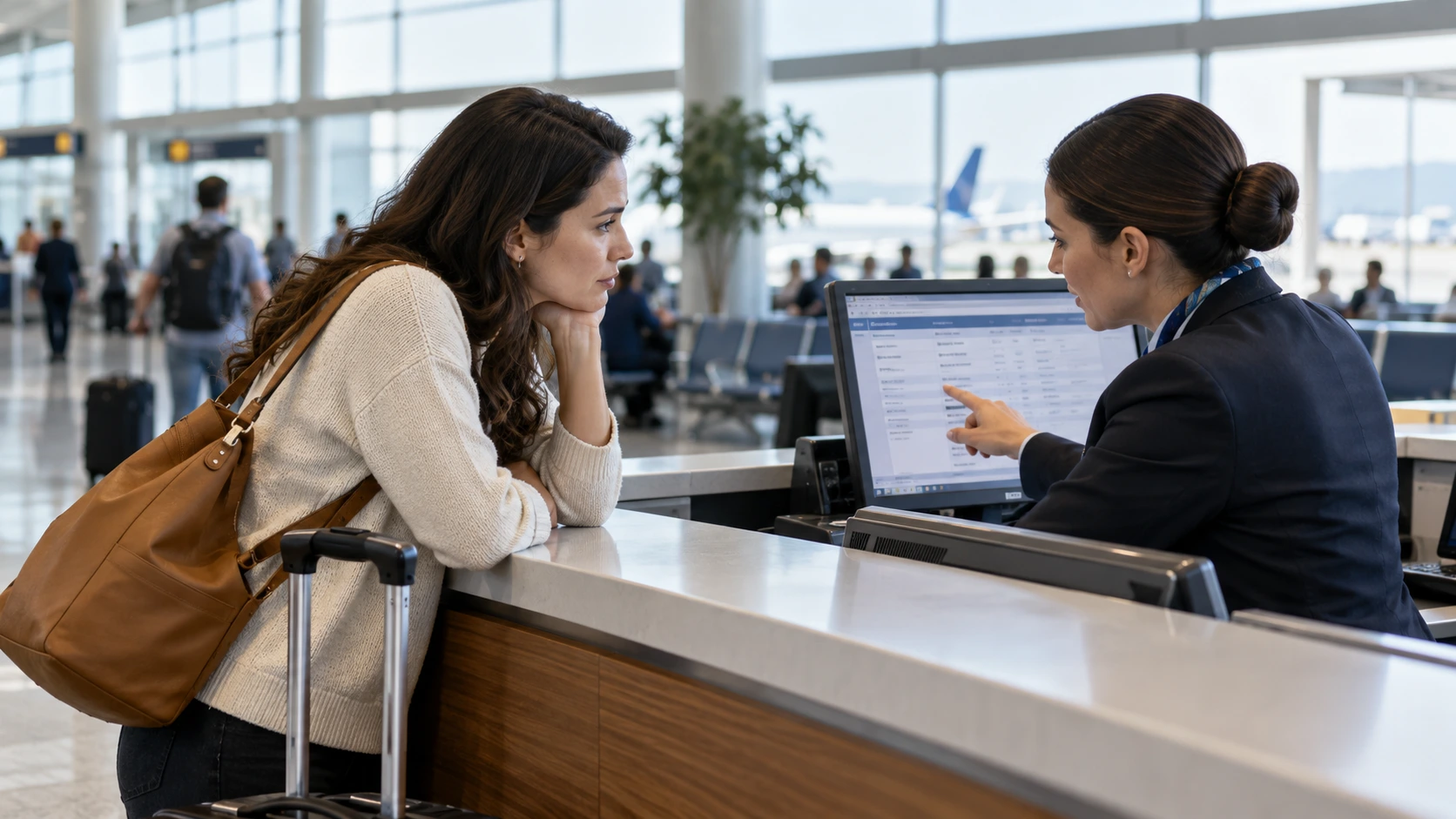
Perhaps you decided to drive to the connecting city, overslept, or arrived after boarding closed. It can feel reasonable to use the rest of the ticket once you reach the next airport. But the airline may have already treated you as a no-show and canceled those remaining flights.
For example, if one ticket takes you from Miami to Dallas to Tokyo, deciding to start in Dallas does not mean you can simply board the Dallas–Tokyo flight. You may need the carrier to change and reissue the itinerary first. The same concern applies when the entire outbound and return journey are linked.
Skipping a segment intentionally can also violate ticket or fare conditions, including restrictions intended to discourage hidden-city ticketing. Do not assume a boarding pass or seat assignment protects a later segment after an earlier one was unused.
Return-Flight Risk
Can missing the outbound flight cancel the return?
Yes, when outbound and return segments are on the same ticket. After a first-leg no-show, the airline may cancel later flight coupons automatically, even if the return is several days away. A return reservation that still appears in an app is not sufficient proof that the ticket remains usable.
Ask an airline representative to verify not only the reservation but also the status of the remaining ticket segments. Request written confirmation of any reinstatement or change before relying on the return flight.
Do not discover the problem at return check-in.
Even if you arranged your outbound travel another way, verify the original ticket before you assume its return segment can still be flown.
After You Miss the Flight
Can you rebook, use standby, or recover the rest of your ticket?
Sometimes. Your options depend on the carrier, fare rules, how late you are, seat availability, and whether the airline caused the disruption. Airlines may offer same-day flight changes, standby, ticket exchanges, or discretionary missed-flight assistance. These are not universally guaranteed.
The often-mentioned “flat tire rule” is informal shorthand for certain airline practices that accommodate passengers who arrive shortly after a missed flight. It is not a universal legal right, and eligibility varies. If you recently missed departure, ask immediately what same-day alternatives apply.
Once the no-show has been processed, the agent may need to reinstate or reissue the ticket. Fare differences or new-ticket costs may apply, and the airline may not be able to restore your original seats.
An Important Exception
An airline-caused missed connection is not the same as a traveler no-show.
If an earlier flight on the same protected ticket is delayed and causes you to miss the onward flight, the airline will generally arrange rebooking to your ticketed destination. That is different from voluntarily skipping a flight or arriving too late for your original departure.
If your flights were purchased on separate reservations, the onward airline may not treat the first carrier’s delay as its responsibility. Rebooking, meals, hotels, and compensation are separate issues that depend on the cause and applicable policy or law.
Our dedicated guide, Minimum Connection Time Explained, covers why a technically valid connection is not necessarily a comfortable one. For an actual missed connection, see What Happens If You Miss a Connecting Flight? rather than assuming traveler no-show rules automatically apply.

Financial Consequences
Will you lose the fare, pay again, or qualify for insurance?
A missed flight does not automatically create a cash-refund right. If you no-show, ticket value, airline credit, fare differences, and any unused taxes depend on fare conditions and applicable rules. Airline cancellation is a different situation: for flights covered by U.S. DOT rules, if the airline cancels or significantly changes your flight and you do not accept the alternative travel or credit offered, you generally have a refund right. That is not the same as arriving late for a flight that operated as scheduled. See the U.S. DOT refund guidance.
Travel insurance or eligible credit-card benefits may cover some losses if the missed flight resulted from a specifically covered event, subject to waiting periods, documentation and exclusions. Intentionally skipping a flight or misjudging airport arrival time generally is not equivalent to a covered airline disruption. See our travel insurance and flight delays guide.
Keep receipts, booking confirmations, delay notices, app screenshots, and written rebooking offers if you may need to dispute a charge or make a claim.
Immediate Action
What should you do if you miss—or might miss—a flight?
Contact the airline now
Call, message, or visit an airport desk as early as possible. Do not wait for the next scheduled segment.
Verify the whole itinerary
Ask whether the missed flight is coded as a no-show and whether onward and return segments remain ticketed and active.
Request the available remedy
Ask about same-day rebooking, standby, ticket exchange, reinstatement, or reissue; confirm any difference in price.
Get evidence in writing
Save ticket numbers, new confirmation details, agent messages, and an updated e-ticket showing the remaining flights.
Question to ask the airline
“Can you confirm that every remaining segment—including my return flight—is still valid and ticketed, and send me an updated confirmation?”
The Fine Print That Matters
Five details that determine what happens next.
One confirmation number is not proof of one ticket.
Verify the actual ticket structure and ticket numbers; separate tickets may still appear together in an agency interface.
A reserved seat is not the same as an active flight coupon.
Ask whether the remaining segments are ticketed and valid, not merely visible in the app.
Missing the first leg can affect the return.
When outbound and return are one linked ticket, the missed outbound segment may cancel future flights.
The cause of the missed flight changes the outcome.
A protected, airline-caused misconnection is different from arriving late or intentionally skipping a segment.
Timing can determine what options remain.
Contacting the airline before departure may be materially better than asking for reinstatement after a no-show.
My Take
Protect the rest of the ticket before solving the one flight you missed.
The most expensive mistake is treating a missed outbound flight as isolated. If I were at risk of missing a departure, I would contact the airline immediately and confirm the status of every later segment before deciding how to travel onward.
I would never drive to a connecting airport or buy an independent replacement outbound flight assuming the existing return will remain available. The airline needs to confirm that—not just the itinerary screen.
TFP Recommendation
Contact the airline first, then verify the entire itinerary in writing.
The Recommendation
Do not skip or abandon a ticketed flight segment without first addressing the remaining itinerary.
If the airline offers rebooking, ask for the complete updated ticket and confirm the status of every onward and return segment. If the airline caused a missed connection, request the protection applicable to that itinerary rather than accepting a traveler no-show classification without question.
Your Next Step
Smarter travel, straight to your inbox
Booking choices, hidden costs, travel rules and useful fine print — explained clearly.
Before You Go
Verify your flight sequence and backup plan before travel day.
These guides help you review connection risks, baggage arrangements, documentation and reimbursement questions before a missed segment threatens the rest of your trip.

Minimum Connection Times
Understand why a legally sellable layover can still be difficult to make.
Review connection timing →Rechecking Bags on Separate Tickets
Know when baggage collection and recheck can make a self-connection riskier.
Check baggage connections →Travel Insurance for Flight Delays
Understand which delays and extra costs might qualify for reimbursement.
Review insurance fine print →Travel Documents Checklist
Save confirmations, ticket numbers and written airline changes before departure.
Open the checklist →Frequently Asked Questions
Missed flights, no-show rules, and remaining tickets
What happens if you miss your flight and do not contact the airline?
The carrier may record a no-show and apply its fare conditions. On a ticket with multiple linked segments, it may also cancel onward or return flights. Contact the airline immediately and ask whether the remaining flight coupons are active and whether any same-day change, standby or reinstatement option is available.
Will the airline cancel my return flight if I miss the outbound flight?
It may. When the outbound and return are part of the same ticket, airlines generally require flights to be used in sequence. Missing the outbound flight may trigger cancellation of subsequent segments, including the return. Contact the airline and verify your ticket status.
Can I skip the first leg and board the second flight?
Usually you should not assume so. Skipping the first segment of a linked ticket can invalidate later flights. Ask the airline to change or reissue the booking before you miss the original segment.
What if I miss a flight because I arrived late?
The airline may apply its no-show policy. Depending on the carrier, fare and timing, you might qualify for standby, same-day rebooking, a fee or fare difference, or no remaining ticket value. Contact the carrier as soon as possible.
Does the flat tire rule guarantee free rebooking?
No. “Flat tire rule” is an informal name for airline-specific missed-flight accommodations. It is not a universal passenger right and may depend on timing, fare and availability.
What if an airline delay makes me miss my connection?
If the flights are on one protected ticket, the carrier generally arranges rebooking when its earlier delayed flight causes the missed connection. Separate tickets can be different; see our missed-connection guide.
Can an airline reinstate a canceled return flight?
Sometimes. An agent may be able to reinstate, exchange or reissue the ticket, but available seats, fare conditions, no-show status and carrier policy all matter. Ask for written confirmation.
Is a missed flight eligible for a refund or travel insurance?
A traveler no-show does not automatically create a cash-refund right. The airline fare rules and any eligible taxes or residual credit may matter. Insurance generally requires a specified covered reason and documentation; simply arriving late is often excluded.
Free Travel Guide
Avoid the travel mistakes that can cost you money, flexibility, or time.
Get 27 Travel Mistakes That Cost Travelers Thousands — a practical guide to booking mistakes, hidden costs, travel rules and decisions worth understanding before they become a problem.
- Spot booking details that are easy to overlook
- Understand where hidden costs can appear
- Recognize when a cheaper option comes with a tradeoff
- Make travel decisions with fewer surprises
You’ll also receive occasional practical guidance from Travel Fine Print on booking choices, hidden costs, travel rules and the fine print worth understanding. Unsubscribe anytime.