
You bought a non-refundable flight because it was cheaper, because the schedule worked, or because it was the only reasonable option.
Then your plans changed.
That can feel frustrating because the words non-refundable sound final. You may assume every dollar is gone the moment you cancel.
But airline tickets are not always treated as one single amount. A ticket can include a base fare, taxes, fees, airline-imposed charges, add-ons, seat fees, baggage fees, credits, and sometimes unused value that follows different rules.
That is where many travelers get stuck.
A non-refundable flight usually limits cash refunds when you cancel voluntarily. But that does not always mean there is no money, credit, tax, fee, or unused value left to recover.
The real question is not just:
“Is my flight non-refundable?”
It is:
“Which parts of this ticket can still come back as cash, credit, or usable value?”
This guide explains when you may still get money back from a non-refundable flight, when you may receive an airline credit instead, when taxes or fees may be refundable, and what to check before canceling or accepting that your money is gone.
Quick Answer
Can you get money back from a non-refundable flight?
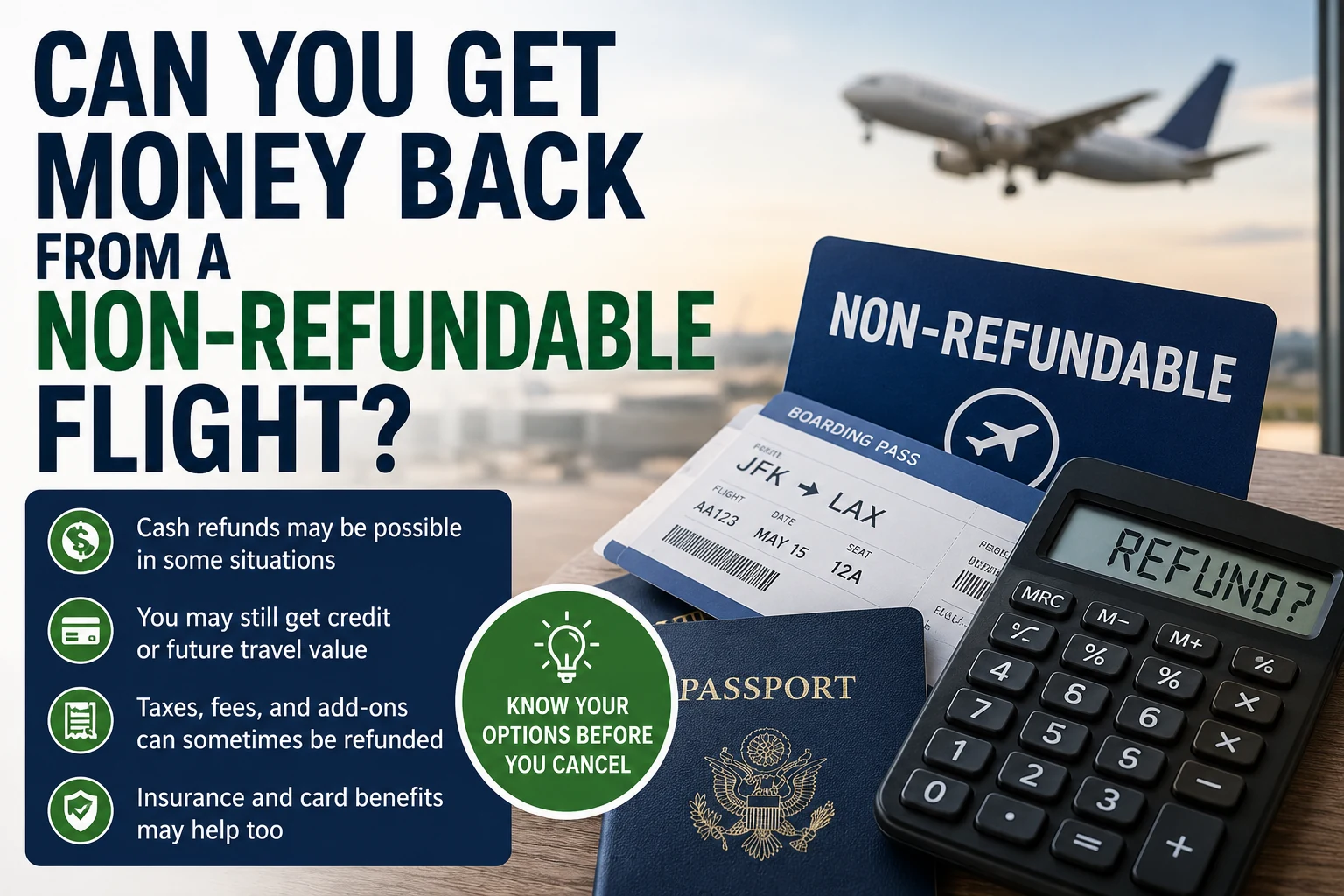
Sometimes, but it depends on why the flight is being canceled and what part of the ticket you are trying to recover. If you cancel a non-refundable flight voluntarily, the base fare usually is not returned as cash. But you may still receive airline credit, recover certain unused taxes or fees, or get money back for eligible add-ons depending on the airline and fare rules.
Your options may be stronger if the airline cancels or significantly changes the flight, if you are still within a qualifying 24-hour cancellation window, or if travel insurance or credit card benefits apply. The key is to separate cash refund, travel credit, refundable taxes or fees, unused add-ons, and lost value before assuming everything is gone.
System Insight
“Non-refundable” usually limits the base fare, but the ticket may still have separate pieces of value.
- The base fare matters because this is usually the part most restricted when you cancel voluntarily.
- The timing matters because a qualifying 24-hour cancellation window can create a different outcome.
- The airline’s action matters because cancellations or significant schedule changes by the airline may create refund rights that voluntary cancellation does not.
- The ticket pieces matter because taxes, fees, unused add-ons, credits, and travel insurance benefits may follow separate rules.
What “Non-Refundable” Usually Means
A non-refundable flight usually means the airline will not return the base fare to your original form of payment if you cancel voluntarily.
That does not always mean the entire booking has no value.
Airline tickets are often made up of different parts. Some parts may be restricted. Some may be reusable. Some may be refundable only in limited situations. Others may be lost once you cancel or miss the flight.
In most cases, the restricted part is the base fare. That is the main price of the ticket before taxes, fees, and optional add-ons. If the fare is non-refundable, the airline may keep that amount in its system instead of sending the money back to your card.
But depending on the fare rules, the airline may still offer:
- A future travel credit
- Refundable taxes or government-imposed fees
- Refunds for eligible unused add-ons
- A refund if the airline cancels or significantly changes the flight
- A refund or hold option within a qualifying 24-hour booking window
- Possible reimbursement through travel insurance or credit card benefits
The important distinction is this:
Non-refundable usually means “not refundable as cash when you cancel voluntarily.” It does not always mean every part of the ticket is worthless.
Where Value May Still Exist
When You May Still Get Money or Value Back
A non-refundable flight does not always mean every dollar is gone. The outcome depends on why you are canceling, what part of the ticket is involved, and whether the airline or another protection source creates a different path.
You are still within the qualifying cancellation window.
If the booking qualifies, you may be able to cancel without penalty even though the ticket is labeled non-refundable.
The airline cancels or significantly changes the flight.
Your rights may be stronger if the airline caused the disruption and you do not accept the replacement itinerary.
The airline offers reusable ticket value.
You may not get cash back, but some or all of the ticket value may return as an airline credit with conditions attached.
Some ticket charges may be refundable.
Even if the base fare is non-refundable, certain unused taxes, government fees, or other charges may still be recoverable.
Unused extras may follow separate rules.
Paid seats, bags, priority services, or upgrades may be refundable, transferable, or lost depending on how the airline treats each extra.
Travel insurance or card benefits may help.
If your reason is covered, another source outside the airline may reimburse some or all of the non-refundable cost.
Quick rule: before assuming everything is lost, separate the base fare, travel credit, taxes, fees, add-ons, and outside protection benefits. They do not always follow the same rule.
When the Airline Cancels or Changes the Flight
The biggest distinction is who caused the change.
If you cancel because your plans changed, the airline usually applies the non-refundable fare rules attached to your ticket. That often means no cash refund for the base fare, though you may still have credit, taxes, fees, or add-ons to check.
But if the airline cancels your flight or makes a significant change, the situation can be different.
For U.S.-covered flights, DOT rules say airlines must provide refunds when a flight is canceled or significantly changed and the traveler does not accept the alternative offered. DOT also says the 24-hour reservation rule requires airlines to either allow a qualifying 24-hour cancellation without penalty or hold the reservation at the quoted fare for 24 hours when the ticket is purchased at least seven days before departure.
That matters because a non-refundable ticket may still become refundable if the airline’s action creates the refund right.
Before accepting a voucher, credit, or replacement flight, ask:
- Did the airline cancel the flight?
- Did the airline significantly change the schedule?
- Did the new itinerary no longer work for your trip?
- Are you accepting a rebooking voluntarily?
- Are you giving up a refund option by accepting a credit?
- Was the ticket purchased directly with the airline or through a third party?
- Are you still within a qualifying 24-hour cancellation window?
A travel credit may still be useful, but do not accept one too quickly if the airline’s cancellation or major schedule change may give you a stronger refund option.
Traveler Risk
Accepting a travel credit too quickly can turn a possible refund into restricted airline value.
The risk is assuming “non-refundable” means the airline gets to decide the only outcome. If you voluntarily cancel, a credit may be the best available option. But if the airline cancels or significantly changes the flight, the refund path may be different.
Before accepting a voucher, credit, or replacement itinerary, confirm whether you are still eligible for a cash refund, refundable taxes or fees, unused add-ons, travel insurance reimbursement, or credit card protection.
Check the Fine Print
Not sure whether you should cancel, wait, ask for a refund, or accept a credit?
The Travel Fine Print Risk Checker can help you sort the issue: voluntary cancellation, airline-caused change, non-refundable fare, travel credit, unused taxes or fees, add-ons, insurance, or documentation.
What To Check Before Canceling
Before you cancel a non-refundable flight, slow down and compare the possible outcomes.
Canceling too quickly can lock you into a travel credit, trigger a fee, or cause you to lose value that might have been preserved another way.
Start by checking whether you are still within a qualifying 24-hour cancellation window. If you are, that may be the cleanest option.
Then check who caused the change. If your plans changed, the airline will usually apply the non-refundable fare rules. If the airline canceled or significantly changed the flight, your options may be different.
Next, compare cancellation against changing the flight. In some cases, changing the ticket to a future date preserves more value than canceling and waiting for a credit.
Also check the smaller pieces of the booking. Taxes, fees, seat charges, baggage fees, upgrades, and other add-ons may not all follow the same rule as the base fare.
Before canceling, ask the airline:
- Will I receive cash, credit, or nothing?
- Is the base fare non-refundable, or is the entire booking non-refundable?
- Are any taxes, government fees, or unused charges refundable?
- Will any seat fees, bag fees, or upgrades be refunded or transferred?
- Does canceling create a credit, and when does it expire?
- Is the credit tied to the original traveler?
- Would changing the flight preserve more value than canceling?
- Am I giving up any refund option by accepting a credit?
- Do travel insurance or credit card benefits apply?
The goal is not just to cancel the ticket.
It is to understand what value still exists before you give up control of it.
Action Step
Separate Cash, Credit, Taxes, Fees, and Add-Ons Before You Cancel
Do not treat the ticket as one all-or-nothing amount. Ask the airline to break down what happens to each part of the booking before you cancel or accept a credit.
Quick win: Ask, “Before I cancel, can you tell me what comes back as cash, what becomes credit, what fees apply, and whether any taxes or unused extras are refundable?”
Before You Cancel
Save the Proof Before Your Options Change
If you need to challenge a refund denial, use a travel credit later, or file an insurance claim, documentation matters. Save the fare rules, cancellation options, credit terms, refund request, airline response, receipts, and any schedule-change notices before they disappear from the booking screen.
❓Frequently Asked Questions
These questions can help you understand what may still be recoverable when a flight is labeled non-refundable.
Can you get money back from a non-refundable flight?
Sometimes, but a cash refund is not always the outcome. If you cancel voluntarily, the base fare is usually restricted. However, you may still receive airline credit, recover certain unused taxes or fees, or get money back for eligible add-ons depending on the airline and fare rules.
Your options may be stronger if the airline cancels or significantly changes the flight, or if you are still within a qualifying 24-hour cancellation window.
What does non-refundable mean on an airline ticket?
Non-refundable usually means the airline will not return the base fare to your original form of payment if you cancel voluntarily.
It does not always mean every part of the booking is lost. Taxes, fees, credits, unused add-ons, travel insurance, or credit card benefits may follow separate rules.
Can I get a credit for a non-refundable flight?
Often, yes. Many non-refundable fares may return value as a future travel credit instead of a cash refund.
Before accepting the credit, check the expiration date, traveler restrictions, airline restrictions, fare difference rules, and whether accepting the credit affects any refund option you may have had.
Are taxes and fees refundable on a non-refundable flight?
Some taxes, government fees, or unused charges may be refundable even when the base fare is not.
The amount may be small compared with the total ticket price, and it may not be returned automatically. Ask the airline whether any unused taxes, government fees, carrier charges, or refundable add-ons can be separated from the non-refundable fare.
Is it better to change or cancel a non-refundable flight?
It depends on the fare rules and the cost difference. In some cases, changing the flight preserves more value than canceling and waiting for a credit.
Before canceling, compare the credit amount, change options, fare difference, cancellation fees, expiration dates, and whether the airline has changed or canceled the flight first.
Bottom Line
A non-refundable flight does not always mean every dollar is gone.
It usually means the airline will not return the base fare as cash if you cancel voluntarily. But the ticket may still have other pieces of value, including airline credit, refundable taxes or fees, unused add-ons, insurance benefits, credit card protections, or stronger refund rights if the airline cancels or significantly changes the flight.
Before you cancel, separate the booking into parts:
- Cash refund
- Airline credit
- Taxes and fees
- Seat, bag, upgrade, or add-on charges
- Travel insurance or credit card benefits
- Lost value
The mistake is treating “non-refundable” as one final answer.
The smarter move is to ask what happens to each part of the ticket before you cancel, accept a credit, or assume the money is gone.
Related Guides
Non-refundable flight problems often connect to refunds, credits, partial recovery, travel insurance, and documentation. These guides help travelers understand the next decision before they cancel, accept a credit, or assume the money is gone.
Refunds and Credits
- Airline Refund vs Travel Credit: What’s the Difference? — Helps travelers compare cash refunds, airline credits, vouchers, restrictions, and future-use value.
- Flight Canceled: Refund or Credit? How to Know What You’re Owed — Useful when the airline cancels or changes the flight and the traveler needs to understand refund options.
Ticket Value and Partial Recovery
- What Is a Partial Travel Refund? — Explains how only part of a trip cost may be returned, including taxes, fees, unused services, or add-ons.
- Why Do Travel Credits Expire? — Helps travelers understand why future flight credits may come with expiration dates, traveler restrictions, or booking limits.
Insurance and Documentation
- Travel Insurance Claim Proof: What Documents You May Need — Useful when a non-refundable flight may need to be claimed through travel insurance or credit card benefits.