
You arrive at the airport, check in on time, and head to your gate — only to be told there is no seat available on your flight.
Now you want to know whether the airline owes you denied boarding compensation.
For many travelers, this comes as a surprise. You had a confirmed ticket, followed the process, and still were not allowed to board.
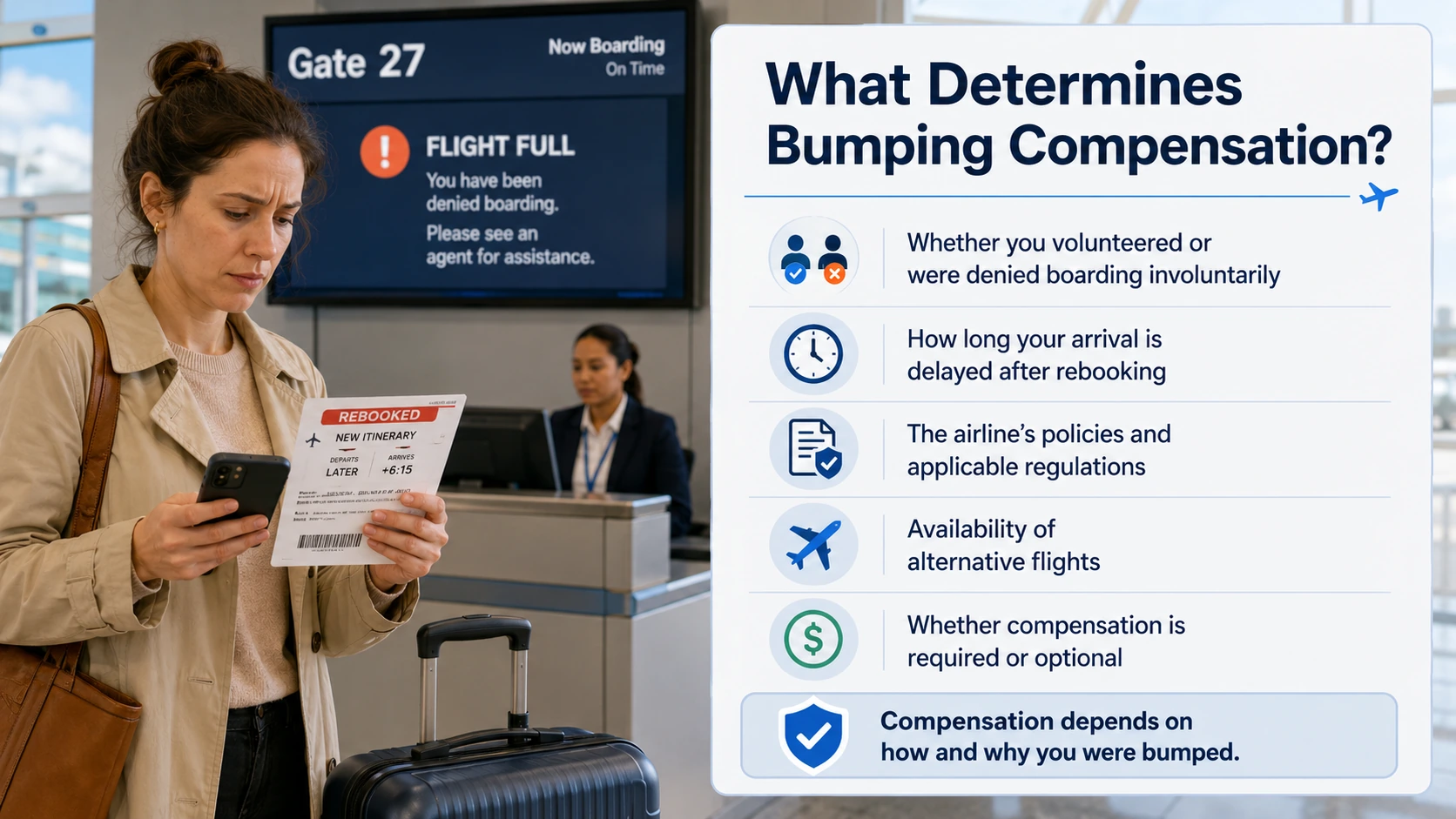
Being bumped from a flight can feel arbitrary, but the reason matters. Compensation usually depends on whether you volunteered, whether you were involuntarily denied boarding, how late the replacement flight gets you to your destination, and which passenger-rights rules apply.
The real question is not just:
“What happens if I am bumped from a flight?”
It is:
“Was I involuntarily denied boarding — and what compensation may the airline owe?”
This guide explains how denied boarding compensation works, how voluntary bumping differs from involuntary denied boarding, and what to confirm before accepting a gate offer or leaving the airport.
Quick Answer
What Is Denied Boarding Compensation?
Denied boarding compensation is payment an airline may owe when you are involuntarily bumped from an oversold flight. It usually depends on whether you volunteered, how late your replacement transportation gets you to your destination, and which rules apply to your route.
Voluntary bumping is different. If you agree to give up your seat, the offer is usually negotiated with the airline. If you are involuntarily denied boarding, ask for the reason in writing, confirm your rebooking, and clarify whether cash, check, travel credit, or another form of compensation applies.
When Denied Boarding Compensation May Apply
Denied boarding compensation usually applies only in specific bumping situations. The strongest case is when you had a confirmed reservation, checked in on time, arrived at the gate as required, and were involuntarily denied boarding because the flight was oversold.
It may not apply the same way if you volunteered to give up your seat, arrived late, missed the boarding cutoff, had a documentation problem, failed to meet travel requirements, or were denied boarding for a reason unrelated to overbooking.
The first question to ask at the gate is simple: “Am I being involuntarily denied boarding because the flight is oversold?” That answer affects whether denied boarding compensation rules may apply or whether the airline is treating the problem under a different policy.
To understand what the airline may owe, first separate the situation into three different buckets: voluntary bumping, involuntary denied boarding, and other denied boarding problems.
That distinction matters because the compensation rules are not triggered just because you were not allowed onto the plane. They usually depend on why you were denied boarding, whether the flight was oversold, and whether you agreed to give up your seat.
System Insight
Denied boarding compensation depends on why you were not allowed to board.
- Volunteering changes the situation because you are agreeing to give up your seat in exchange for an offer you choose to accept.
- Involuntary denied boarding is different because the airline is denying boarding after not getting enough volunteers on an oversold flight.
- Not every denied boarding event qualifies — arriving late, missing the boarding cutoff, document issues, or travel-rule problems may be handled under different policies.
- The words used at the gate matter because “volunteer,” “oversold,” “denied boarding,” and “rebooked” can affect what compensation may apply.
How Flight Overbooking Leads to Denied Boarding
Airlines may sell more tickets than there are seats because they expect some travelers not to show up. Most of the time, that does not create a problem. But if more passengers arrive than expected, the airline has to reduce the number of people boarding.
The process usually starts with the airline asking for volunteers. A volunteer agrees to give up a seat in exchange for an offer, such as cash, a travel credit, miles, meal support, hotel support, or another arrangement.
If not enough passengers volunteer, the airline may deny boarding to some travelers involuntarily. That is the situation most closely tied to denied boarding compensation rules.
The important point is that bumping is not one single event. It can be a voluntary agreement, an involuntary denied boarding situation, or another boarding problem that may not qualify for the same compensation.
How Flight Overbooking Works
A confirmed ticket does not always guarantee a seat if the flight is oversold.
Airlines routinely sell more tickets than there are seats on a plane because they expect some passengers not to show up. When more passengers arrive than expected, the airline has to reduce the number of people boarding.
That may happen by asking for volunteers first or, in some cases, by denying boarding to travelers who did not volunteer.
Your ticket reserves a place on the flight, but overbooking can still create a boarding conflict.
What Actually Happens When a Flight Is Oversold
When more passengers show up than there are seats, the process unfolds in stages—often quickly and in real time.
Airlines will usually start by asking for volunteers at the gate, offering compensation in exchange for giving up a seat. These offers may increase if not enough passengers accept.
If there still aren’t enough volunteers, the airline must move to involuntary denied boarding. At that point, passengers are selected based on internal criteria and rebooked on later flights.
This is where the situation shifts—from a negotiation to a decision made by the airline.
Bumping isn’t a single event—it’s a process that escalates from voluntary offers to forced decisions.
Denied Boarding Scenarios
You Agree
Voluntary Bumping
- You agree to give up your seat.
- The airline offers compensation, credit, miles, or perks.
- The terms are usually negotiated at the gate.
- You should confirm rebooking before accepting.
What this means: You may receive value, but you are choosing the offer instead of being involuntarily denied boarding.
No Volunteers
Involuntary Denied Boarding
- The flight is oversold.
- You did not agree to give up your seat.
- The airline denies boarding anyway.
- Denied boarding compensation rules may apply.
What this means: This is the main situation where denied boarding compensation may be owed.
Different Problem
Other Denied Boarding
- You arrive after the cutoff.
- You have a documentation or travel-rule issue.
- Your ticket, fare, or identity check creates a problem.
- The flight may not be oversold.
What this means: You may still be denied boarding, but the same bumping compensation rules may not apply.
Key distinction: compensation usually depends on the reason you were denied boarding, whether you volunteered, and whether the airline can get you to your destination within the relevant delay window.
The tricky part is that compensation is not based only on whether you were bumped.
It usually depends on a combination of factors: whether you volunteered, whether the flight was oversold, whether you met check-in and boarding requirements, how late you arrive after rebooking, and which passenger-rights rules apply to the flight.
That is why two travelers can both be denied boarding and still receive very different outcomes.
Compensation Factors
What Changes the Amount of Denied Boarding Compensation?
How you were bumped Voluntary bumping and involuntary denied boarding are treated differently.
How late you arrive Compensation often depends on how much later the replacement transportation gets you to your destination.
Which rules apply Country, route, flight type, airline policy, and passenger-rights rules can change the outcome.
The gate offer is not always the same as what the airline may owe. Before accepting compensation, confirm whether you are volunteering, whether you are being involuntarily denied boarding, how you will be rebooked, and whether the offer is cash, check, travel credit, voucher, miles, or another form of compensation.
This is where travelers can lose value without realizing it.
A gate offer may sound generous in the moment, but accepting it can change the situation from involuntary denied boarding to a voluntary agreement. Once you volunteer, the compensation rules may no longer work the same way.
That does not mean volunteering is always a bad choice. It means you should understand what you are accepting: the amount, form of compensation, expiration date, rebooking details, meal or hotel support, and whether you are giving up any claim to denied boarding compensation.
Traveler Risk
Do not accept a bumping offer before you know what you are giving up.
A voluntary offer can be useful, especially if you are flexible. But once you accept it, the airline may treat the situation as a negotiated agreement instead of involuntary denied boarding.
Before saying yes, ask what happens if you do not volunteer. Confirm whether the flight is oversold, whether involuntary denied boarding compensation may apply, and exactly what the airline is offering if you give up your seat voluntarily.
Before You Fly
Check the travel documents and flight details before one small issue costs you your seat.
Use the Travel Documents Checklist to make sure your ID, passport, boarding details, travel records, and backup documents are ready before check-in, boarding, or a gate issue becomes expensive.
What to Do If You Are Asked to Give Up Your Seat
If a flight is oversold, the goal is not just to avoid being bumped. It is to understand how the airline is treating the situation before you accept an offer, leave the gate, or assume you know what you are owed.
If the airline is asking for volunteers, pause before accepting the first offer. Voluntary bumping can be worthwhile, but the value depends on the compensation amount, the form of payment, expiration rules, rebooking details, and whether meals, hotel, or transportation support applies.
If you do not want to volunteer, ask what happens next. The most important distinction is whether the airline is asking you to give up your seat voluntarily or telling you that you are being involuntarily denied boarding because the flight is oversold.
If you are involuntarily denied boarding, focus on documentation. Ask for the reason in writing, confirm your rebooking, ask when you will arrive at your destination, and clarify what denied boarding compensation applies before leaving the gate area.
Action Step
Ask these questions before accepting a bumping offer.
If the airline asks for volunteers or denies boarding, the details matter. Your next move should be to clarify whether you are volunteering, what the airline is offering, and what happens if you do not accept.
- Ask whether the flight is oversold.
- Ask whether you are volunteering or being involuntarily denied boarding.
- Confirm whether the offer is cash, check, voucher, travel credit, miles, or another form of value.
- Ask when the replacement flight gets you to your final destination.
- Confirm whether meals, hotel, or transportation support applies.
- Get the compensation and rebooking details in writing before leaving the gate.
The most important question: “If I do not volunteer, am I being involuntarily denied boarding because this flight is oversold?” That answer can change what compensation rules may apply.
Check the Fine Print
Not sure what the airline owes you?
Use the Travel Fine Print Risk Checker to narrow whether your issue is voluntary bumping, involuntary denied boarding, rebooking, delay compensation, voucher terms, or another flight policy that could affect what you may receive.
Who Gets Bumped First on an Oversold Flight?
There is not one universal rule that decides who gets bumped first on every oversold flight. Airlines use their own boarding priorities and internal criteria when they do not get enough volunteers.
That can include factors such as check-in time, gate arrival, fare type, elite status, seat assignment, special service needs, group size, connection timing, and how easily a passenger can be rebooked.
This is why two travelers on the same flight may not face the same risk. One passenger may be easier to move to another flight, while another may have a tighter connection, protected status, or a travel need the airline considers differently.
The safest move is to reduce avoidable risk where you can: check in early, arrive at the gate on time, make sure your boarding pass is active, and stay close enough to hear gate announcements if the flight is oversold.
What to Get in Writing If You Are Denied Boarding
If you are involuntarily denied boarding, do not rely only on what the gate agent says out loud. Ask for the reason in writing before you leave the gate area.
The written record matters because denied boarding compensation can depend on the reason you were not allowed to board, whether the flight was oversold, how you were rebooked, and how late you arrived at your destination.
Ask the airline to confirm:
- whether the flight was oversold
- whether you volunteered or were involuntarily denied boarding
- your new flight details and expected arrival time
- what compensation is being offered
- whether the compensation is cash, check, travel credit, voucher, miles, or another form of value
- whether meals, hotel, or transportation support applies during the delay
The goal is to leave the gate with a clear paper trail. If the airline later describes the situation differently, your written details can help you understand what happened and what compensation may still be owed.
❓Frequently Asked Questions
Denied boarding compensation depends on why you were not allowed to board, whether you volunteered, whether the flight was oversold, and how the airline rebooks you. These questions cover the key details to check before accepting an offer or leaving the gate.
What is denied boarding compensation?
Denied boarding compensation is payment an airline may owe when you are involuntarily denied boarding from an oversold flight. It is most relevant when you had a confirmed reservation, met the check-in and boarding requirements, did not volunteer to give up your seat, and the airline cannot get you to your destination within the required timing window.
How much compensation do you get if you are bumped from a flight?
The amount can depend on the route, fare, delay length, and passenger-rights rules that apply to the flight. In many cases, the key question is how much later the airline gets you to your destination after rebooking. Before accepting an offer, ask the airline to explain how the amount was calculated and whether it is cash, check, voucher, credit, miles, or another form of value.
What is the difference between voluntary and involuntary denied boarding?
Voluntary bumping happens when you agree to give up your seat in exchange for an offer from the airline. Involuntary denied boarding happens when the airline denies boarding even though you did not volunteer. This distinction matters because voluntary offers are usually negotiated, while involuntary denied boarding may trigger specific compensation rules.
Do airlines have to pay cash if they bump you?
It depends on the situation and the rules that apply. Airlines may offer vouchers, credits, miles, or other benefits when asking for volunteers, but involuntary denied boarding compensation may have different requirements. Ask whether you are entitled to cash or check compensation before accepting a travel credit or voucher.
Can you refuse to give up your seat?
Yes, you can refuse to volunteer. If the airline still denies boarding because the flight is oversold and there are not enough volunteers, the situation may become involuntary denied boarding. Ask the gate agent to confirm whether you are being involuntarily denied boarding and request the reason in writing.
Who gets bumped first on an oversold flight?
There is not one universal rule for every airline. Airlines may consider check-in time, gate arrival, fare type, elite status, seat assignment, special service needs, connection timing, group size, and how easily a passenger can be rebooked. Checking in early and being at the gate on time can help reduce avoidable risk.
Can you negotiate compensation at the gate?
Yes, if the airline is asking for volunteers, you may be able to negotiate the offer before agreeing to give up your seat. Ask about the amount, payment form, expiration rules, rebooking details, meal support, hotel support, and transportation before accepting. Once you volunteer, the situation may no longer be treated the same as involuntary denied boarding.
Bottom Line
Denied boarding compensation is not based only on whether you were bumped from a flight. It depends on why you were not allowed to board, whether the flight was oversold, whether you volunteered, how the airline rebooked you, and which passenger-rights rules apply.
If the airline asks for volunteers, you may be able to negotiate the offer. But once you accept, the situation may be treated as a voluntary agreement instead of involuntary denied boarding.
If you do not volunteer and the airline denies boarding anyway, ask whether you are being involuntarily denied boarding because the flight is oversold. Then get the rebooking details, expected arrival time, compensation offer, and reason in writing before leaving the gate.
A confirmed ticket gives you a place in the boarding process, but it does not always guarantee a seat on an oversold flight. The best protection is knowing the difference between a voluntary offer, involuntary denied boarding, and another boarding problem before you accept the airline’s first explanation.
Related Guides
If you are trying to understand denied boarding compensation, bumped flights, airline vouchers, or rebooking problems, these related guides may help:
Bumped Flights and Airline Compensation
- Do Airlines Compensate for Delays?
Compare delay compensation with denied boarding compensation so you do not assume the same rules apply. - Flight Canceled: Refund or Credit?
Understand when an airline cancellation may lead to a refund, credit, or rebooking option. - Airline Refund vs Travel Credit: What’s the Difference?
See why a voucher or credit may not give you the same control as money back.
Missed Flights and Rebooking Problems
- What Happens If You Miss Your Flight?
Learn how missed flights, no-shows, skipped segments, and return-flight risks can affect the rest of your itinerary. - Will an Airline Rebook You on Another Flight?
Check when rebooking may be available and why the reason for the disruption matters.
Travel Insurance and Flight Disruptions
- Airline Delay Letter for Travel Insurance
Learn what proof insurers may ask for when a flight delay affects your claim.