
Your passport has not expired, so it feels like you should be able to travel.
But for some international trips, that is not enough.
Many countries require your passport to remain valid for a set period beyond your arrival, departure, or planned stay. Sometimes that window is three months. Sometimes it is six months. The point is to make sure your passport stays valid long enough for the trip, possible delays, and entry-rule requirements.
That is why travelers can be stopped before the trip even begins.
The airline may deny boarding at check-in if your passport does not meet the destination’s entry rules, even if the expiration date is still weeks or months away.
The real question is not just:
“Is my passport still valid?”
It is:
“Is it valid long enough for the country I am entering?”
This guide explains how the 6-month passport rule works, why airlines enforce it before departure, and what to check before booking or flying with a passport that is close to expiring.
Quick Answer
Why do some countries require 6 months of passport validity?
Some countries require extra passport validity so your passport remains valid beyond your planned stay. The rule helps cover entry requirements, possible overstays, travel delays, emergencies, and return-travel issues.
If your passport does not meet the destination’s validity rule, the airline may deny boarding before you leave. A passport can be unexpired and still not valid enough for that specific trip.
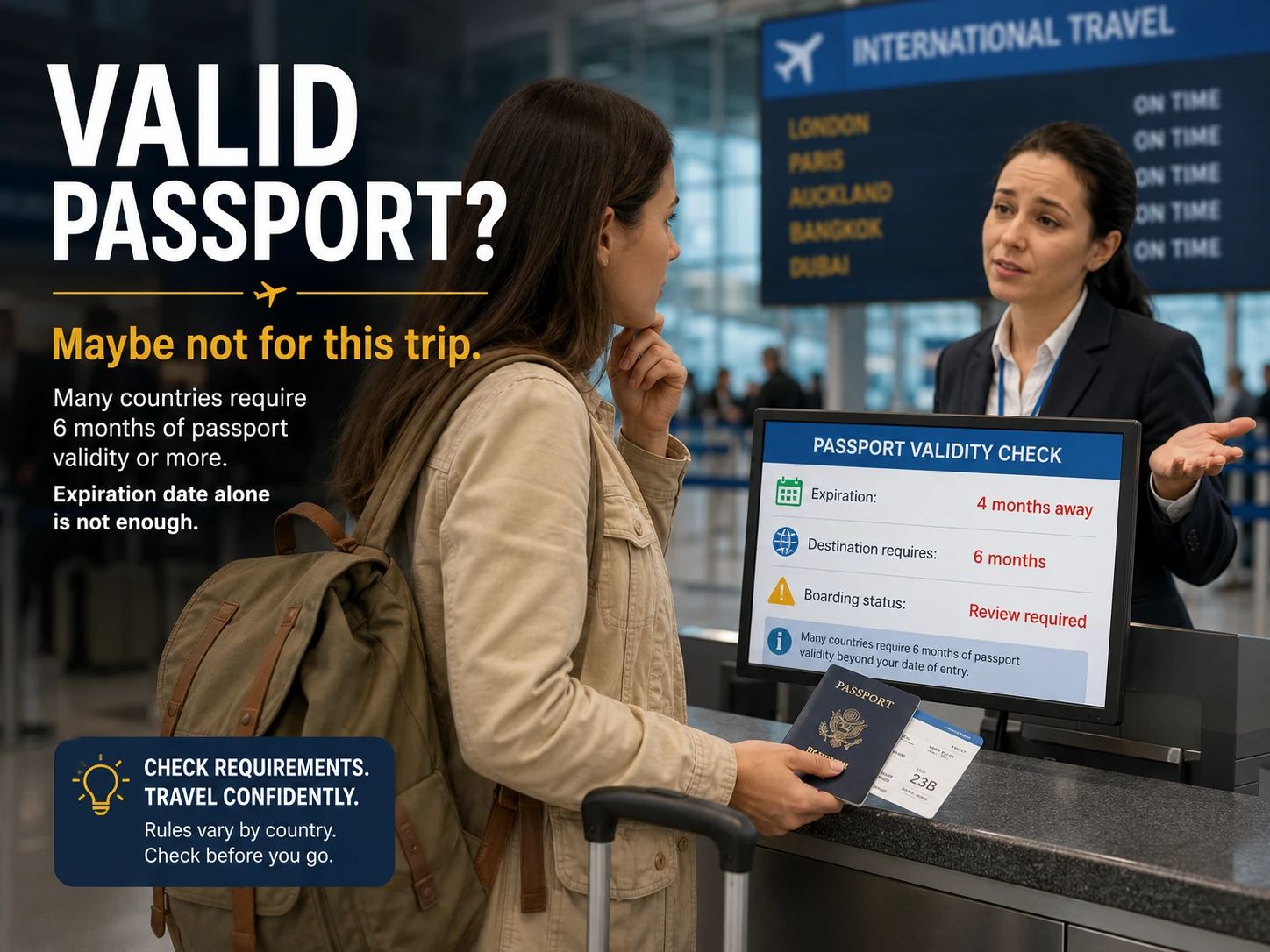
System Insight
Passport validity is an entry-rule issue, not just an expiration-date issue.
- Your passport can be unexpired and still fail the rule. Some destinations require extra validity beyond your trip.
- Airlines may enforce the rule before departure. If the system does not clear your passport, you may not receive a boarding pass.
- The required window can vary. Some rules are based on arrival, others on departure, nationality, transit points, or length of stay.
- The airport is usually too late to fix it. If the passport does not meet the requirement, renewal or replacement is usually the real solution.
Passport Validity Outcomes
When Your Passport Is Cleared, Questioned, or Rejected
The issue is not simply whether your passport has expired. It is whether it meets the validity rule for the destination and itinerary you are actually using.
Meets the requirement
Your passport has enough validity beyond the required window. The document clears the rule and travel can usually proceed as planned.
Close to the cutoff
Your passport is still valid, but close enough to expiration that the rule may trigger a warning, manual review, or itinerary-specific concern.
Does not meet the rule
Your passport falls short of the destination’s validity requirement. The airline may not issue a boarding pass, even though the passport is not expired.
How the 6-Month Passport Rule Is Enforced
When you travel internationally, the airline checks more than whether your passport is expired.
It checks whether your passport meets the destination’s entry rules. That can include your nationality, destination, transit countries, passport expiration date, and the validity rule that applies to your itinerary.
If the destination requires extra validity, the system looks at how much time remains before your passport expires. If your passport does not meet the requirement, your booking may be flagged, your boarding pass may not be issued, or the agent may need to escalate the issue for review.
At that point, the airline is not simply deciding whether it wants to let you travel. It is checking whether you appear eligible to enter the destination.
That is why the agent may have little flexibility at the counter. If your passport does not meet the entry requirement, the issue is not the flight itself. The issue is that your document may not clear the destination’s rules.
When the 6-Month Rule Catches Travelers Off Guard
The 6-month rule usually causes problems when travelers check the wrong date.
They look at the passport expiration date and see that it is still valid. But the destination may be looking at how long the passport remains valid after arrival, after departure, or beyond the planned stay.
This can create problems with last-minute international trips, multi-country itineraries, long vacations, and trips booked when a passport is already within 6–9 months of expiration.
It can also surprise travelers who assume every country uses the same rule. Some countries require six months. Others require three months. Some may have different rules based on nationality, transit, or itinerary.
The risky assumption is:
“My passport is not expired, so I’m fine.”
The better question is:
“Does my passport meet the validity rule for every country on this itinerary?”
Traveler Risk
A valid passport can still fail the trip requirement.
The biggest risk is checking only the expiration date. If your passport does not have enough remaining validity for the destination, the airline may deny boarding before you leave, even though the passport has not expired.
Check the Fine Print
Not Sure Whether Your Passport Is Valid Enough?
Use the Travel Fine Print Risk Checker to narrow whether your issue is a passport validity rule, damaged passport, travel insurance question, booking deadline, or another document-related travel risk.
Action Step
Check the validity rule before you book international travel.
If your passport expires within the next 6–9 months, treat it as a travel risk until you confirm the exact rule for your destination and itinerary.
Quick win: If your passport expires within the next six months, check the entry rule before you pay for any non-refundable international travel.
Before You Travel
Check the Documents Before the Airport Does
Use the Travel Documents Checklist to review passport validity, entry rules, ticket names, visas, insurance documents, and other details before they interrupt your trip.
Why Countries Enforce the 6-Month Rule
Countries use passport-validity rules to reduce the risk that travelers will overstay, face delays, or run into problems abroad with a passport that expires too soon.
For airlines, the issue is compliance. If an airline transports a traveler who does not meet entry requirements, the airline may be responsible for returning that traveler. That is why the rule is often enforced before departure, not just after arrival.
This is also why airport staff may have limited flexibility. The passport may be real, unexpired, and in good condition — but still not meet the rule for that destination.
Travel Fine Print Takeaway
Expiration is not the only passport date that matters.
A passport can be valid today but still not valid enough for the trip you booked. Before international travel, check the destination’s validity window, not just the expiration date printed inside the passport.
❓Frequently Asked Questions
These questions explain why an unexpired passport may still create problems when a destination requires extra validity beyond your trip.
Why do countries require 6 months of passport validity?
Many countries require extra passport validity so your passport remains valid beyond your planned stay. The rule helps reduce the risk of overstays, emergencies, travel delays, or return-travel problems if your passport would otherwise expire while you are abroad.
Does every country require 6 months of passport validity?
No. Some countries require six months, some require three months, and some may have different rules depending on nationality, itinerary, or transit points. The risk comes from assuming every country uses the same passport-validity rule.
Can I travel if my passport expires in 5 months?
It depends on where you are going. Some destinations may allow it, while others may require six months of validity. If your passport expires within five months, check the specific rule before booking or traveling.
Will the airline really stop me from boarding?
Yes, it can. Airlines check passport validity against destination entry rules before departure. If your passport does not meet the rule, the airline may deny boarding even though the passport has not expired.
Can I fix a passport validity problem at the airport?
Usually no. If your passport does not meet the destination’s validity rule, you normally need to renew or replace the passport before travel. Waiting until check-in leaves you with very little flexibility.
Bottom Line
The 6-month passport rule is not about whether your passport is valid today. It is about whether your passport is valid long enough for the country you are entering.
Travelers often think in expiration dates. Airlines and countries think in eligibility windows.
That is why a passport can be unexpired and still stop the trip before it begins.
Before you book or fly internationally, check the passport-validity rule for your destination, transit points, nationality, and travel dates. If your passport is close to expiring, treat it as a risk before the airport does.
Related Guides
Passport and Document Rules
- Can You Travel With a Damaged Passport? What to Know Before You Fly
When passport condition can affect boarding or entry. - Why Some Travelers Are Denied Boarding — Even With a Valid Passport
Why a valid passport may still fail airline or destination checks. - Passport Card vs Passport Book: Which One Do You Need for Travel?
When a card works — and when only a passport book is enough. - Can You Use an AI Passport Photo? What Travelers Should Know Before Submitting One
Why formatting a photo is different from changing your appearance.
Passport Timing and Insurance
- Are Passport Expediting Services Worth It? What to Know Before You Pay
What private expeditors can and cannot do. - Does Travel Insurance Cover Passport Problems?
When passport issues may or may not be covered. - Does Travel Insurance Cover Forgetting Your Passport?
Why forgetting a passport is different from losing one. - Why Travel Insurance Claims Get Denied — And What to Check Next
Common claim problems before you rely on coverage.