
Travel Insurance Claims
Travel Insurance Claim Proof: Receipts, Proof of Loss & Documents You Need
Travel insurance claims can involve receipts, provider statements, refund records, medical paperwork, and other documents — but those records are not interchangeable. A strong claim file connects them so the insurer can see what happened, why it happened, what it cost, and what financial loss actually remained.
The decision: Do your documents simply show that something happened — or do they prove the event, covered reason, cost, and unrecovered loss the insurer actually needs to evaluate?
This guide combines the practical questions travelers ask about receipts, claim documents, and proof of loss into one framework: what happened, why it happened, what it cost, and what amount remained unrecovered. For broader guidance on coverage choices, claim records, and travel document requirements, see our Travel Insurance & Documents guidance.

Quick Answer
What proof do you need for a travel insurance claim?
Travel insurance claim proof usually needs to show what happened, why it happened, what it cost, and what amount was not refunded, credited, reimbursed, or otherwise recovered.
Receipts and proof of payment establish only part of that story. Depending on the claim, you may also need airline or provider statements, medical records, baggage or incident reports, cancellation notices, refund or credit records, and insurer-specific forms. Together, those records become the proof of loss supporting the amount you are asking the policy to pay.
One rule to remember
A receipt proves a transaction. It does not automatically prove a covered loss.
Decision in 30 Seconds
What does the document in your hand actually prove?
Most claim problems happen because one document is expected to prove more than it really does. Use this as a quick check before assuming the file is complete.
| If you have… | It may help prove… | You may still need… |
|---|---|---|
| An itemized receipt | What you purchased, when, from whom, and how much it cost. | Why the expense was necessary, whether the reason was covered, and what amount remained unreimbursed. |
| An airline or provider notice | That a delay, cancellation, or other disruption occurred and sometimes when it occurred. | The official cause, your resulting expenses, and refund or reimbursement details. |
| A booking confirmation | That a reservation existed and what it was expected to cost. | Proof of payment, cancellation terms, and whether the amount was refundable or recovered. |
| A refund, credit, or voucher record | What another company returned or offered after the disruption. | The original loss and the amount that still remained your responsibility. |
| A doctor or medical-provider statement | The medical event, treatment, timing, and potentially why travel was affected. | Any insurer-required physician form, medical bills, trip costs, and unrecovered amounts. |
Claim Proof Framework
The four-part claim proof test
Once you understand what each document can prove, organize the entire claim around four questions. This is the simplest way to spot the missing link before you submit.
What happened?
Show the delay, cancellation, illness, injury, baggage problem, theft, interruption, or other event behind the claim.
Why did it happen?
Show the reason for the event because the policy may cover some causes and exclude others.
What did it cost?
Show the amount paid or lost with receipts, bills, invoices, booking records, or other payment evidence.
What was not recovered?
Show what remained after refunds, vouchers, credits, compensation, provider adjustments, or other reimbursements.
The four answers do not require four separate documents.
One record may answer more than one question. The point is not document count; it is whether the complete file establishes all four parts clearly enough for the claim to be evaluated.
Receipts & Proof of Payment
What do receipts prove — and what do they not prove?
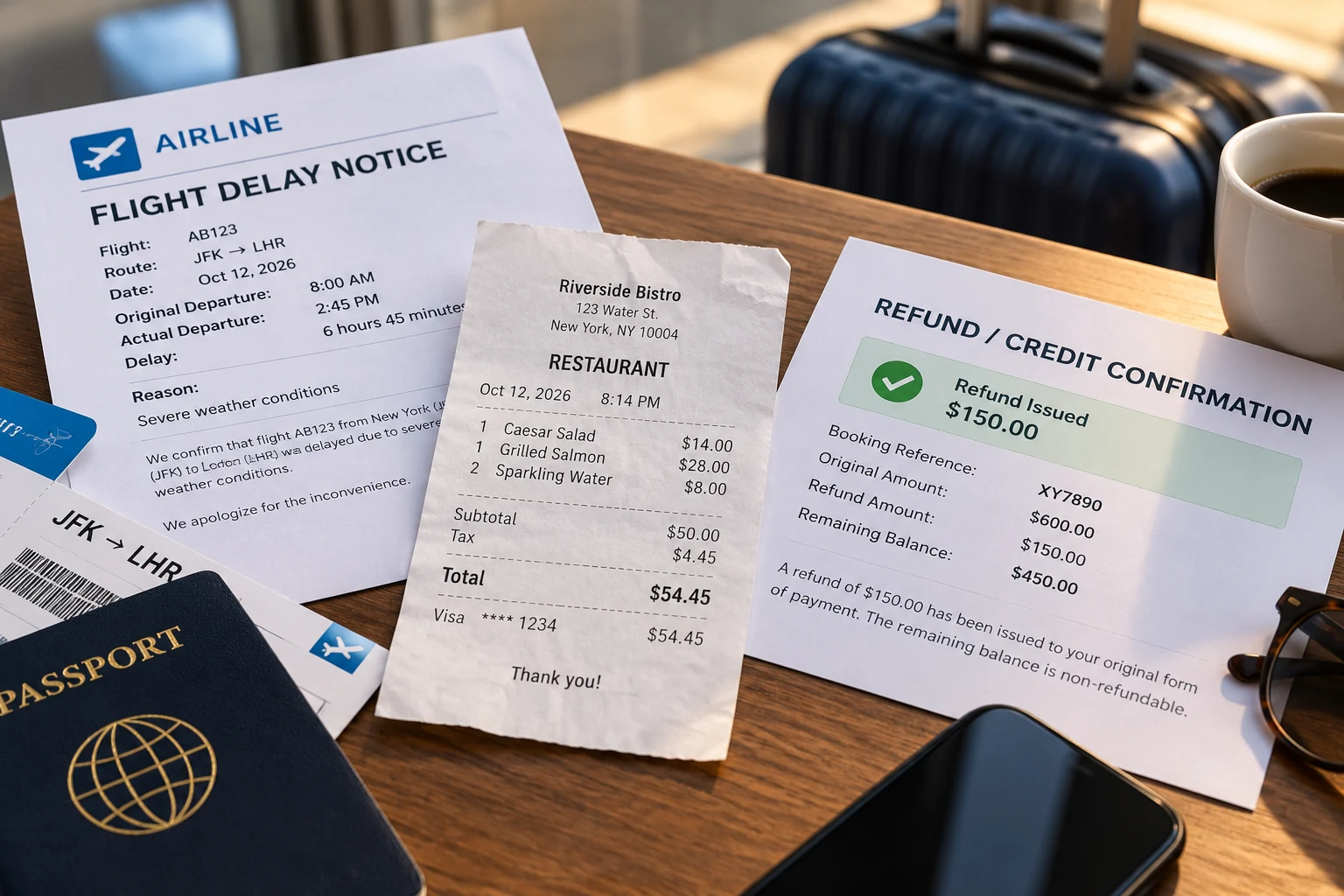
Receipts are important because they can establish the date, merchant, amount, and sometimes the specific item or service you purchased. For an extra hotel night, meal, taxi ride, prescription, or replacement item, an itemized receipt is generally stronger than a card statement showing only a total charge.
But a receipt usually proves only one part of the claim: what you spent. It may not show why you had to spend it, whether the reason was covered, whether the expense was reasonable under the policy, or whether part of the loss was later refunded or reimbursed.
Receipt
Helps prove the transaction, date, merchant, amount, and — when itemized — what was purchased.
Credit-card statement
Can support proof of payment, but a generic charge may not identify the specific travel expense well enough by itself.
Booking confirmation
Can establish the reservation and price, but may not show whether the amount was actually paid or remained non-refundable.
Refund or credit record
Shows what you recovered — which may be just as important as proving what you originally paid.
Why itemization matters
A restaurant receipt showing the meal is usually more useful than a card statement showing a restaurant charge. A hotel folio is usually more useful than a generic lodging charge. The clearer the money trail, the easier it is to connect the expense to the disruption.
Proof of Loss
What does “proof of loss” actually mean?
Proof of loss is broader than a receipt or document checklist. It is the evidence that helps connect the travel problem to the covered, measurable financial loss you are asking the insurer to pay.
That means showing not only the original cost, but also what happened afterward. If an airline refunded part of the ticket, a hotel waived a charge, a cruise line issued a credit, or another benefit reimbursed part of the loss, the insurer may need that information to calculate what remains.
Proof of loss is the claim math.
Original loss − refunds, credits, vouchers, compensation, or other reimbursements = the amount that may still remain for the policy to evaluate.
A refund, credit, voucher, or other payment does not automatically tell you what the insurer will decide. Its effect depends on the policy and the loss being claimed. The important point is that the claim file should disclose those recoveries so the remaining amount can be evaluated correctly.
Documents by Claim Type
The proof changes with the kind of travel problem.
The four-part framework stays the same, but the documents that answer those questions can look very different. Use the policy and claim instructions as the final checklist for your specific situation.
Flight delay or cancellation
Original and revised itineraries, airline notices, written cause or delay confirmation when available, hotel or meal receipts, transportation receipts, and records of airline refunds, vouchers, or assistance.
Trip cancellation or interruption
Booking and payment records, provider cancellation terms, documentation of the covered reason, cancellation confirmations, refund or credit records, and proof of prepaid costs that remained unrecovered.
Medical claim
Medical-provider records, insurer-required physician forms when applicable, itemized bills, proof of payment, treatment dates, and records showing what another health plan or provider paid.
Delayed, lost, or damaged baggage
Airline baggage reports or claim numbers, receipts for necessary replacement purchases, original purchase records when available, repair or valuation documents, and any airline compensation already received.
Theft or another documented incident
Police or incident reports when required, proof of ownership or value, receipts or replacement records, provider correspondence, and documentation of any reimbursement from another source.
A general document may not replace a required form.
A doctor’s note, for example, may support an illness claim but may not answer everything requested on an insurer’s attending-physician statement. Check the claim instructions before assuming an ordinary letter is enough.
Documentation Quality
Weak proof vs. stronger proof
The strongest claim file is not necessarily the largest. It is the one that closes the important gaps. A useful document should help a reviewer verify a fact rather than simply add another page to the upload.
Weaker Proof
May support the story but leave gaps
- A receipt showing a charge but not why the expense was necessary.
- A screenshot showing a flight delay but not the official reason or full duration.
- A cancellation email that does not explain why the trip was canceled.
- A booking confirmation that does not show payment, refund status, or cancellation terms.
- A personal explanation without third-party documentation.
Stronger Proof
Helps connect the whole claim
- An airline or provider statement showing what happened and why.
- Itemized receipts showing date, merchant, amount, and what was purchased.
- Medical documentation tied to the travel disruption and relevant dates.
- Refund, credit, or denial records showing what was not recovered.
- Supporting records organized so the reviewer can follow the timeline.
Build the File While It Happens
The hardest proof to get later is often the proof you did not request at the time.
After the trip, it may be harder to get an airline to explain the official reason for a delay, a hotel to confirm a non-refundable charge, a tour operator to document a cancellation, or a provider to put refund status in writing.
That is why the best time to build the claim file is often while the disruption is still happening.
Save proof before you file the claim.
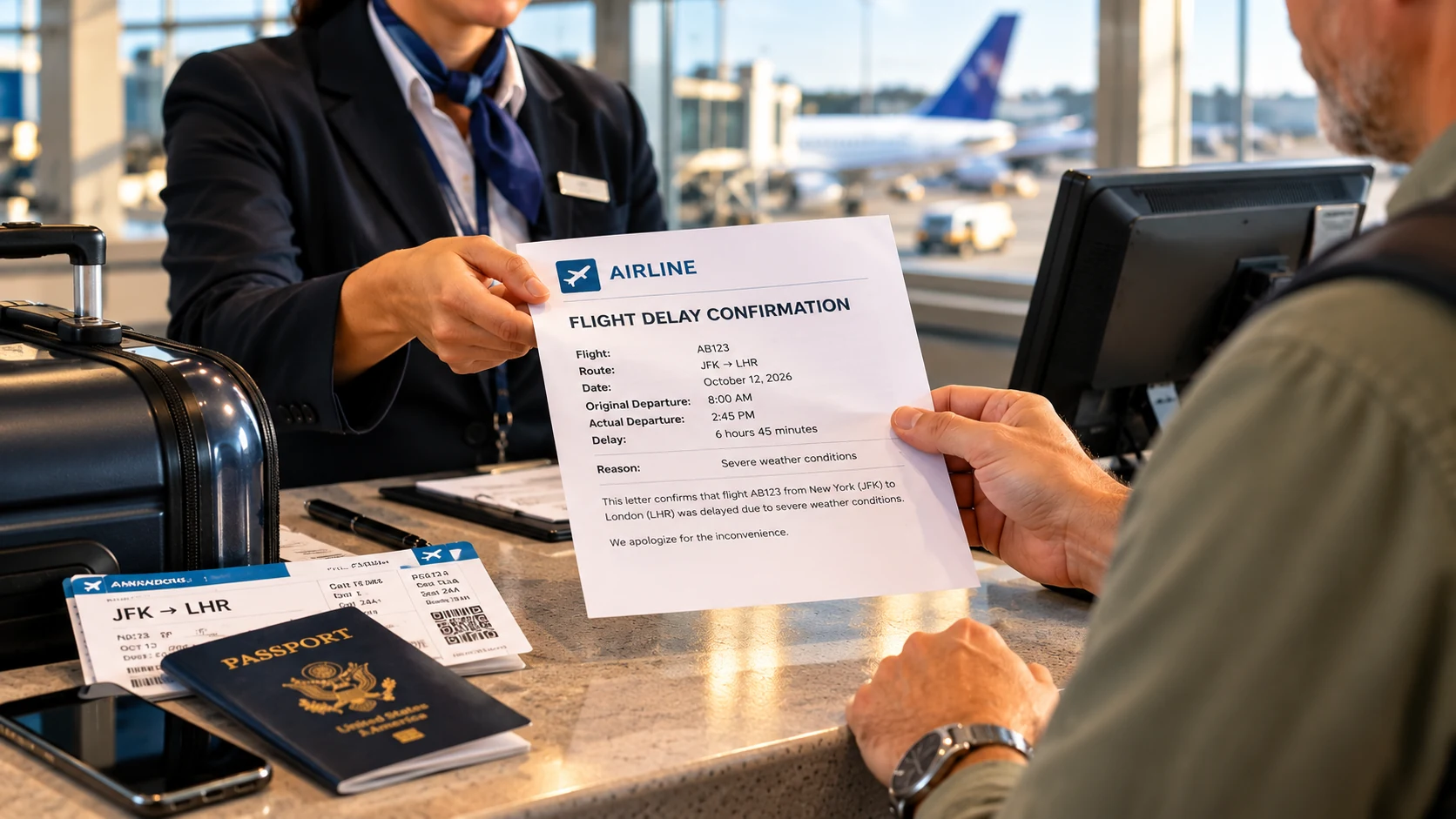
- Ask the airline or provider for written confirmation of what happened.
- Save the official reason when the cause may affect coverage.
- Keep original and revised itineraries.
- Keep receipts itemized whenever possible.
- Save refund, voucher, credit, and denial records.
- Keep medical, baggage, police, or incident documentation when relevant.
- Organize records by date before uploading them.
Quick win
Before you leave the airline counter, baggage office, hotel desk, clinic, or provider chat, ask: “Can you put that in writing?”
Missing Documentation
What happens when the claim file has a proof gap?
Incomplete documentation does not always mean an immediate denial. The insurer may first pause the review and ask for additional information. That request is useful: it often tells you which part of the claim the file has not yet proved.
Some gaps are easy to close. A duplicate receipt may be simple to obtain. Others — such as an official airline delay reason, provider refund denial, physician statement, police report, or proof that a prepaid cost was non-refundable — may be much harder to recreate after the trip.
You proved the event, not the cost
The insurer may ask for receipts, invoices, bills, or proof of payment.
You proved the cost, not the cause
The insurer may ask for documentation showing why the disruption occurred and whether that reason fits the policy.
You proved both, but not the unrecovered amount
The insurer may still need refund, credit, voucher, compensation, or other reimbursement records.
The insurer says documentation was insufficient
Read the request or denial carefully and address the specific proof gap rather than simply sending more unrelated paperwork.
If the claim has already been denied for missing or insufficient documentation, see what to check before you appeal or resubmit.
The Fine Print That Matters
Five distinctions worth checking before you submit
Proof of payment is not proof of coverage.
A charge can be real and still fall outside the policy if the event, reason, timing, or expense does not meet the benefit requirements.
A receipt is not the same thing as proof of loss.
Proof of loss connects the covered event to the measurable amount that remained unrecovered.
The official reason may matter as much as the expense.
A flight delay, cancellation, illness, or interruption may be evaluated differently depending on why it happened.
A travel credit can affect the loss calculation.
Even when you would have preferred cash, the insurer may need to evaluate whether a credit, voucher, refund, or other recovery reduced the financial loss under the policy.
The same expense generally cannot be reimbursed twice.
Keep records of what the airline, hotel, credit card, insurer, medical plan, or another source already paid so the remaining loss can be evaluated correctly.
My Take
Build the claim file for someone who was not there.
I would organize a travel insurance claim as if the reviewer knew nothing about the trip except what the documents showed. A clear file should let that person follow the timeline, understand the reason for the loss, match the expenses to the disruption, and see what was or was not recovered elsewhere.
The goal is not more paperwork. It is fewer unanswered questions.
TFP Recommendation
Use the four-part test before you upload anything.
The Recommendation
Make sure the claim file establishes what happened, why it happened, what it cost, and what amount remained unrecovered.
Then follow the insurer’s claim instructions and add any required forms. The goal is not to submit the most paperwork — it is to close the proof gaps that would otherwise force the reviewer to guess.
Your Next Step
Choose the action that matches where you are in the claim process.
Smarter travel, straight to your inbox
Booking choices, hidden costs, travel rules and useful fine print — explained clearly.
Before You Go
Set up the record trail before the trip goes wrong.
Save your policy details, booking records, and provider contacts before departure. These related guides cover the coverage and documentation questions that may matter if a disruption happens later.

Does Travel Insurance Cover Flight Delays?
Start here if the question is whether a disruption may qualify for trip-delay reimbursement before you worry about the claim documents.
Understand delay coverage →Do You Need an Airline Delay Letter?
See when written carrier confirmation can help establish the event or cause — and what it still may not prove by itself.
Understand delay letters →Do You Need Travel Insurance for a Refundable Flight?
Understand why refundable reservations and travel-insurance protection address different financial risks.
Compare the protection →Why Travel Insurance Claims Get Denied
See how covered reasons, timing, exclusions, documentation, and other policy rules can affect whether a claim is paid.
Understand claim denials →Frequently Asked Questions
Travel insurance claim proof, receipts and proof of loss
What proof do you need for a travel insurance claim?
It depends on the claim, but the documents usually need to show what happened, why it happened, what it cost, and what amount remained unrecovered. Common examples include booking records, receipts, provider statements, medical records, airline notices, baggage reports, refund records, and claim-specific forms.
Does travel insurance require receipts?
Receipts are commonly important when you are claiming an expense, especially for meals, lodging, transportation, medical costs, or replacement items. But the claim may also need proof showing why the expense occurred and whether it was covered.
Are receipts enough for a travel insurance claim?
Not always. A receipt can prove what you paid but may not prove the covered reason, timing, necessity of the expense, or whether the amount was refunded, credited, or reimbursed elsewhere.
What if I lost a receipt for a travel insurance claim?
Check the insurer’s claim instructions and ask whether alternative proof is acceptable. A duplicate receipt, merchant invoice, hotel folio, booking record, or card statement may help establish the expense, but whether it is sufficient depends on the policy and the specific claim.
What is proof of loss for travel insurance?
Proof of loss is the collection of documents that helps connect the travel problem to the financial amount being claimed. It may include proof of the event and cause, receipts or bills, and records showing what amount remained after refunds, vouchers, credits, compensation, or other reimbursements.
Do you need proof of payment for travel insurance?
Often, yes. A receipt, invoice, booking record, card statement, or other payment record may help establish that you actually paid the cost being claimed. More detailed documentation is usually stronger than a generic charge.
Is a doctor’s note enough for a travel insurance claim?
It may help, but not always. Some claims require the insurer’s own physician form or additional records showing treatment dates, diagnosis or medical circumstances, and why the condition affected the trip. Follow the specific claim instructions.
Can a claim be denied for missing documents?
Yes. A claim can be delayed, reduced, or denied if the insurer cannot verify the covered reason, timing, eligible expense, benefit conditions, or unrecovered amount. The insurer may sometimes request additional proof before making a final decision.
What should I do if the insurer asks for more proof of loss?
Identify what the request is trying to establish: the event, cause, payment, non-refundable status, or amount not reimbursed elsewhere. Then provide the strongest document that answers that specific question.
Free Travel Guide
Avoid the travel mistakes that can cost you money, flexibility, or time.
Get 27 Travel Mistakes That Cost Travelers Thousands — a practical guide to booking mistakes, hidden costs, travel rules and decisions worth understanding before they become a problem.
- Spot booking details that are easy to overlook
- Understand where hidden costs can appear
- Recognize when a cheaper option comes with a tradeoff
- Make travel decisions with fewer surprises
You’ll also receive occasional practical guidance from Travel Fine Print on booking choices, hidden costs, travel rules and the fine print worth understanding. Unsubscribe anytime.