
Travel Insurance & Passports
Does Travel Insurance Cover Forgetting Your Passport?
Forgetting your passport can cause a missed flight, lost hotel nights, or a ruined trip — but that does not automatically make the loss covered by travel insurance. Standard coverage usually turns on whether the reason you could not travel is a covered event under the policy.
The decision: Did a covered event prevent you from traveling, or did you simply fail to bring the passport or document the trip required?
This guide explains the difference between forgetting a passport and having one lost, stolen, or otherwise affected by a separate event, and what to do when the mistake threatens the trip.
On this page
- Quick Answer
- Decision in 30 Seconds
- Forgotten vs. Lost or Stolen
- Why Forgetting Is Different
- What Standard Coverage Requires
- Where to Verify Coverage
- If You Realize at the Airport
- If You Miss the Flight
- Could CFAR Help?
- What Proof Could Matter?
- When It Is a Different Passport Problem
- Fine Print
- TFP Recommendation
- Before You Go
- FAQ

Quick Answer
Does travel insurance usually cover a trip you miss because you forgot your passport?
Usually not under standard trip cancellation coverage. A forgotten passport is generally a document-readiness mistake, not a covered reason for canceling or missing the trip.
A forgotten passport is different from a lost or stolen passport. Loss or theft may trigger different benefits depending on the policy, timing, and documentation. The policy certificate or description of coverage controls the outcome.
Decision in 30 Seconds
Which passport problem actually caused the trip loss?
The cause of the document problem usually matters more than the size of the resulting loss.
| Scenario | Typical coverage question | What to check |
|---|---|---|
| Passport left at home | Usually a traveler-responsibility issue rather than a covered event. | Try to retrieve it, preserve the ticket if possible, and reduce downstream losses. |
| Wrong or unusable passport brought | Often treated as failure to have the required travel document. | Check airline options and whether another document can realistically solve the problem. |
| Passport stolen | May be treated differently if theft is a covered event and can be documented. | Policy wording, police report requirements, timing, and resulting eligible expenses. |
| Passport lost during the trip | Some plans may include assistance or benefits tied to replacement, delay, or interruption. | Assistance benefits, travel delay/interruption terms, receipts, and replacement records. |
| Passport did not arrive in time | Processing delay is often different from an unexpected covered event. | Whether the policy specifically lists a qualifying reason that applies. |
| CFAR coverage | May provide a separate path for some otherwise non-covered cancellations. | Purchase timing, trip-cost requirements, cancellation deadline, and reimbursement percentage. |
The Coverage Distinction
Forgotten, lost, and stolen passports are not the same insurance event.
The passport problem may look similar from the airport — you cannot travel as planned — but the cause behind it can change the coverage analysis.
Forgotten passport
The document existed and was available, but you did not bring it. Standard coverage commonly does not treat that mistake as a covered reason to cancel.
Lost or stolen passport
A separate loss or theft event may trigger different assistance or coverage questions, particularly when it can be documented and fits the policy terms. If a U.S. passport is missing before departure, you can also explore paid passport-replacement assistance alongside official replacement options; first confirm that the service handles your situation and deadline.
Delayed, expired, or invalid passport
Processing delays and document-readiness problems usually require a separate policy analysis and should not be treated as the same event as theft or loss during travel.

Why the Cause Matters
Why is forgetting your passport usually treated differently?
Travel insurance is generally built around defined covered reasons, exclusions, and benefits. The claim question is not simply whether the trip became unusable; it is whether the event that caused the loss fits the policy language.
If the reason is “I left my passport at home,” the insurer may treat the loss as failure to bring required travel documents rather than as a covered event. That is different from an unexpected theft, a loss during travel, or another event expressly included by the policy.
The financial loss does not create the covered reason.
A missed flight, forfeited hotel, cruise departure, or unused tour can make the mistake expensive. But the insurer still looks first at why the loss happened.
Standard Coverage
What does trip cancellation or interruption coverage actually require?
Standard trip cancellation insurance does not reimburse every reason a traveler cannot take a trip. The cause generally has to match a covered reason in the policy or fit another applicable benefit.
That is why passport mistakes are difficult claims. You can lose prepaid, non-refundable money and still have no covered insurance loss if the reason for missing the trip is outside the policy.
Check the policy certificate or description of coverage for covered reasons, exclusions, notification deadlines, documentation requirements, and any duty to reduce the loss.
Verify the Policy
Where should you look for the actual coverage answer?
Start with the policy certificate or description of coverage, not the marketing summary. Look for the sections on trip cancellation, trip interruption, travel delay, travel-document assistance, exclusions, and Cancel For Any Reason if you purchased it.
If the wording is unclear, contact the insurer or assistance provider and describe the exact event: the passport was forgotten, lost, stolen, delayed, damaged, or otherwise unavailable. Those are not interchangeable coverage scenarios.
Act Before the Flight Leaves
What should you do if you realize the passport is missing at the airport?
The first priority is usually to salvage the trip, not to assume an insurance claim will reimburse everything later.
1. See if the passport can reach you
If it is safely at home, determine whether a family member, friend, rideshare, courier, or other practical option could get it to the airport within the airline’s check-in or boarding window.
2. Contact the airline before departure
Ask about moving to a later flight, same-day changes, preserving ticket value, or avoiding a no-show outcome. Options depend on the fare and airline rules.
3. Protect the rest of the trip
Contact hotels, cruise lines, tour providers, transfer companies, and other booked services if a delayed arrival will affect them.
4. Call the insurer or assistance line
Ask whether any benefit might apply and what records to preserve. Do not assume the answer is yes simply because the trip was disrupted.
If the Flight Is Missed
Missing the flight can create several separate losses.
The airfare is only the first issue. A missed departure can affect hotel nights, cruises, tours, transfers, event tickets, rental cars, and other non-refundable bookings.
Contact each provider as quickly as possible. A later flight, late-arrival notation, date change, partial credit, or goodwill exception may reduce the amount ultimately lost.
Mitigation matters even when coverage is uncertain.
If you can preserve part of the trip or recover money directly from a provider, that may be more valuable than waiting to see whether an insurance claim is payable.

Cancel For Any Reason
Could Cancel For Any Reason coverage help?
Possibly. Cancel For Any Reason (CFAR) is an optional benefit that can provide partial reimbursement for some cancellations that standard trip cancellation coverage would not cover.
Its rules are strict: CFAR generally must be purchased within the plan’s required timeframe, may require the appropriate trip cost to be insured, reimburses only a percentage of eligible prepaid non-refundable costs, and requires cancellation before a stated deadline. It is not something you can add after reaching the airport and discovering the passport is missing.
If You File Anyway
What proof could an insurer ask for?
Documentation depends on the benefit and claim, but the insurer may need enough information to understand what happened, when it happened, what costs were lost, and what you recovered from airlines or other providers.
Airline records
Rebooking confirmations, no-show information, denied-boarding documentation, ticket credits, or written confirmation of what happened.
Provider refund records
Hotel, cruise, tour, transfer, or other booking records showing what was refundable, credited, changed, or forfeited.
Passport-event documentation
If the passport was actually stolen or lost, reports, replacement-document records, embassy or consular paperwork, and related receipts may matter.
Policy and claim records
Keep the policy, insurer communications, claim number, receipts, and any instructions provided by the assistance line.
Different Passport Problems
When is this really a different insurance question?
If the passport was stolen, lost during travel, damaged, delayed in processing, expired, or failed a destination validity rule, you are dealing with a different passport problem.
Those situations can involve different benefits, exclusions, evidence, and traveler responsibilities. Identify the actual event before applying an insurance answer meant for a forgotten passport.
If you lost your U.S. passport while still at home, you may need a replacement before you can travel. Start with the State Department’s loss-reporting and replacement instructions; if departure is near, compare private application and courier assistance as an optional extra-cost service. If you are already abroad, contact the nearest U.S. embassy or consulate for an emergency replacement rather than relying on a domestic expeditor.
The Fine Print That Matters
Five distinctions that change the insurance question.
Trip disruption is not the same as a covered event.
The insurer evaluates why the trip was lost or changed, not merely whether the consequence was expensive.
Forgotten is different from stolen.
A passport left at home may be treated as traveler error; documented theft can raise a different coverage question.
Passport assistance is not automatically trip reimbursement.
A policy may provide assistance services without promising to reimburse every missed booking caused by the document problem.
CFAR has its own rules.
It generally must be purchased and used before the problem occurs and does not usually reimburse 100% of the trip cost.
Recover what you can first.
Airline changes, provider credits, and late-arrival options can reduce the actual loss even when insurance coverage is uncertain.
My Take
I would treat a forgotten passport as a trip-recovery problem first and an insurance question second.
If the passport is still reachable, the most valuable minutes may be spent getting it to the airport, preserving the airline ticket, and protecting the rest of the itinerary.
If the passport has actually been lost or stolen before departure, I would switch priorities: begin the official replacement process immediately. With a tight deadline, paying for help checking paperwork and coordinating domestic replacement logistics might be worthwhile, but it cannot guarantee government issuance or save a flight that is already boarding.
I would still call the insurer if the loss is significant, but I would not assume standard coverage will reimburse a preventable document mistake.
TFP Recommendation
Recover what you can first. Then evaluate coverage based on the actual cause.
The Recommendation
If the passport is at home, act immediately to retrieve it, protect the ticket, and salvage the rest of the trip.
Then evaluate the insurance question using the actual cause of the loss. A forgotten passport, documented theft, loss during travel, and passport-processing delay are different events and can produce different coverage answers.
Your Next Step
Choose the action that matches what happened now.
Smarter travel, straight to your inbox
Booking choices, hidden costs, travel rules and useful fine print — explained clearly.
Before You Go
Prevent the document problem — and know where to turn if one happens.
These related guides cover broader passport coverage, claim documentation, boarding eligibility, and the pre-trip document check that can prevent this problem altogether.

Does Travel Insurance Cover Passport Problems?
See how lost, stolen, damaged, delayed, expired, and other passport problems may be treated differently.
Compare passport problems →Travel Insurance Claim Proof
Learn what documentation can help establish the event, expense, refund trail, and unrecovered loss.
Build the claim record →Denied Boarding With a Valid Passport
Understand why having the passport in hand still does not guarantee that every travel-document requirement is satisfied.
Understand boarding eligibility →Travel Documents Checklist
Review the passport, ID, visa, authorization, booking, and backup-document details before departure day.
Open the checklist →Frequently Asked Questions
Travel insurance coverage for forgotten passports
Does travel insurance cover forgetting your passport?
Usually not under standard trip cancellation coverage. Forgetting the passport is generally treated as a traveler document mistake rather than a covered reason. Check the policy, but do not assume a missed flight or lost trip cost is reimbursable simply because the passport was left at home.
Is forgetting your passport a covered reason for trip cancellation?
Usually not under standard trip cancellation coverage. Covered reasons are defined by the policy, and forgetting a required travel document is generally treated differently from an unexpected event such as documented theft or another listed covered reason.
Does travel insurance cover a lost passport?
It may, depending on when the loss happened and which benefits the policy includes. Loss during a trip can raise different assistance, delay, interruption, or replacement-cost questions than a passport that was misplaced before departure.
Does travel insurance cover a stolen passport?
Possibly, if the theft fits the policy terms and can be documented. A police report and other records may be required. Theft should not be treated as equivalent to simply forgetting the document.
Will travel insurance cover denied boarding because I forgot my passport?
Often not. If boarding was refused because you did not have the required travel document, the insurer may treat the loss as failure to meet document requirements rather than a covered travel disruption.
Can CFAR help if I forgot my passport?
Possibly, but only if you already purchased qualifying Cancel For Any Reason coverage and comply with its purchase, trip-cost, cancellation-timing, and other requirements. CFAR generally cannot be added after the problem is discovered.
What should I do first if I discover the passport is at home?
Try to retrieve the passport while contacting the airline before departure. Ask about a later flight or preserving ticket value, then notify other trip providers if your arrival will be delayed.
Should I file a claim even if I think forgetting the passport is not covered?
You can contact the insurer for a coverage determination if you are unsure. Keep airline records, provider refund information, receipts, and insurer communications so the claim can be evaluated against the actual policy terms.
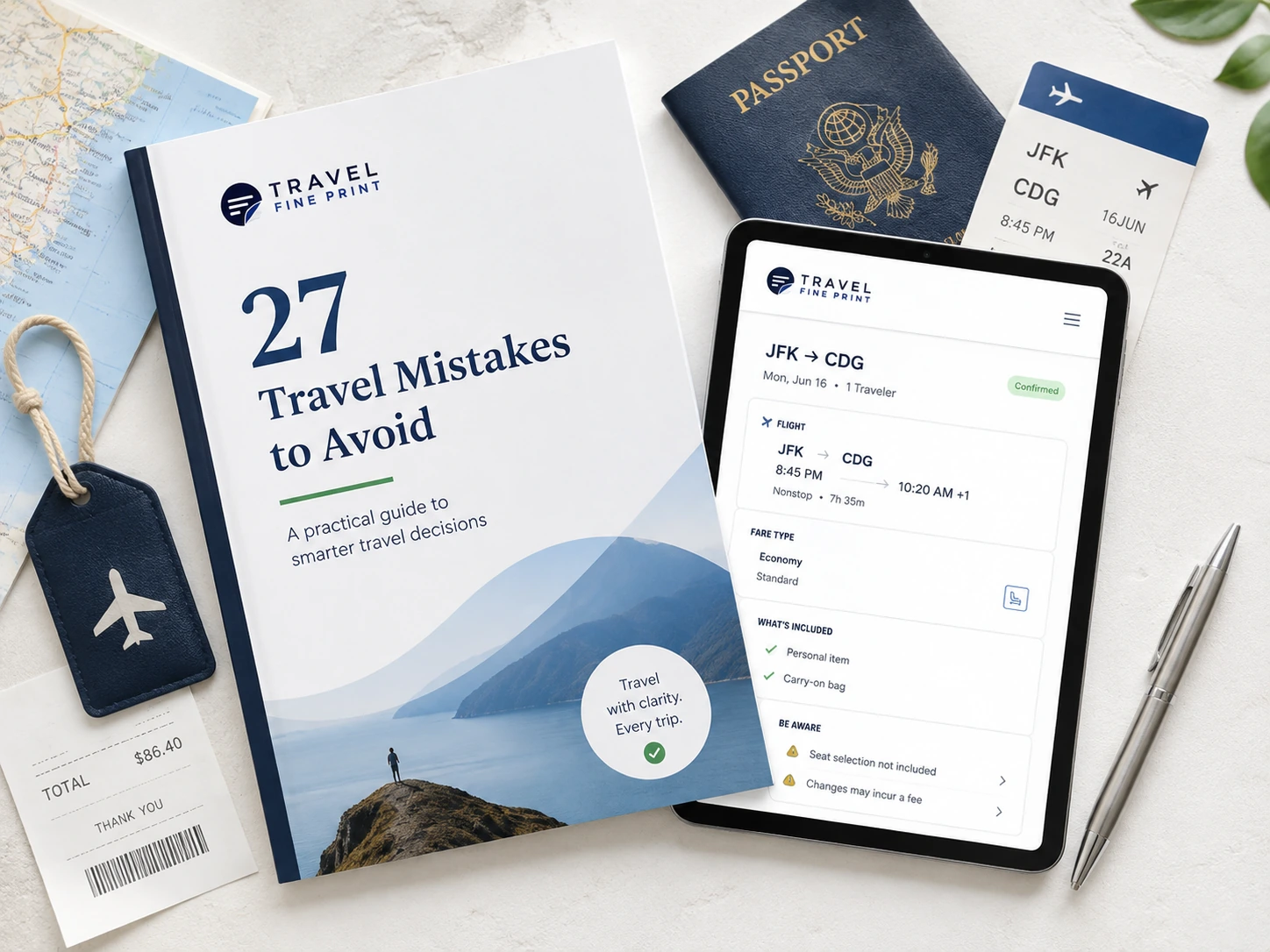
Free Travel Guide
Avoid the travel mistakes that can cost you money, flexibility, or time.
Get 27 Travel Mistakes That Cost Travelers Thousands — a practical guide to booking mistakes, hidden costs, travel rules and decisions worth understanding before they become a problem.
- Spot booking details that are easy to overlook
- Understand where hidden costs can appear
- Recognize when a cheaper option comes with a tradeoff
- Make travel decisions with fewer surprises
You’ll also receive occasional practical guidance from Travel Fine Print on booking choices, hidden costs, travel rules and the fine print worth understanding. Unsubscribe anytime.