
Airline ticket prices can feel random.
You may search for a flight in the morning, check again later, and see a different price. One fare looks cheap at first, but by the time you add a bag, choose a seat, or compare a more flexible ticket, the total cost can look very different.
That is because airline pricing is not built around one fixed price.
Airlines price tickets using a mix of base fares, fare buckets, seat availability, demand, route timing, taxes, fare types, and optional or fare-dependent add-ons. The lowest fare you see is often only one layer of the total cost.
The real question is not just:
“Why is this flight so expensive?”
It is:
“What is included in this fare, what pricing bucket is still available, and what will the flight actually cost after fees and restrictions are considered?”
This guide explains how airline ticket pricing works, why flight prices change, how fare buckets and fare types affect what you pay, and why the cheapest-looking ticket is not always the cheapest real option.
Quick Answer
How does airline ticket pricing work?
Airline ticket pricing is built from several layers: the base fare, fare bucket availability, demand, route timing, taxes, fare type, and add-ons like bags, seats, boarding, and flexibility. The price you see first is often the lowest available fare for that moment, not necessarily the full cost of the flight.
As cheaper fare buckets sell out, prices can rise even if seats are still available. The final amount you pay also depends on what the ticket includes, what it excludes, and whether you add baggage, seat selection, upgrades, or change flexibility before checkout.
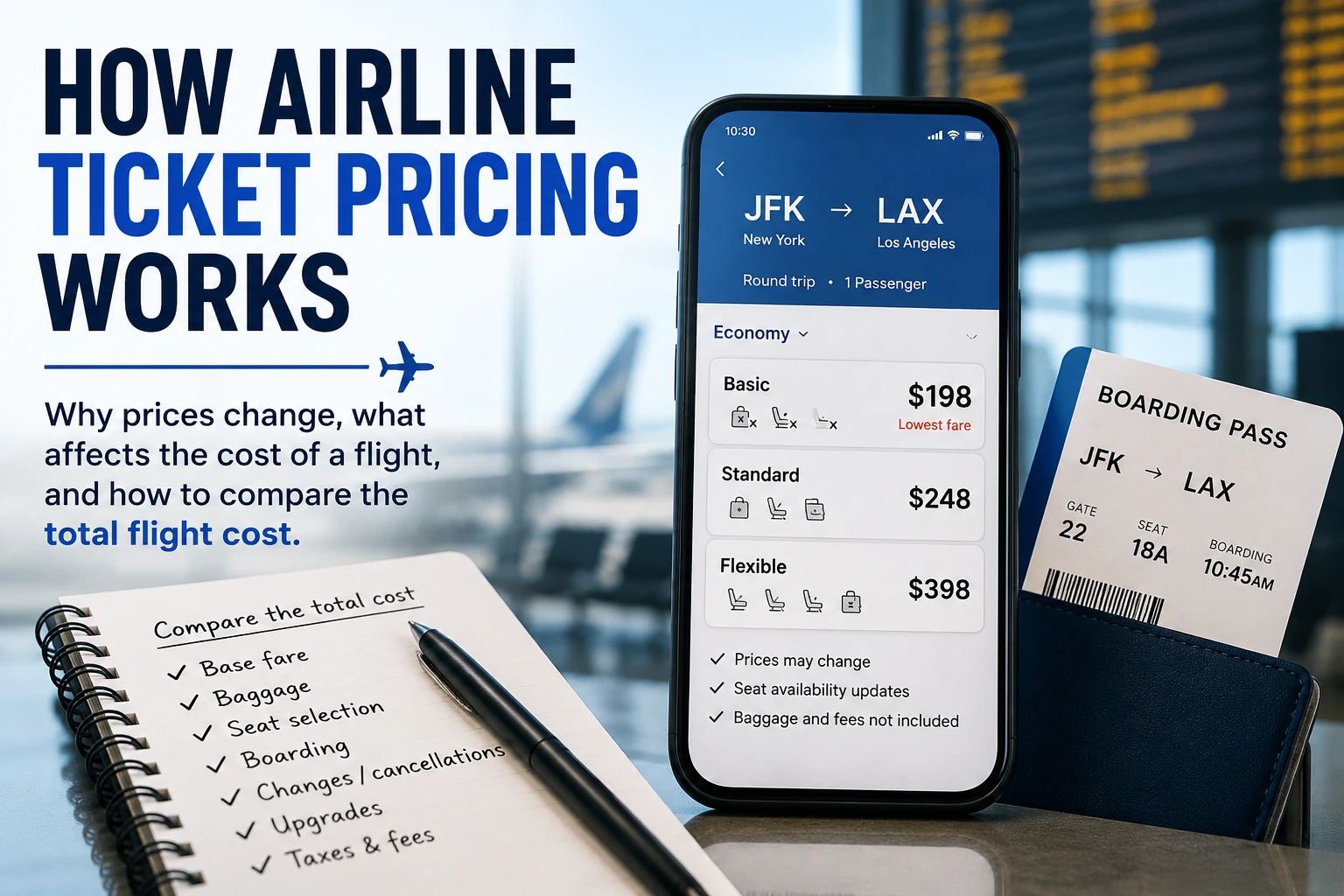
What Determines the Price of an Airline Ticket?
Airline ticket pricing is not based on one fixed number.
The price you see depends on several moving parts: the route, travel dates, demand, seat availability, fare bucket, fare type, taxes, and what the ticket includes.
That is why two travelers can buy tickets on the same flight and pay different amounts. They may have booked at different times, chosen different fare types, or purchased from different pricing levels that were still available when they booked.
The key is understanding that the airfare you see first is usually only the starting point.
The real cost depends on what pricing level is available, what fare type you choose, and what you still need to add before checkout.
System Insight
Airline pricing is layered, not random.
- Fare buckets matter because the cheapest pricing level can sell out while seats are still available.
- Demand matters because popular routes, dates, and travel periods can move into higher price levels faster.
- Fare type matters because basic, standard, and flexible tickets include different rules, benefits, and restrictions.
- Add-ons matter because bags, seats, boarding, upgrades, and flexibility can change the total cost before checkout.
Most travelers focus on the ticket price.
But airline pricing is easier to understand when you separate the pieces that make up the total cost.
A cheaper flight may only look cheaper because fewer things are included upfront. A higher fare may include benefits you would otherwise pay for separately.
That is why the better comparison is not just ticket price vs. ticket price.
It is total flight cost vs. total flight cost.
Airline Pricing Layers
Airline Ticket Price vs Total Flight Cost
The airfare you see first is only one layer of the price. To understand what a flight will actually cost, separate the base fare, fare bucket, fare type, add-ons, and final total.
Starting Price
Base Fare
The starting ticket price before every restriction, included benefit, or add-on is considered.
Availability
Fare Bucket
The pricing level still available at that moment. Cheaper buckets can sell out before the flight sells out.
Rules Included
Fare Type
The version of the ticket you choose, such as basic economy, standard economy, flexible, refundable, or premium cabin.
Added Costs
Add-Ons
Bags, seats, boarding priority, upgrades, Wi-Fi, changes, and flexibility that may cost extra.
Real Cost
Total Flight Cost
The fuller amount you are likely to pay after taxes, fare rules, baggage, seats, and likely extras are included.
Quick rule: the cheapest airfare is not always the cheapest flight. A lower base fare can become more expensive once you add what your trip actually requires.
Common Reasons Flight Prices Move
Airline ticket prices can change because airlines are constantly balancing seat availability, demand, timing, and fare bucket inventory.
A flight may still have seats available, but the lowest-priced fare bucket may be gone. When that happens, the next available ticket can cost more even though the plane is not sold out.
Price Movement
Common Reasons Flight Prices Move
Flight prices can move for several reasons. The change is not always personal, and it does not always mean the airline raised the price because you searched again.
Availability
Cheaper Fare Buckets Sell Out
A flight can still have seats available even after the lowest-priced fare bucket is gone.
What it means: the next available economy ticket may cost more than the one you saw earlier.
Route Pressure
The Route Is Selling Faster
Popular routes, holiday dates, events, weekends, and peak travel periods can move into higher price levels faster.
What it means: demand can push the available price higher before the flight is full.
Booking Window
Departure Is Getting Closer
Last-minute travel, limited schedules, and fewer remaining options can make lower fares harder to find.
What it means: waiting can reduce your choices, even if a few seats remain.
Fare Type
The Fare Rules Change the Cost
Basic, standard, flexible, refundable, and premium fares may include different benefits, restrictions, and change rules.
What it means: a higher fare may include things the lower fare charges for separately.
Checkout
The Price Gets Rechecked
Some booking paths recheck live availability before payment is completed.
What it means: the price can change before checkout if the lower fare is no longer bookable.
Add-Ons
The Total Changes After Extras
Bags, seats, boarding, upgrades, Wi-Fi, and flexibility can change what the flight actually costs.
What it means: the cheapest ticket may not be the cheapest total flight cost.
Quick rule: a price change is not always the same problem. Sometimes the fare moved before payment. Sometimes the fare stayed low because it excludes what you still need to add.
Airline pricing is easier to understand once you separate why the price moves from what the ticket includes.
The next step is choosing the fare type that actually fits the trip.
Fare Decision Guide
Which Airline Fare Type Fits Your Trip?
The cheapest fare is only a good deal if it matches how you actually travel. Before choosing a ticket, compare what each fare includes, what it excludes, and what you may need to add later.
Lowest Upfront Price
Basic Economy or Lowest Fare
Usually the cheapest starting price, but it may come with the most restrictions.
Choose this if: your plans are fixed, you travel light, and you do not need seat choice, flexibility, or many included benefits.
Balanced Option
Standard Economy or Main Cabin
Often costs more upfront, but may include fewer restrictions and better options for bags, seats, or changes.
Choose this if: you want a more predictable ticket and may need a carry-on, seat choice, or fewer change restrictions.
More Flexibility
Flexible, Refundable, or Premium Fare
Usually costs more, but may reduce stress or extra costs if your plans change.
Choose this if: your trip is uncertain, expensive, time-sensitive, or difficult to replace if something changes.
Quick rule: do not compare only the starting fare. Compare the fare you need after bags, seats, flexibility, restrictions, and likely add-ons are included.
When Airline Fees Add Up
Airline fees usually do not feel expensive one at a time.
A bag fee, seat fee, boarding upgrade, or change fee may seem manageable by itself. The problem is that these charges can stack together, especially when the lowest fare excludes the things you actually need.
That is why the next risk is choosing the cheapest fare first and only discovering the real cost later.
Traveler Risk
Choosing the cheapest fare before checking what it excludes.
The risky assumption is thinking the lowest airfare is automatically the cheapest flight. A low base fare may exclude carry-on bags, checked bags, seat selection, boarding options, flexibility, or change rights that another fare includes upfront.
If you add those items later, the cheapest-looking ticket can become more expensive than a higher fare that already included what your trip required.
Before booking, compare the total flight cost — not just the starting fare.
Not Sure Which Pricing Risk Applies?
Sometimes the problem is the fare bucket. Sometimes it is the fare type. Sometimes it is baggage, seat selection, or another add-on that changes the total cost.
The safest move is to slow down before checkout and identify which part of the pricing system is affecting the flight. That helps you avoid confusing a true price increase with a fare restriction, add-on cost, or fee that was never included in the first place.
Check the Fine Print
Not sure why the flight price changed?
Use the Travel Fine Print Risk Checker to narrow whether the issue is fare buckets, live pricing, fare type restrictions, baggage fees, seat selection, booking-channel differences, or another cost that can change the total before you pay.
Action Step
Compare the total flight cost before you pay.
Before booking, compare the fare you are considering against the trip you are actually taking. The goal is to know whether the lowest price still wins after required and likely extras are included.
- Check whether carry-on or checked baggage is included.
- Review seat-selection costs before assuming the fare is cheaper.
- Compare basic, standard, and flexible fare types.
- Check change, cancellation, and refund restrictions.
- Add likely bag, seat, and boarding costs before comparing fares.
- Watch for fare rechecks before payment is completed.
- Compare direct booking against third-party booking details.
- Save screenshots of the fare rules and final price breakdown.
Quick win: if a higher fare already includes what you need, it may be cheaper than starting with the lowest fare and adding everything later.
Before You Book
Save the fare details before the price or rules change.
Use the Travel Documents Checklist to review booking details, fare rules, baggage limits, seat costs, cancellation terms, confirmation screenshots, and other trip records before you commit to a flight.
Why the Lowest Fare Is Not Always the Best Deal
The lowest airfare can still be the right choice.
But only when it fits the trip.
If you are traveling light, do not care where you sit, and have firm plans, a basic or low-cost fare may work well. But if you need a carry-on bag, checked bag, seat selection, flexibility, or easier changes, a higher fare may be the better deal once everything is included.
The goal is not to avoid every airline fee.
The goal is to know whether the fee changes the real value of the ticket.
Travel Fine Print Takeaway
Compare the total flight cost, not just the starting fare. Airline ticket pricing depends on fare bucket availability, demand, fare type, baggage, seat selection, flexibility, restrictions, and add-ons. The cheapest fare is only the best deal if it still fits the trip after those costs and limits are included.
❓Frequently Asked Questions
These questions explain how airline ticket pricing works, why prices change, and why the cheapest fare is not always the lowest total flight cost.
How does airline ticket pricing work?
Airline ticket pricing is based on several layers, including route demand, travel dates, seat availability, fare buckets, fare type, taxes, and add-ons such as baggage, seat selection, boarding, upgrades, and flexibility.
The price you see first is usually the lowest available fare at that moment, not necessarily the full cost of the flight.
Why do airline ticket prices change?
Airline ticket prices can change when cheaper fare buckets sell out, demand increases, departure gets closer, travel dates become more popular, or the fare is rechecked before payment.
A flight can still have seats available even after the lowest-priced fare bucket is gone.
What is an airline fare bucket?
A fare bucket is a pricing level within a cabin. Two travelers can buy economy tickets on the same flight but pay different prices because they booked from different fare buckets.
Once the cheapest bucket sells out, the next available ticket may cost more even if the plane is not full.
Is the cheapest airline ticket always the best deal?
Not always. The cheapest fare may exclude bags, seat selection, boarding options, changes, cancellations, or flexibility that another fare includes upfront.
Before booking, compare the total flight cost after the items your trip actually requires are included.
Why does the price go up by checkout?
The price may go up by checkout if the fare is rechecked against live availability, the lower-priced fare bucket is no longer available, or you add baggage, seats, boarding, upgrades, or other extras during the booking path.
If the price itself changed before payment, that is different from choosing add-ons that increase the total cost.
Should I buy basic economy or a higher fare?
Basic economy may work if your plans are fixed, you travel light, and you do not need seat choice or flexibility. A higher fare may be better if you need a carry-on, checked bag, assigned seat, easier changes, or fewer restrictions.
The better choice is the fare that fits the trip after likely extras and restrictions are included.
Bottom Line
Airline ticket pricing is not just about the first fare you see.
The price of a flight can depend on route demand, travel dates, seat availability, fare buckets, fare type, taxes, and add-ons. A flight may still have seats available even after the lowest-priced fare bucket is gone.
That is why prices can move before you book, and why the cheapest-looking ticket is not always the cheapest real option.
Before choosing a fare, compare the total flight cost. Check what is included, what is excluded, what could change before checkout, and what you may need to add later.
It is the ticket that fits your trip without quietly adding costs, restrictions, or risks you were not expecting.
The best airfare is not always the lowest starting price.
Related Guides
If you are trying to understand why an airfare changed, why the final flight cost was higher than expected, or whether the cheapest ticket is really the best deal, these related guides can help you compare the fine print before booking.
Flight Pricing and Checkout Costs
- Why Travel Prices Change Before Checkout
Helpful if the flight price itself changes while you are still trying to book. - Why the Checkout Price Isn’t Always the Final Travel Cost
Use this if the fare stayed the same, but baggage, seats, taxes, add-ons, or pay-later charges changed the full trip cost. - Why Travel Prices Are Different on Different Websites, Apps, and Devices
Helpful if the same flight or trip shows different prices depending on where or how you search.
Airline Rules and Booking Decisions
- Airline Refund vs Travel Credit: What’s the Difference?
Use this before choosing a restrictive fare, accepting a credit, or assuming you can get cash back. - Flight Canceled: Refund or Credit?
Helpful if a flight disruption changes your plans and you need to understand refund or credit options. - What Happens If You Miss Your Flight?
Use this if fare rules, timing, check-in issues, or missed segments could affect the rest of your itinerary. - Carry-On Size, Weight, and Fee Rules
Learn how fare type, operating-airline rules, bag dimensions, weight limits, and fee timing determine whether a carry-on is included and accepted.
Fees, Restrictions, and Travel Fine Print
- Hidden Travel Fees Explained
A broader guide to extra travel costs that can make a cheap-looking trip more expensive.