
What Does Pay When You Stay Mean—and Can Hotels Still Charge You Early?
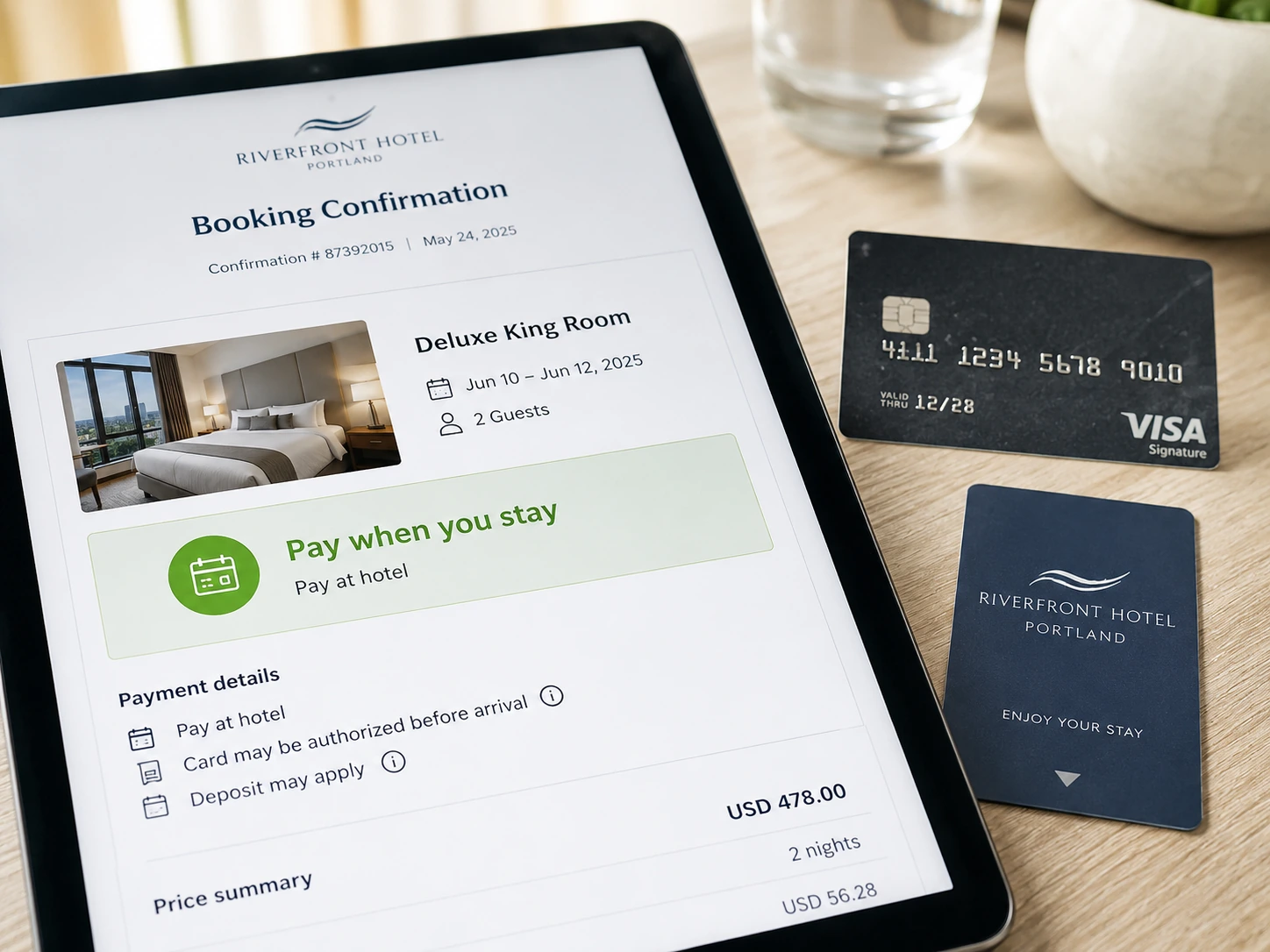
“Pay when you stay” usually means the hotel collects the main room payment—not that your card will remain untouched until arrival.
A hotel may still verify your card, place a temporary authorization, collect a deposit, or process a charge when the reservation terms allow it. The payment label identifies the general arrangement, while the rate rules control the actual timing.
About this guidance: Travel Fine Print draws on firsthand experience with hotel reservations, payment processing, booking channels, resort operations, and traveler billing issues to explain how payment terms work in practice. This guidance focuses on the operational difference between who collects the payment, when a hotel may verify or charge a card, and what the rate rules actually permit—details that are often much clearer inside booking systems and hotel policies than in the headline label shown to travelers.
Why “Pay When You Stay” Can Still Lead to an Early Hold or Charge
“Pay when you stay” describes the general payment arrangement, but it does not override the conditions attached to the rate.
The hotel may still be permitted to:
- Verify that the card is valid
- Place a temporary authorization
- Collect a required deposit
- Charge the reservation after the cancellation deadline
- Process payment early when the rate is restricted or nonrefundable
That does not necessarily mean the hotel charged the full room balance early. A pending authorization, booking deposit, and completed payment are different transactions, even though each may appear as card activity before arrival.
The safest way to read the label is this: “pay when you stay” explains the expected payment path, while the rate rules determine what the hotel may do before check-in.
To decide whether paying at the property is better than prepaying, see Hotel Payment Options: Pay Now or Pay at Hotel.

Pay at Hotel Does Not Mean Free Cancellation
“Pay at hotel” describes how the main room payment is expected to be collected. It does not automatically mean the reservation can be canceled without a penalty.
A pay-at-hotel rate may become partially or fully chargeable after the cancellation deadline. A prepaid rate may still be refundable when canceled within its stated terms. Payment timing and cancellation flexibility must be checked separately.
Use the comparison below to separate the booking label from what can actually happen before check-in.
What It Sounds Like
- You will pay when you arrive
- Your card will not be charged before check-in
- The booking is more flexible
- The hotel only needs your card to hold the room
What Can Still Happen
- The hotel may verify your card
- A temporary hold may appear before arrival
- A deposit may be charged under the rate rules
- Payment may be collected after the cancellation deadline
See how payment terms differ between hotel rates.
Compare the same room type, total price, payment timing, and cancellation deadline before selecting a rate.
Travel Fine Print may earn a commission if you book through this link, at no extra cost to you.
Why Hotels May Hold or Charge Your Card Before Arrival
Hotels may interact with the card before check-in because the reservation creates financial risk for the property.
Even when the main room balance is expected at the hotel, the property may still need to confirm that the card is valid, secure a required deposit, or protect itself once the cancellation penalty begins.
Common reasons include:
- Card verification. The hotel confirms that the card information is valid.
- Temporary authorization. A pending hold may reserve part of your available credit or bank balance without becoming a completed payment.
- Deposit requirement. The rate may require one night, a percentage, or a fixed amount before arrival.
- Cancellation deadline. The hotel may process a charge once the reservation becomes partially or fully nonrefundable.
- Restricted rate terms. Some hotel-collected rates still allow payment before arrival.
- Higher-risk dates or stays. Resorts, holidays, events, long stays, and peak periods may carry stricter deposit or payment requirements.
The important question is not simply whether card activity appeared before arrival. It is what type of transaction appeared and whether the rate terms allowed it.
A Temporary Hold Can Still Affect the Money Available for Your Trip
A temporary authorization may not be a completed charge, but it can still reduce the credit or bank balance available before your stay.
- Available credit may be reduced. A pending hotel authorization can temporarily limit how much remains available on the card.
- Debit-card funds may be tied up. The amount may reduce the cash available in the connected bank account until the hold is released.
- Release timing may vary. The hotel may release the authorization, but the card issuer controls when the available balance reflects that release.
- The transaction may be misunderstood. A pending authorization can look like an early room charge even when the hotel has not completed the payment.
The risk is not only whether the transaction becomes final. It is whether the temporary amount leaves you with enough available credit or cash for the rest of the trip.
Hold, Deposit, Pending Charge, or Actual Charge?
Before deciding that a pay-at-hotel booking was charged incorrectly, identify what kind of card activity appeared.
Temporary Authorization Hold
A temporary authorization reserves part of your available credit or bank balance without necessarily becoming a completed payment. It usually appears as pending and may disappear after the hotel or bank releases it.
Deposit
A deposit is an amount collected under the reservation terms before or during the stay. It may be refundable, applied toward the final bill, or retained under specific cancellation or no-show rules.
Pending Transaction
A pending transaction has been initiated but has not fully posted. It may become a completed charge, change to a different amount, or drop off depending on how the hotel and card issuer process it.
Posted Charge
A posted charge is a completed payment. Compare the amount with the payment, deposit, and cancellation terms before assuming the hotel violated the pay-at-hotel arrangement.
For more detail, see Hotel Pending Charges: What They Mean and When They Drop Off and Hotel Deposits Explained: What They Mean and How They Work.
Before You Book
Check the Terms Behind the Pay-at-Hotel Label
The payment label is only the starting point. Open the full rate details and confirm what the hotel or booking platform may do before arrival.
Use the rate rules before you choose.
After finding a hotel, open the details attached to each rate. Confirm who collects payment, when the reservation becomes chargeable, and whether deposits, authorizations, taxes, or property fees may be collected separately.
Before booking: Open the payment and cancellation details attached to the exact room and rate you are considering. A lower headline price may carry stricter timing, refund, deposit, or no-show conditions.
Travel Fine Print may earn a commission if you book through this link, at no extra cost to you.
What to Do If You Were Charged Before Arrival
If card activity appears before check-in, first determine whether it is a temporary authorization, deposit, pending transaction, or completed charge.
Start with these checks:
- Review the transaction status. A pending amount may still be an authorization rather than a completed payment.
- Compare the amount with the rate. One night, a percentage, or a fixed amount may indicate a deposit rather than full prepayment.
- Check the confirmation. Look for deposit, prepayment, card-verification, cancellation-deadline, or no-show language.
- Confirm who processed it. The merchant name may identify whether the hotel, booking platform, or payment provider controls the transaction.
- Contact the hotel with a specific question. Ask whether the amount is a hold, deposit, or completed charge and when it should be released, applied, or refunded.
- Save the documentation. Keep the booking terms, confirmation, screenshots, card activity, and the hotel’s written response.
If the hotel says the transaction was allowed, ask where that rule appears in the reservation terms. If the amount does not match the disclosed policy, request a correction or written explanation before contacting the card issuer.
A hotel hold, deposit, and early room payment are different transactions. Before challenging the amount, confirm whether it is pending or posted, identify who processed it, and compare it with the payment, deposit, and cancellation terms attached to the reservation.
Common Hotel Payment Terms
Frequently Asked Questions
These answers explain what pay-at-hotel labels usually mean and why a hotel may still verify, hold, or charge a card before arrival.
What does pay when you stay mean?
“Pay when you stay” usually means the hotel or property collects the main room payment instead of the booking site charging you upfront.
It does not necessarily mean your card will remain untouched until check-in. The hotel may still verify it, place a temporary hold, collect a deposit, or process a permitted charge before arrival.
What does payment upon check-in mean?
Payment upon check-in generally means the main room balance is expected when you arrive and register at the hotel.
The hotel may still require a card in advance to guarantee the reservation, verify available funds, collect a deposit, or enforce a late-cancellation or no-show policy.
What does pay at property mean?
“Pay at property” usually means the hotel or accommodation collects the payment rather than the booking platform.
The phrase identifies the payment collector, but the rate details still determine when the property may verify, hold, or charge the card.
Does pay when you stay mean I pay at check-in?
Often, but not always. Some properties collect the main balance at check-in, while others settle it at checkout or process it shortly before arrival under the reservation terms.
Check the payment date, deposit language, cancellation deadline, and authorization terms attached to the exact rate.
Can a hotel charge my card before I arrive?
Yes, when the booking terms allow it. Early card activity may involve verification, an authorization hold, a required deposit, a cancellation penalty, or payment under a restricted rate.
First check whether the transaction is pending or posted and compare the amount with the terms shown in the confirmation.
Is a hotel hold the same as a charge?
No. A temporary authorization hold reduces available credit or bank funds but is not necessarily a completed payment.
A posted charge is a completed transaction. For more detail, see Hotel Pending Charges: What They Mean and When They Drop Off .
How can I avoid surprise hotel charges before arrival?
Open the full rate details and look for terms such as deposit, prepayment, authorization, cancellation deadline, nonrefundable, card verification, and payment due.
Save the confirmation after booking so you can compare any later card activity with the terms you accepted.
Bottom Line
“Pay when you stay,” “pay at hotel,” and “pay at property” usually mean the hotel or property will collect the main room payment rather than the booking platform charging you upfront. They do not guarantee that your card will remain untouched until arrival.
Before booking, check the payment date, deposit requirement, authorization language, cancellation deadline, and no-show rule attached to the exact rate. The label explains the general payment path; the booking terms control what may actually happen to your card.
Related Guides
These guides explain the hotel payment terms, charges, and refund rules that can affect a pay-at-property reservation.
Deposits, Holds, and Early Charges
- Why Did My Hotel Charge Me Before Arrival?
Review the common reasons a hotel may process card activity before check-in.
Refund and Rate Restrictions
- Hotel Refund Policy: What Travelers Should Check Before Booking
See how the rate terms, cancellation deadline, and payment collector affect refunds. - Non-Refundable Hotel Rates: The Risk Travelers Miss
Understand what you may give up when choosing a cheaper restricted rate.