
Travel Decision Guide
Rome to Civitavecchia Cruise Port: Train, Shuttle or Private Transfer?
Getting from Rome to Civitavecchia looks like a simple transportation decision until cruise luggage, train platforms, the final port connection and a fixed embarkation time enter the equation. The train is the cheapest practical option, a shared shuttle removes much of the luggage burden, and a private transfer is the easiest choice when the budget allows.
The decision: Take the train when keeping the cost low matters most and you can comfortably manage your own bags. Choose a shared shuttle when you want door-to-port convenience at a lower price than private service. Choose a private transfer when minimizing friction on embarkation day is worth the premium.
About This Guidance
Travel Fine Print compares the full Rome-to-Civitavecchia journey: getting out of your hotel, handling cruise luggage, reaching the platform, boarding and leaving the train, the final connection to the ship, shared shuttle tradeoffs, private transfers, Fiumicino Airport transfers and whether going to Civitavecchia the day before creates the better trip.
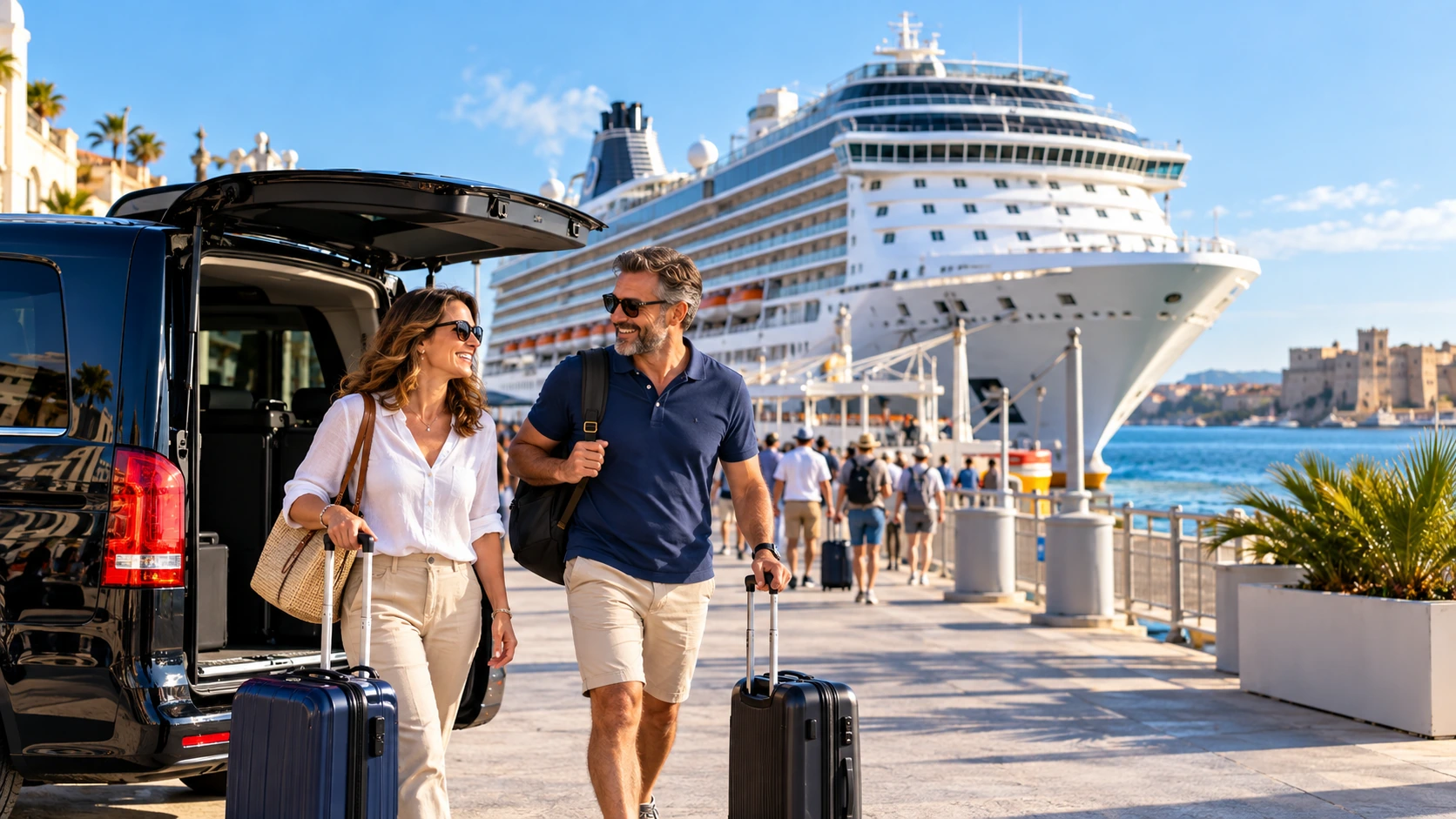
The easiest Rome-to-Civitavecchia trip is not necessarily the cheapest one; cruise luggage and the final port connection are the tradeoffs that change the decision.
Quick Answer
What is the best way to get from Rome to Civitavecchia Cruise Port?
For travelers comfortable handling their own luggage, the train is the lowest-cost practical way to travel from Rome to Civitavecchia. The important fine print is that arriving at Civitavecchia station does not by itself put you at your ship: cruise passengers can use a special station-to-ship shuttle that currently costs €6 each way and takes about 15 minutes.
For many cruise passengers with larger bags, a shared door-to-port shuttle offers the better balance of price and convenience. A private transfer is the easiest option when the budget allows because it eliminates the station, platform, luggage handling and final-port connection.
The Decision in 30 Seconds
Choose based on how much luggage friction you want to manage.
| Your situation | What TFP would prioritize |
|---|---|
| You are packing light and want the lowest cost | Train — viable and inexpensive if you can comfortably manage every bag yourself. |
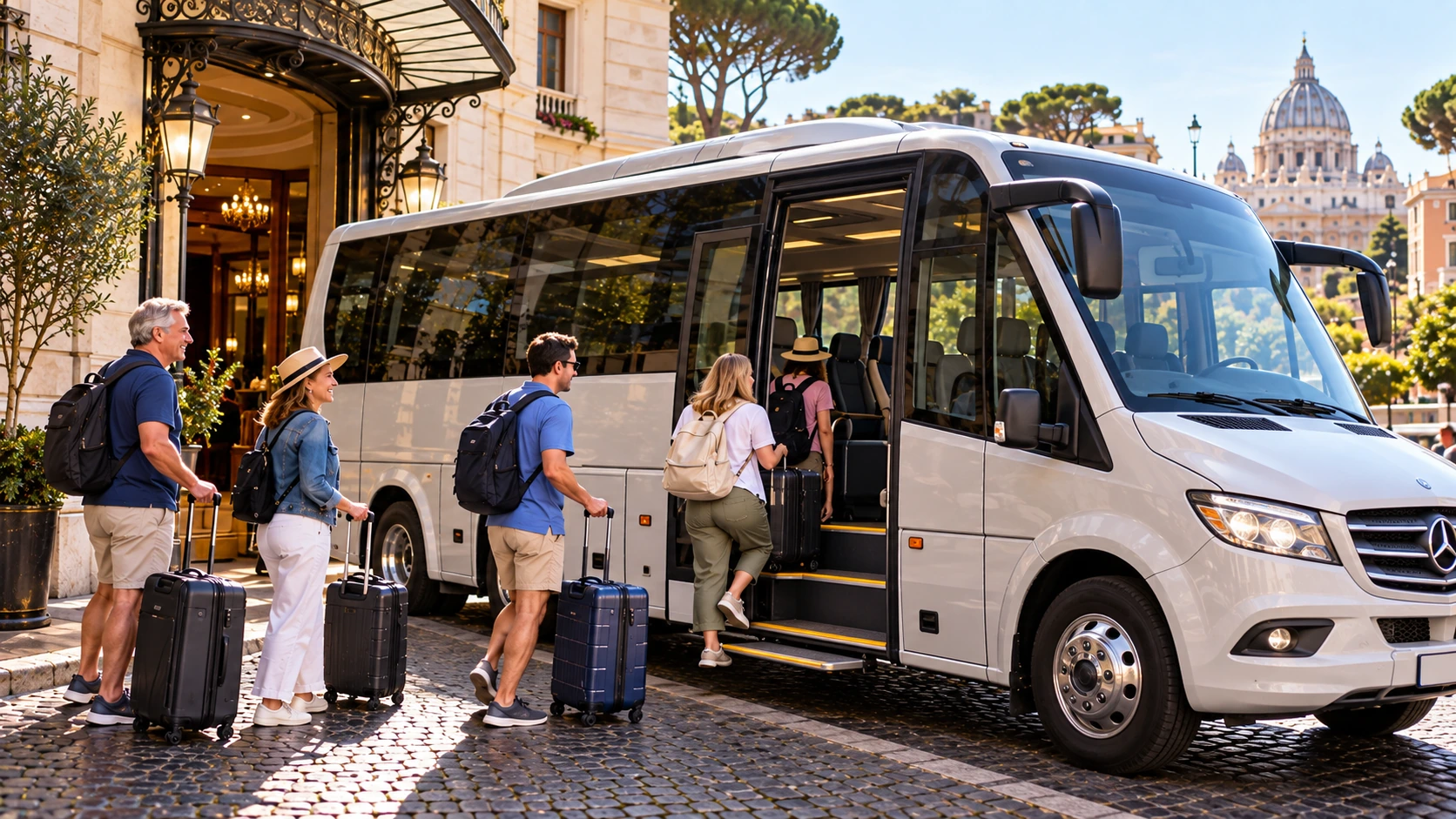
| You have cruise luggage but still care about price | Shared shuttle — the value choice when avoiding stations and bag handling matters. |
| You want the simplest embarkation morning | Private transfer — hotel pickup and direct cruise-port transportation. |
| You are traveling as a couple, family or small group | Price private against shared — the per-person premium can narrow as the party grows. |
| You land at FCO and are going directly to the cruise | Airport-to-port private transfer — avoid backtracking into Rome. |
| You want to remove same-day transfer stress entirely | Stay in Civitavecchia the night before. |
Rome to Civitavecchia Map
The train, airport and door-to-port options solve different parts of the trip.
The train route starts in Rome and ends at Civitavecchia station, while road transfers continue into the cruise-port area. Because the station and cruise terminal sit close together at this regional scale, the map uses one clean Civitavecchia port-area marker and explains the last-mile distinction in the legend.
The Civitavecchia marker represents the port area rather than trying to label the station and cruise terminal separately at this regional scale. Lines are decision guides, not exact rail or road routes.
Option 1 · Best for Lowest Cost
Rome to Civitavecchia by train: viable, inexpensive and more physical than it sounds.
The train is a legitimate choice, especially if you travel light and are comfortable using Italian rail. Regional service connects Rome with Civitavecchia, and the rail portion is straightforward enough that many cruise passengers choose it.
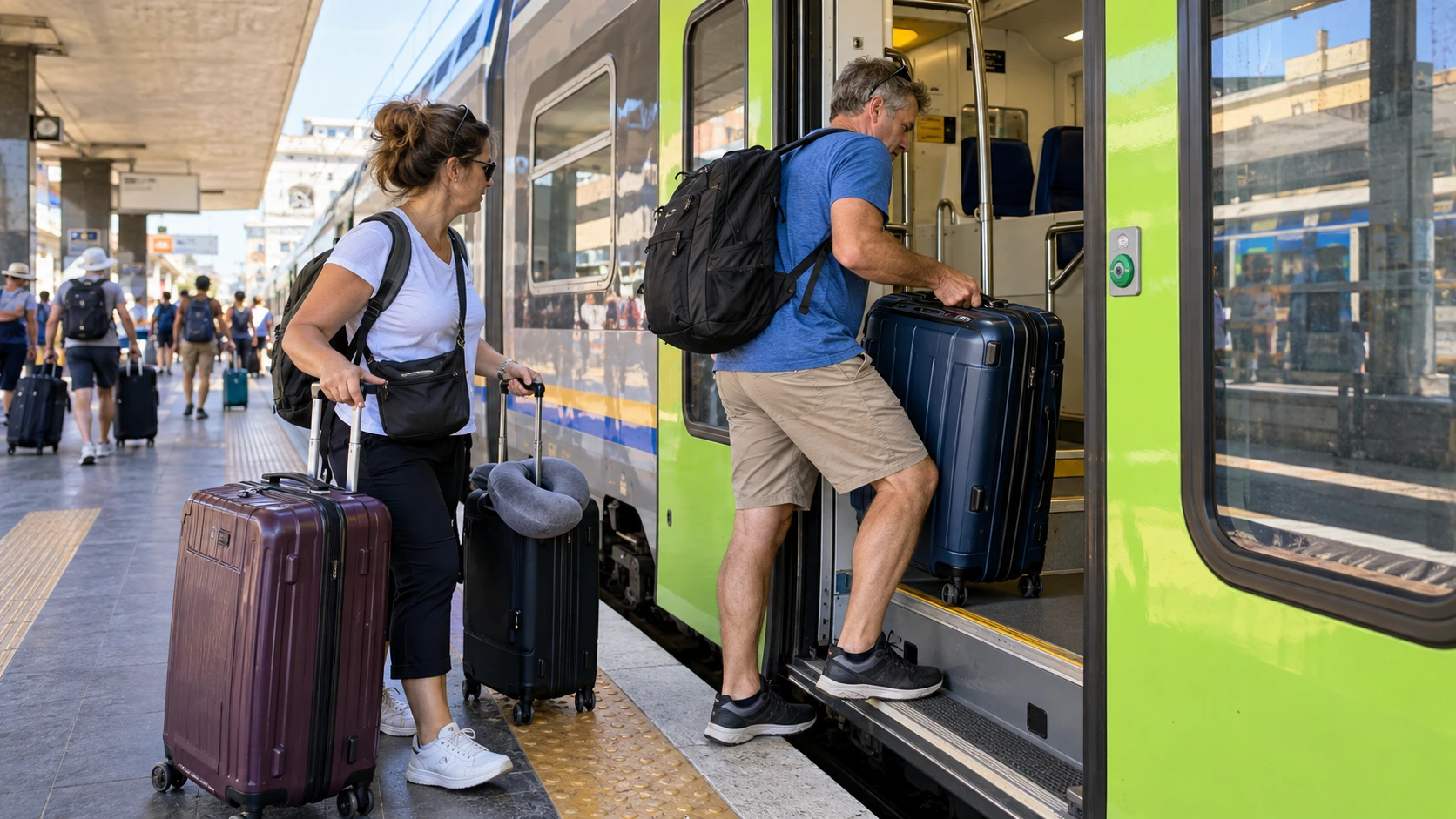
The tradeoff is everything surrounding the train ride. You need to get from your Rome hotel to the station, move your cruise luggage through the station and onto the correct platform, lift or roll it onto the train, manage it during the journey, get it off again in Civitavecchia and then complete the final trip to your ship.
Port Mobility currently operates a special public-transport service for cruise passengers between Civitavecchia station and the cruise ships on ship days. It runs roughly every 20–25 minutes, takes about 15 minutes and costs €6 each way, with tickets sold onboard.
TFP Tip
Evaluate the train based on your bags, not just the ticket price. A route can be easy on a map and still be tiring when you are moving two large cruise suitcases through stations and platforms.
Option 3 · Easiest When Budget Allows
Private transfer: the simplest Rome-to-Civitavecchia option.
A private transfer solves almost every friction point at once: pickup from your Rome location, room for your cruise luggage, no station or platform, no shared departure schedule and direct transportation toward the cruise port.
There are two useful booking paths here. Kiwitaxi provides a route-specific Rome-center-to-Civitavecchia transfer page with different vehicle categories, while the Viator product we selected is explicitly cruise-focused and marketed as a private door-to-ship transfer.
Route-specific private
Compare private cars and minivans
Useful when you want to compare vehicle classes for a direct Rome-center-to-Civitavecchia trip.
Compare the Kiwitaxi private-transfer options →Cruise-specific private
Private door-to-ship transfer
Useful when the cruise-port experience itself is the priority and you want a product built specifically around embarkation.
Compare the Viator private door-to-ship transfer →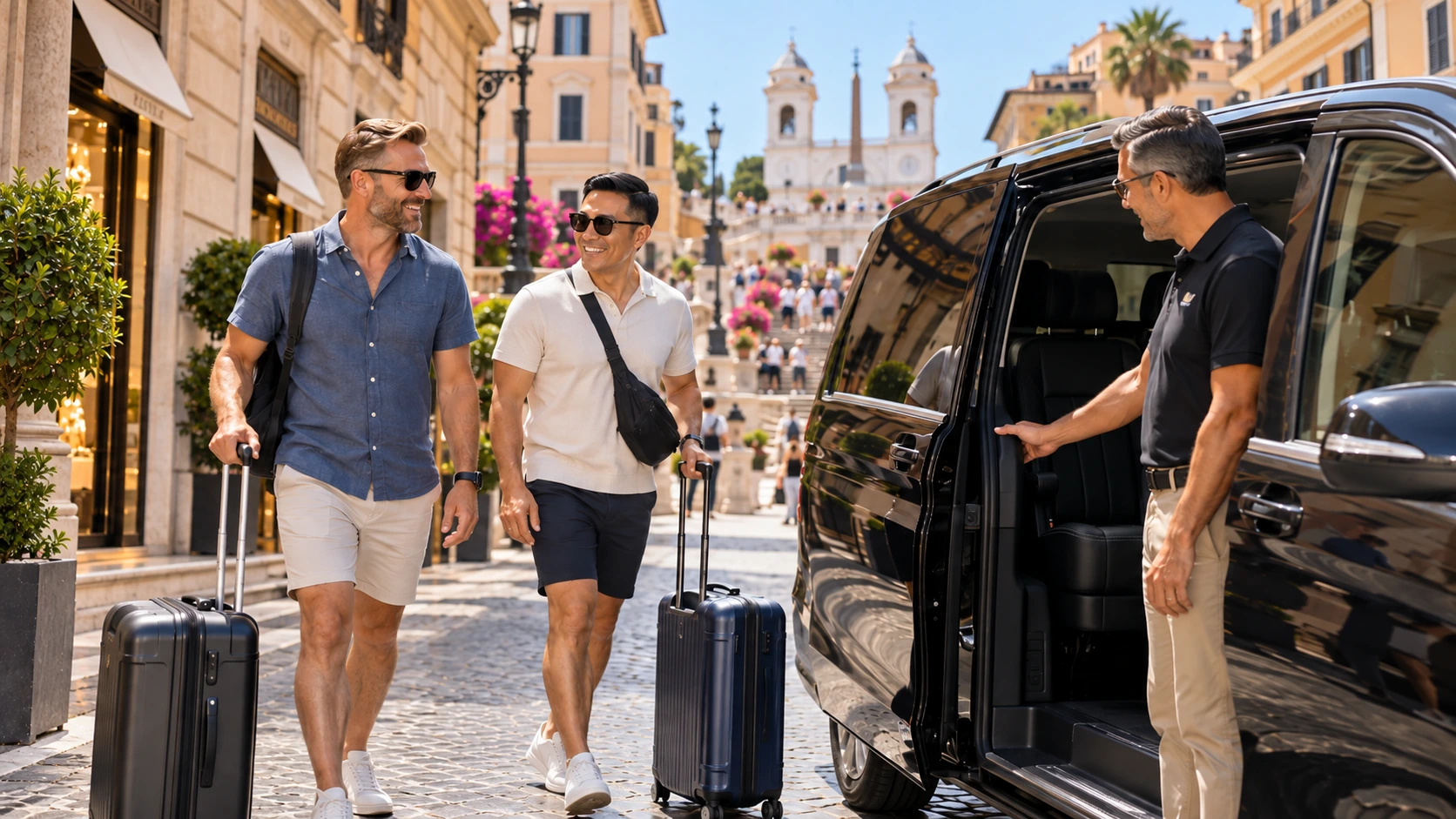
Flying In
Fiumicino Airport to Civitavecchia: do not automatically go into Rome first.
If you land at FCO and are heading directly to a cruise or to a pre-cruise hotel in Civitavecchia, routing through central Rome can add unnecessary transportation steps. A direct airport-to-port transfer is the cleaner comparison.
This is especially relevant when you have cruise luggage, are traveling as a couple or family, or simply want to leave the airport once and arrive at the next destination without another rail or taxi connection.
An Unperceived Option
What if you go to Civitavecchia the day before?
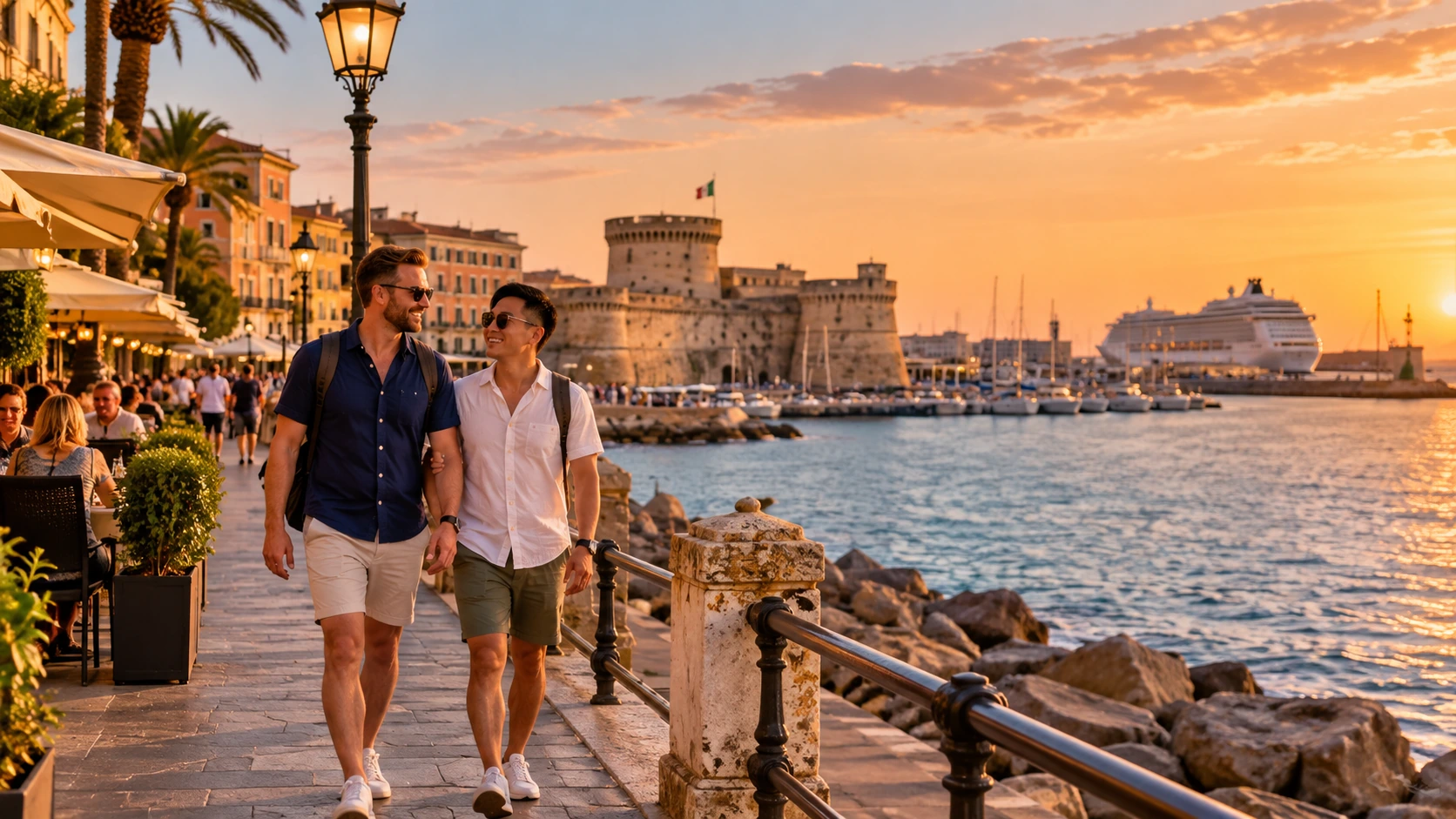
Staying in Civitavecchia is not only about reducing the risk of a same-day transfer. The city has a waterfront promenade, the Marina and Pirgo area, Fort Michelangelo, restaurants and a small historic center, so arriving the afternoon before the cruise can feel like an easy coastal extension rather than simply sleeping beside the port.
The itinerary decision is simple: stay in Rome when one more evening in the city matters more; stay in Civitavecchia when removing embarkation-day transportation entirely sounds better.
Stay in Rome
Best when maximizing Rome time matters and you are comfortable transferring to the port on cruise morning.
Compare a morning shared transfer →Stay in Civitavecchia
Best when a relaxed waterfront evening and a much simpler embarkation morning are worth giving up one final night in Rome.
Compare hotels near Civitavecchia Port →I have spent time in Civitavecchia before and remember strolling through town, taking in the coast and beach, and seeing plenty of local life despite the cruise traffic. I would not trade a prime Rome sightseeing day for it, but as a pre-cruise afternoon and evening, it can be a very pleasant way to slow the trip down.
After the Cruise
Civitavecchia to Rome uses the same decision in reverse.
The reverse trip has even more search demand, and the same tradeoffs apply. Train is the budget option, but you still need to get from the ship to the station and then manage luggage through the rail journey. A shared or private transfer removes that friction and is especially attractive when you are heading directly to a Rome hotel or FCO.
For travelers who want to avoid handling luggage through the station after disembarkation, the shared transfer below provides a practical middle ground between the train and a private car.
Compare the shared Civitavecchia-to-Rome/FCO transfer →
Port Mobility’s free cruise shuttles connect the cruise piers with Largo della Pace, while the special paid cruise-passenger shuttle connects ships with Civitavecchia station on ship days.
The Fine Print That Matters
The cheapest transportation price does not describe the entire trip.
The train stops at Civitavecchia station, not at your ship
Plan for the final port connection rather than treating the rail fare as the complete journey.
The special station-to-ship shuttle is currently €6 each way
Port Mobility says the cruise-passenger service operates on ship days, takes about 15 minutes and generally runs every 20–25 minutes.
Free port shuttles and the station shuttle are different services
Free cruise shuttles connect the piers with Largo della Pace. The direct station-to-ship service is a separate paid public-transport service.
Cruise luggage changes the train calculation
Count every bag you will need to move through the station, platform and train before assuming rail is the obvious choice.
Shared transfer is not private service
You may wait for or ride with other cruise passengers. The savings come from sharing the vehicle and schedule.
“Private transfer” can mean different port access
Read the exact pickup/drop-off language. Cruise-specific products may describe door-to-ship or ship-side access more clearly than a generic city-to-city transfer.
FCO and central Rome are different starting points
If you are coming directly from the airport, compare airport-to-port transportation rather than adding an unnecessary trip into Rome.
My Take
I would pay to avoid carrying cruise luggage through the train journey.
I have no problem using trains around Europe when I am traveling light. Cruise luggage changes the calculation for me. Getting multiple bags to the station, down to the platform, onto the train, off again in Civitavecchia and then onto another shuttle is exactly the kind of friction I would rather pay to eliminate.
The shared shuttle is the value option I would compare first when price matters. If the private-transfer premium were reasonable for the number of people traveling, I would choose private. I like the idea of leaving the Rome hotel once, putting the luggage in the vehicle once and arriving at the cruise port without another transportation problem to solve.
I would still recommend the train to someone traveling light who is comfortable handling every bag. The issue is not whether the train works. It does. The issue is whether the savings are worth the physical and logistical work on embarkation day.
TFP Recommendation
Use the train to save money; use a transfer to save effort.
The Recommendation
For travelers with substantial cruise luggage, a door-to-port transfer is the stronger default. The shared shuttle offers the best value when you want to avoid the train without paying for a private vehicle.
If budget allows, private transfer is the easiest experience. Keep the train as the budget choice when you are mobile, packing relatively light and comfortable handling every part of the journey yourself.
Your Next Step
Choose how much luggage handling and transportation coordination you want on embarkation morning.
Smarter travel, straight to your inbox
Booking choices, hidden costs, travel rules, and useful fine print — explained clearly.
Before You Go
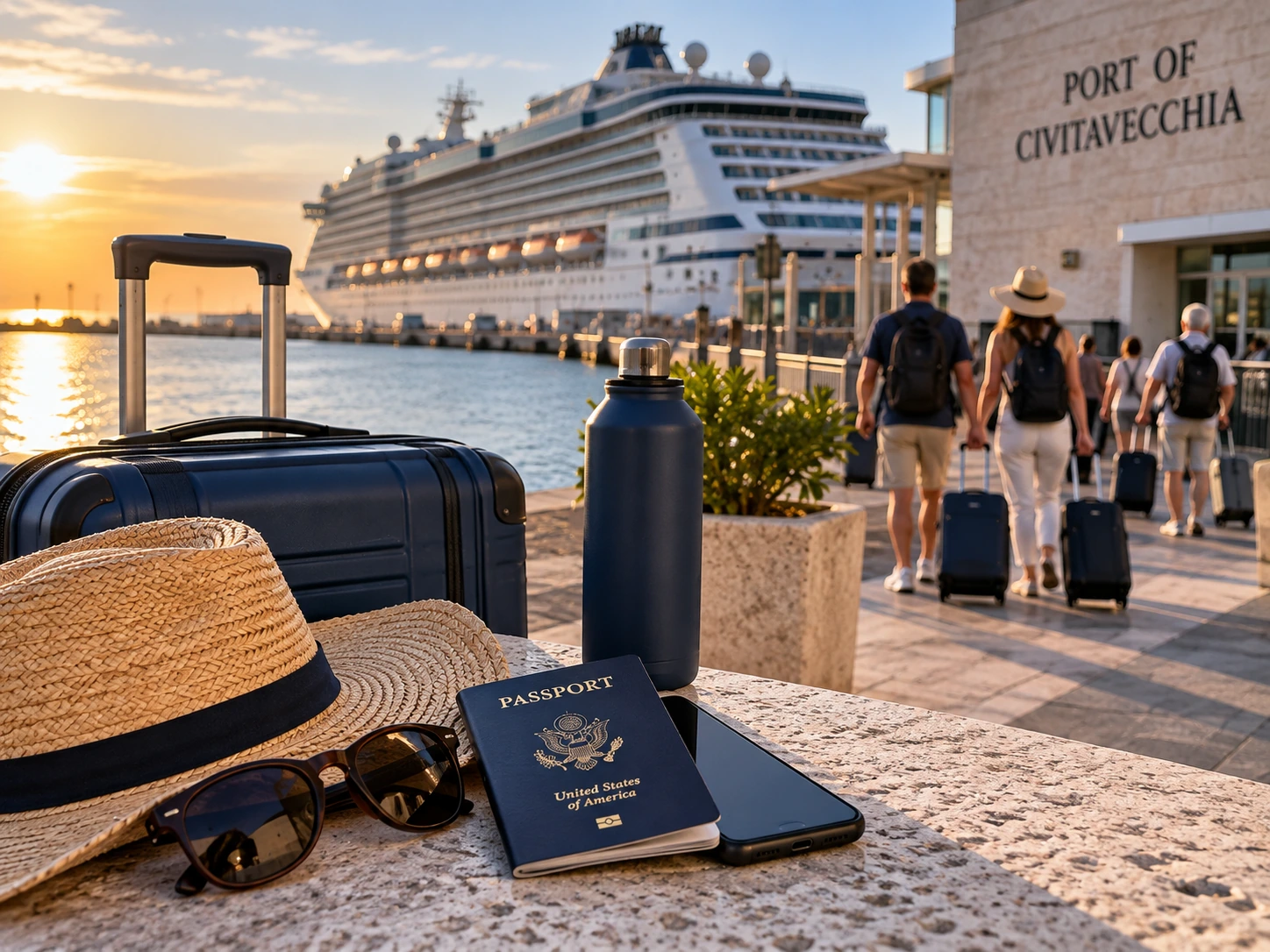
Connect your cruise-port transfer with the rest of your Rome plan.
Your hotel location, airport arrival, luggage strategy and mobile connection can all affect whether the train feels easy or whether a door-to-port transfer is worth paying for.
Where to Stay in Rome
Your Rome hotel location changes how easy it is to reach a train station or meet a transfer on cruise morning.
Compare Rome neighborhoods →Rome Airport Transfer
If you are staying in Rome before the cruise, decide how you will get from FCO into the city first.
Compare Rome airport options →Luggage Storage Rome
Storage can help if hotel checkout and your port departure leave an awkward gap in the day.
Plan your luggage strategy →Best eSIM for Italy
Mobile data helps with driver communication, train changes, port details and cruise-day confirmations.
Compare Italy eSIM options →FAQ
Rome to Civitavecchia: common questions
What is the cheapest way to get from Rome to Civitavecchia?
For most travelers, the train is the lowest-cost practical option. Remember to include the cost and logistics of reaching your Rome station and getting from Civitavecchia station to the ship.
Is the train from Rome to Civitavecchia easy with luggage?
It can be if you pack light and are comfortable moving your own bags through stations, platforms and train doors. With multiple large cruise suitcases, the physical effort is the main tradeoff.
How do I get from Civitavecchia train station to my cruise ship?
Port Mobility currently offers a special cruise-passenger shuttle between Civitavecchia station and the cruise ships on ship days. It costs €6 each way, takes about 15 minutes and generally operates every 20–25 minutes.
Is a shared shuttle from Rome to Civitavecchia worth it?
It can be a strong value when you have cruise luggage and want door-to-port transportation without paying the full cost of a private transfer. Compare the shared shuttle →
Is a private transfer from Rome to Civitavecchia worth it?
Private transfer makes the most sense when convenience, luggage handling, hotel pickup and a predictable embarkation morning matter more than minimizing transportation cost. Compare private transfer options →
How do I get from Fiumicino Airport to Civitavecchia?
If you are going directly from FCO to the port or to a Civitavecchia hotel, compare a direct airport-to-port transfer rather than automatically routing through central Rome. Compare FCO-to-port transfers →
Should I stay in Civitavecchia the night before my cruise?
It can be a smart choice when removing cruise-morning transfer risk matters more than one final evening in Rome. Civitavecchia also has a waterfront, restaurants, Fort Michelangelo and local coastal life, so the overnight does not have to feel purely functional. Compare hotels near the port →
How do I get from Civitavecchia to Rome after a cruise?
The same options work in reverse: train for lower cost, shared transfer for a middle ground, and private transfer for the least luggage handling. Free port shuttles connect cruise piers with Largo della Pace, while the special paid cruise-passenger shuttle connects ships with Civitavecchia station. Compare the shared transfer to Rome or FCO →
Free Travel Guide
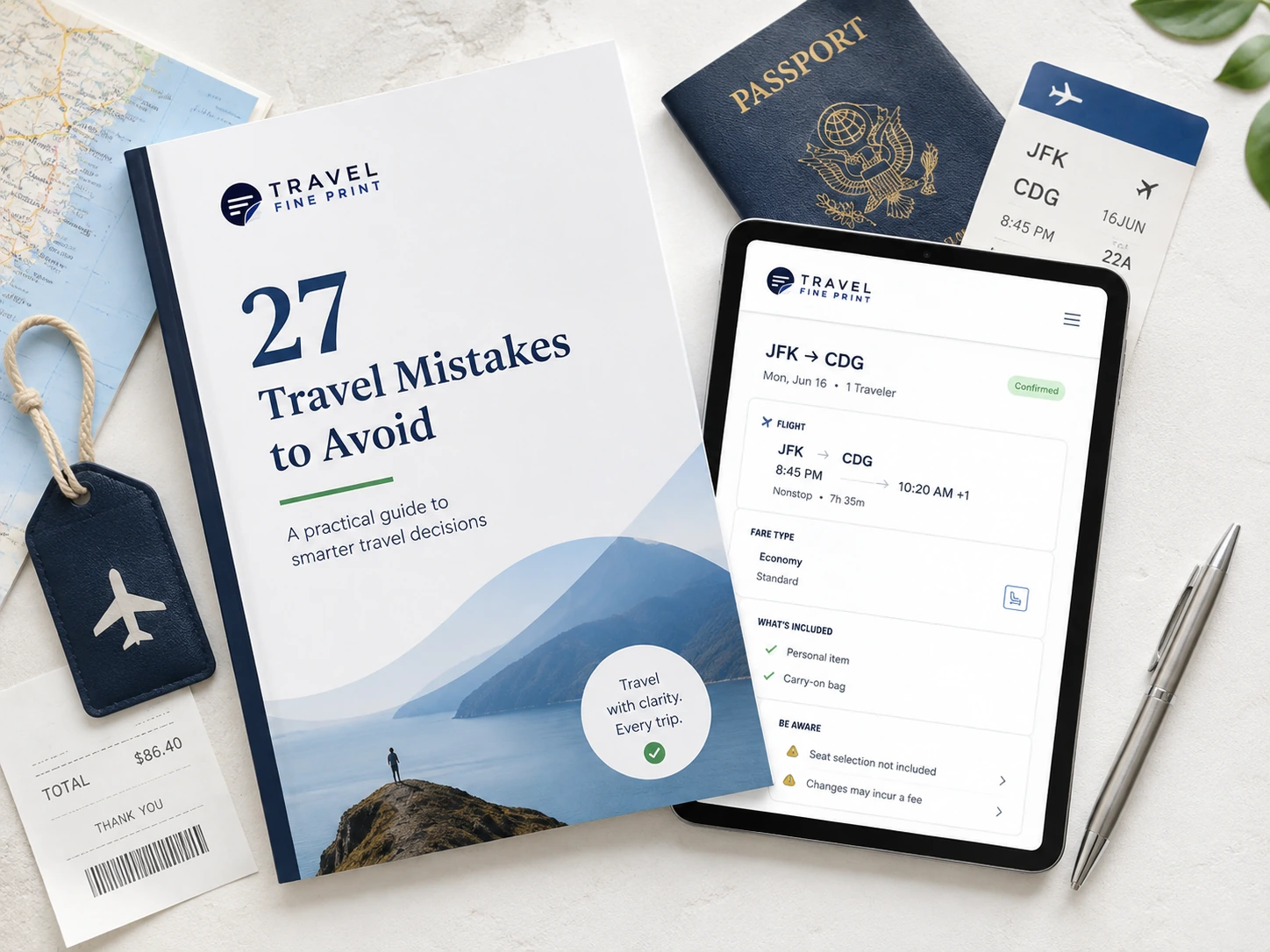
Avoid the travel mistakes that can cost you money, flexibility, or time.
Get 27 Travel Mistakes That Cost Travelers Thousands — a practical guide to booking mistakes, hidden costs, travel rules, and decisions worth understanding before they become a problem.
- Spot booking details that are easy to overlook
- Understand where hidden costs can appear
- Recognize when a cheaper option comes with a tradeoff
- Make travel decisions with fewer surprises
You’ll also receive occasional practical guidance from Travel Fine Print on booking choices, hidden costs, travel rules, and the fine print worth understanding. Unsubscribe anytime.