
Hotel Payment Guide
When Does a Hotel Charge Your Card? What Travelers Should Know
Hotels can charge or authorize your card at booking, before arrival, at check-in, during the stay, or after checkout. The timing depends on the rate type, deposit rules, cancellation deadline, hotel policy, and the kind of transaction being processed.
The decision: A hotel charge before arrival is not automatically wrong. First determine whether it is a temporary authorization, deposit, prepayment, or completed charge—and whether that transaction was permitted by the rate you booked.
About This Guidance
This guide focuses on hotel payment timing, advance charges, temporary authorizations, deposits, prepaid rates, check-in holds, final folios, and third-party booking payment paths.
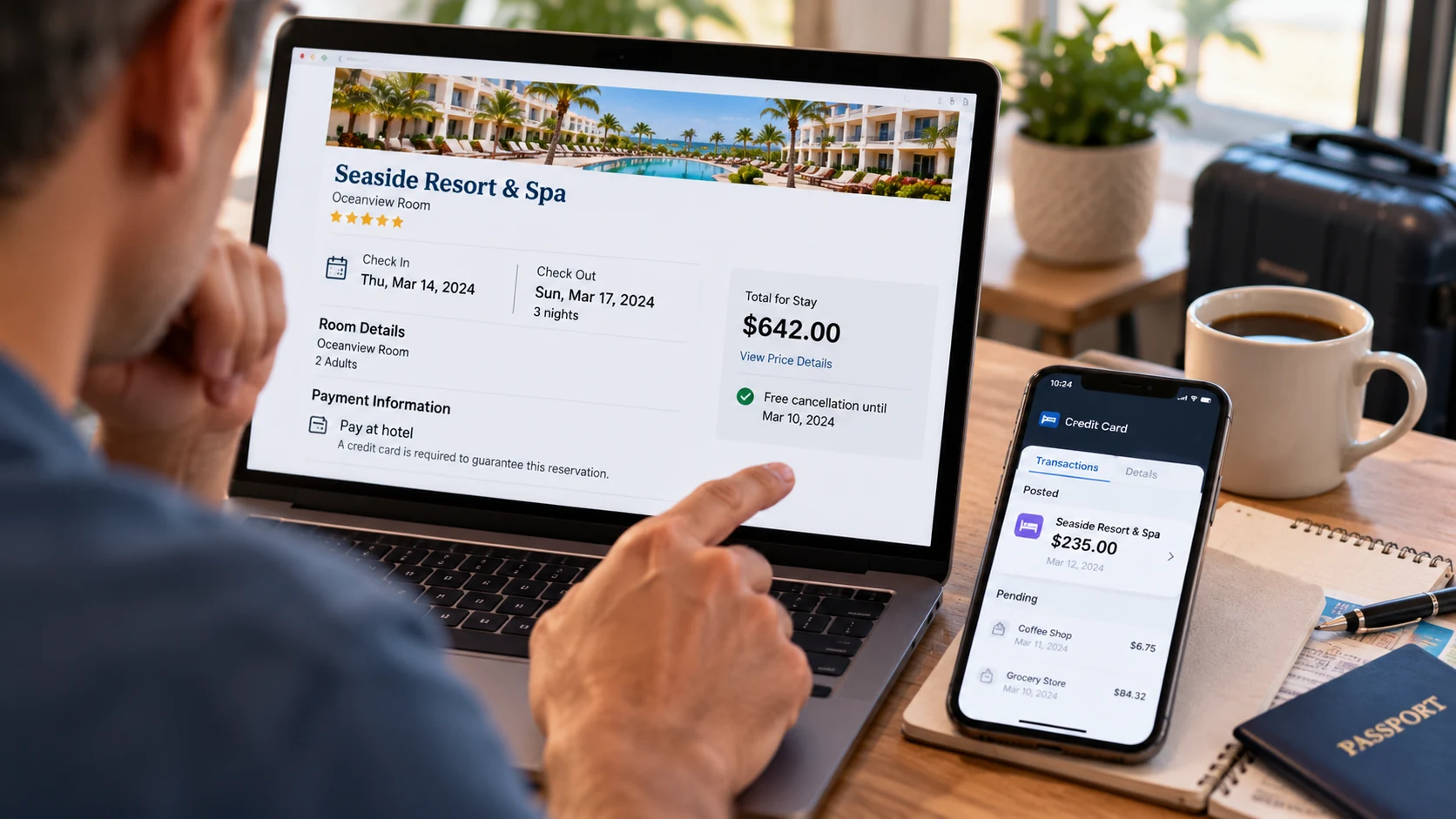
A hotel charge can appear before check-in even when the stay has not started. The key is to match the transaction to the payment terms attached to the reservation.
Quick Answer
A hotel may charge your card before, during, or after the stay.
Some hotels charge at booking because the rate is prepaid, nonrefundable, or deposit-based. Others wait until closer to arrival, check-in, checkout, or shortly after checkout.
A “Pay at Hotel” rate does not necessarily mean your card will remain untouched until check-in. The hotel may still be allowed to verify the card, place a temporary authorization, or collect a deposit before arrival.
The timing alone does not tell you whether the charge is correct. A before-arrival transaction may be a deposit, prepayment, card verification, or temporary hold. An after-checkout transaction may be a final bill, adjusted incidental hold, or another charge allowed by the hotel policy.
TFP rule: Check whether the transaction is pending or posted, then compare the amount and timing with your confirmation, payment policy, cancellation deadline, and final hotel folio.
The Decision in 30 Seconds
What does the timing usually tell you?
| When the card activity appears | What it may mean |
|---|---|
| At booking | Prepayment, deposit, or card verification. Common with prepaid, nonrefundable, advance-purchase, package, or deposit-based rates. |
| Before arrival | Authorization, deposit, or policy-based charge. It may happen when the cancellation deadline passes or the hotel reviews upcoming arrivals. |
| At check-in | Room payment plus an incidental hold. Taxes, fees, or a remaining room balance may also be collected. |
| After checkout | Final charge or adjustment. A prior hold may release, adjust, or convert to a posted charge. |
If you are still choosing a hotel, compare the payment timing attached to the available room offers before assuming every rate at the same property will be charged the same way.
Payment Timing
A hotel can charge your card at several stages of the stay.
One reservation may only require a card to guarantee the room, while another may trigger a deposit, temporary hold, or full payment before you arrive. That is why payment timing can look inconsistent even when both bookings are legitimate.
The important question is not only when the transaction appears, but what kind of transaction it is and whether the booking terms allowed it.
Check the payment terms attached to current hotel offers for your dates →
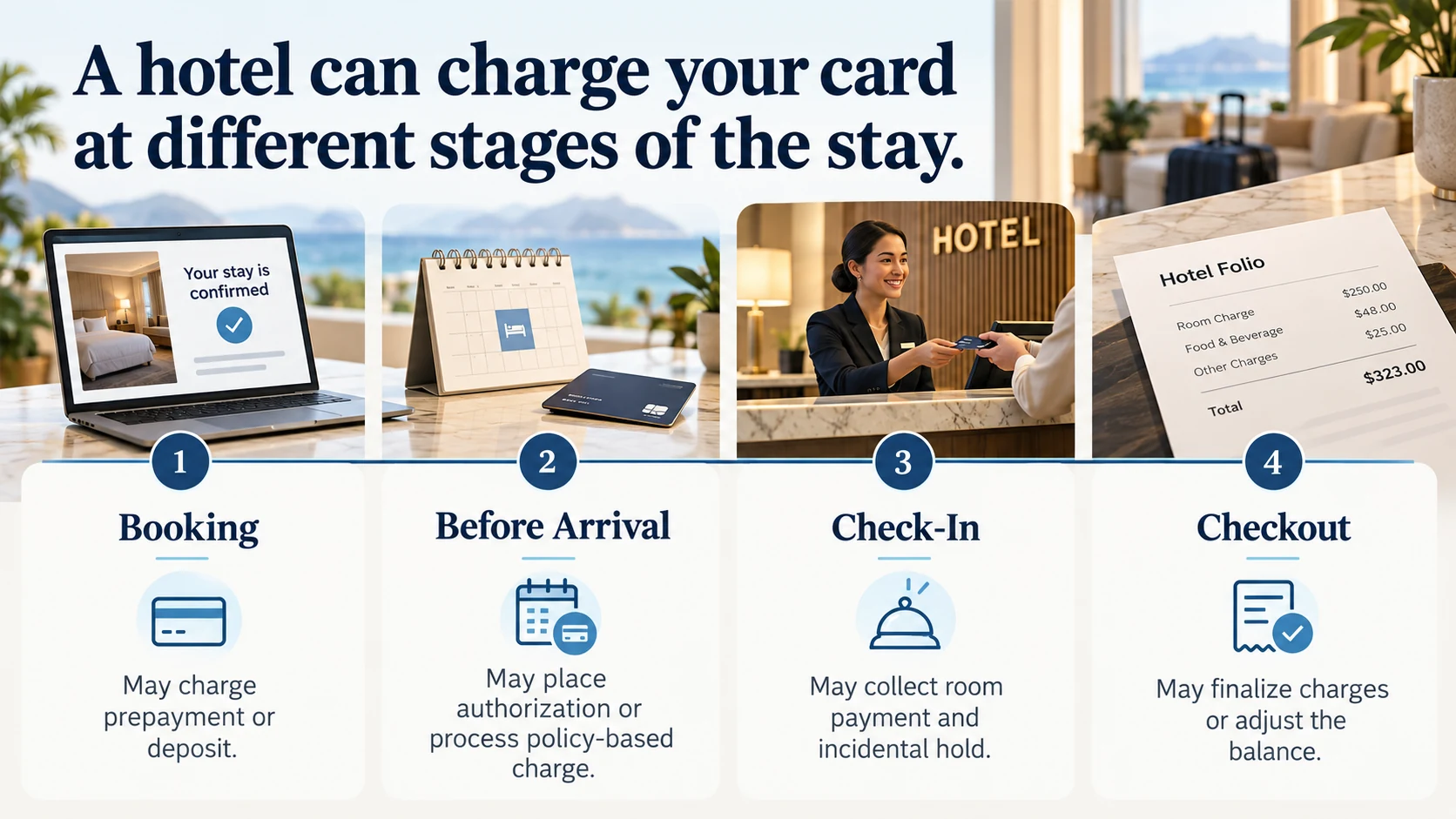
At Booking
Some hotels charge immediately when you reserve the room.
This is most common with prepaid rates, nonrefundable rates, advance-purchase discounts, package rates, or reservations that require a deposit.
Full prepayment
The entire stay is charged at booking under the rate rules.
One-night deposit
The hotel collects one night upfront and applies it toward the reservation.
Percentage-based deposit
A portion of the stay is charged to secure the booking.
Advance-purchase charge
A discounted rate may require payment immediately and may have stricter cancellation rules.
Card verification
The hotel may authorize the card temporarily without completing a full charge.
A charge at booking is not automatically a mistake. The key is whether it matches the rate you selected. A cheaper rate may come with stricter payment rules, while a flexible rate may only require a card to guarantee the reservation.
When several room offers look similar, check which one requires payment now and which one only guarantees the room with a card before choosing on price alone.
If payment timing matters to you, see Pay Now vs. Pay at Hotel.
Before Arrival
Your card can be charged or authorized even if nothing happened at booking.
A hotel may place a hold or complete a charge a few days before check-in, when the cancellation deadline passes, or when staff review upcoming arrivals.
Card verification
The hotel checks that the payment method is still valid before arrival.
Temporary authorization
The hotel reserves funds without necessarily completing the charge.
Required deposit
A hotel or rate type may require a deposit closer to arrival even if one was not collected when you booked.
Cancellation deadline
Once the refundable period ends, the hotel may be permitted to collect some or all of the booking amount.
Peak dates or stricter rate rules
High-demand stays may have earlier or more restrictive payment requirements.
First diagnostic check
Is the amount pending or posted? A pending authorization may drop off or adjust. A posted charge is a completed payment and may need to be applied to the stay, refunded, or explained under the booking terms.
At Check-In
Room payment and incidental holds can happen together.
Check-in is often when the front desk confirms the card on file, collects any remaining room balance, charges taxes or fees due at the property, and places an incidental hold.
Remaining room balance
The unpaid portion of the stay may be collected if the reservation was not fully prepaid.
Taxes and fees
Local taxes, resort fees, destination fees, parking, or other property-collected charges may be added.
Incidental hold
A temporary authorization may cover room service, parking, minibar purchases, damage, or other possible extras.
Deposit adjustment
A prior deposit may be credited toward the amount now due.
An incidental hold is usually separate from the room price. It can make the total card activity look higher than the advertised nightly rate even when the final bill is correct.
For a deeper explanation of deposits and authorization holds, see Hotel Deposits: Refunds, Holds & When Hotels Can Keep Them.
After Checkout
Hotel card activity can continue after you leave.
A charge after checkout does not always mean the hotel added something new. It may be the final version of an earlier authorization, an adjusted balance, or another charge permitted by the hotel policy.
Final room balance
The completed charge for the stay may post after checkout if it was not fully settled earlier.
Adjusted incidental hold
A temporary authorization may be reduced, released, or converted into a completed charge.
Taxes or fees
Some property-level charges may post separately from the room rate.
Extras or policy charges
Parking, minibar, room service, damage, smoking, or missing-item charges may be added after review.
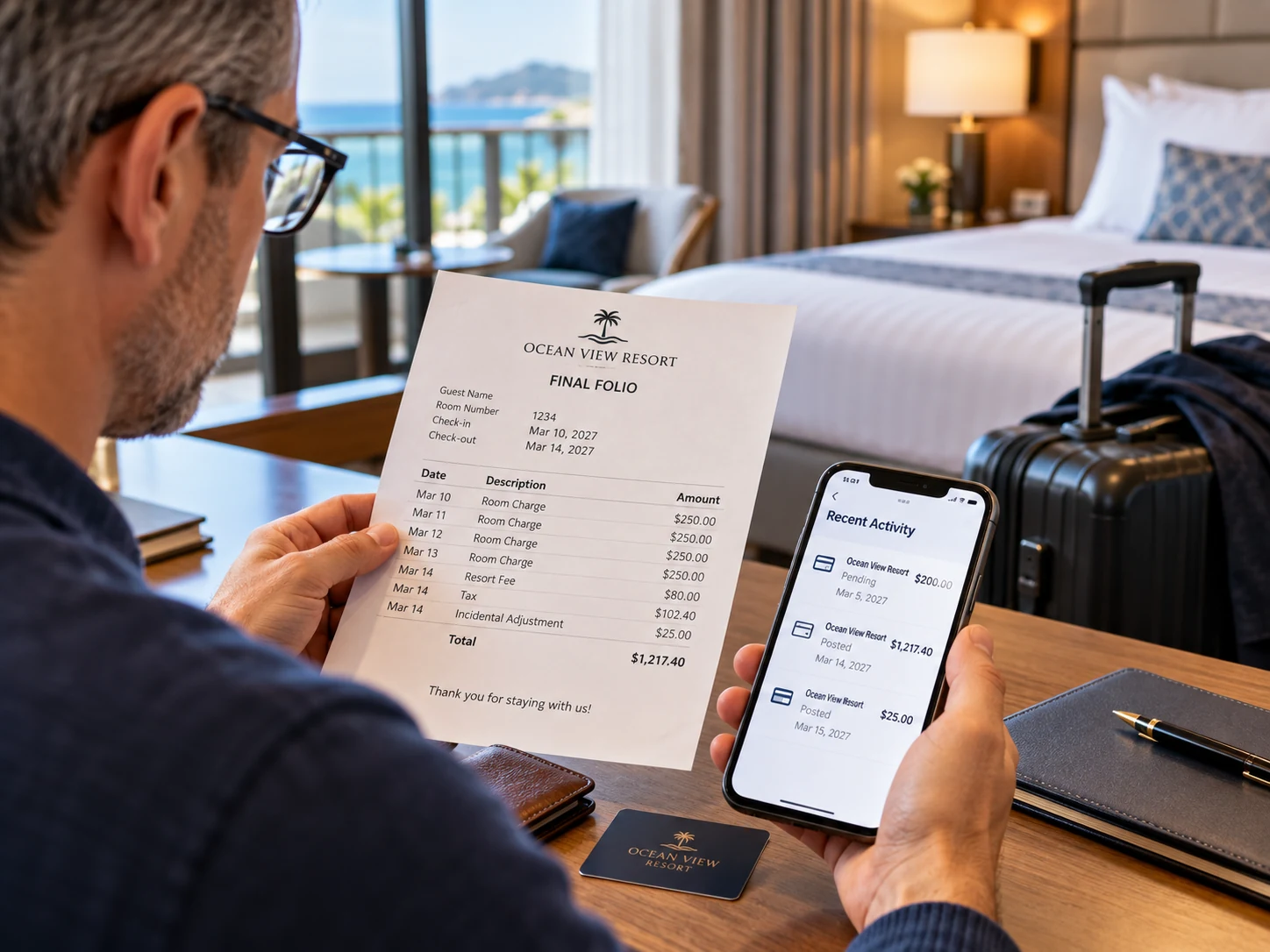
After checkout, compare the posted amount with your final folio and any prior authorization. If the charge is specifically post-stay, see Can Hotels Charge You After Checkout?
Transaction Type
Hold, deposit, prepayment, or final charge?
The transaction type matters more than the timing because each one behaves differently on your card statement.
Temporary hold or pre-authorization
Reserves part of your available credit or bank balance but is not always a completed payment. It may show as pending and later disappear after release.
Deposit
Money collected before or during the stay and usually applied toward the booking. It may be refundable, partially refundable, or nonrefundable depending on the hotel and rate.
Prepayment
Part or all of the stay is charged before arrival. This is common with prepaid, nonrefundable, package, and advance-purchase rates.
Final charge
The completed amount billed for the stay, which should generally reconcile with the folio, receipt, disclosed taxes and fees, and any extras.
If the amount is still pending, our Hotel Pending Charges guide explains how temporary authorizations can behave.

What to Check
Match the charge to the paperwork before assuming it is wrong.
Pending or posted?
A pending amount may be a temporary hold, while a posted amount is generally a completed charge.
What does the amount resemble?
One night, the full stay, taxes, fees, or a round-number authorization can help identify what the transaction may represent.
What does the confirmation say?
Look for deposit, prepayment, authorization, cancellation deadline, nonrefundable, or payment-policy language.
Did the cancellation deadline pass?
Some properties collect payment once the booking becomes partially or fully nonrefundable.
Was the rate prepaid or discounted?
Lower rates often come with stricter payment timing or cancellation restrictions.
Who collected the money?
If you booked through another company, the hotel may not be the merchant controlling the original payment or refund.
Does the folio match?
After checkout, compare the posted total with the final hotel receipt and any prior hold or deposit.
If the amount is higher than the reservation you expected, see Why Did My Hotel Charge More Than the Booking Confirmation?
If you booked through another company, see Booking Hotels Through Third-Party Sites for how merchant control can affect changes and refunds.
If you are still choosing a hotel, look at the payment policy attached to each available rate rather than assuming every room at the property will follow the same charge timing.
The Fine Print That Matters
Payment timing makes more sense when you read the rate rules first.
No charge at booking does not mean no activity before arrival
A hotel may wait until closer to check-in to verify the card, place a hold, collect a deposit, or process a policy-based charge.
Cheaper rates can carry earlier payment
Advance-purchase and nonrefundable rates often trade flexibility for a lower price.
Pending is not the same as posted
A temporary authorization can reduce available funds without becoming a completed charge.
Check-in can create multiple transactions
The room balance, taxes, fees, and incidental authorization may appear together or separately.
The merchant matters
A third-party booking site or payment processor may control the original payment even when the hotel controls the stay itself.
Post-stay timing can be misleading
A final posted charge may simply replace or adjust an earlier authorization rather than represent a second bill.
My Take
I would not judge a hotel charge by timing alone.
When a hotel charge appears earlier than expected, the first things I want to know are whether it is pending or posted, what amount it represents, and what the reservation actually says about payment.
A charge before arrival can be perfectly consistent with the rate you booked—or it can be something worth questioning. The difference is usually in the payment terms, cancellation deadline, and transaction type.
I would compare the card activity with the confirmation before contacting the hotel, because that gives you a much more specific question to ask.
TFP Recommendation
Match the transaction to the rate before deciding whether the hotel charged you incorrectly.
The Recommendation
Use the confirmation as the baseline.
Check the transaction status, amount, payment policy, cancellation deadline, and merchant. If those details line up with the rate rules, the timing may be expected even if it surprised you.
Your Next Step
Use the situation you are in now to decide what to do next.
Smarter travel, straight to your inbox
Booking choices, hidden costs, travel rules and useful fine print — explained clearly.
Before You Go
A pre-arrival charge is only one part of the hotel payment trail.
Once you understand why the card activity appeared, these related guides can help you follow the money through deposits, holds, booking channels, and final charges.
Hotel Deposits
Separate refundable deposits, authorization holds, bill credits, and amounts a hotel may legitimately retain.
Understand the deposit →Hotel Pending Charges
Learn why temporary authorizations can reduce your available credit or balance before disappearing or changing.
Understand the hold →Booking Hotels Through Third-Party Sites
See how the booking channel can change who controls the payment, refund, and reservation.
Understand the booking relationship →Can Hotels Charge You After Checkout?
Understand final balances, adjusted holds, and charges that may appear after you leave the property.
Follow the post-stay charge →FAQ
Hotel card charges: common questions
Do hotels charge your card when you book?
Some do, especially for prepaid, nonrefundable, advance-purchase, package, or deposit-based rates. Other reservations may only require a card guarantee at booking and charge later.
Do hotels charge before or after your stay?
Either is possible. Hotels may collect a deposit or prepayment before the stay, charge or authorize the card at check-in, or post the final balance at or after checkout.
Why did a hotel charge my card before I arrived?
The hotel may be verifying the card, collecting a required deposit, processing a prepaid rate, or charging after the cancellation deadline passed. Check whether the amount is pending or posted and compare it with the reservation terms.
Is a pending hotel charge the same as being charged?
Not always. A pending transaction may be a temporary hold or authorization that later drops off, adjusts, or becomes a posted charge. A posted charge is a completed payment.
Can a hotel charge me after checkout?
Yes. A hotel may post the final balance, adjust an incidental hold, or add charges permitted by the booking terms or hotel policy, such as parking, minibar, room service, damage, smoking, or missing-item charges.
Why did the hotel charge more than the room rate?
The amount may include taxes, resort or destination fees, parking, incidentals, or a temporary hold above the room price. Compare the amount with your confirmation, folio, and transaction status.
What should I do if a hotel charge looks wrong?
First check whether it is pending or posted. Then compare the amount with the booking confirmation, payment policy, cancellation terms, deposit rules, and final receipt. If it still does not match, ask the hotel or merchant what the transaction represents.

Free Travel Guide
Avoid the travel mistakes that can cost you money, flexibility, or time.
Get 27 Travel Mistakes That Cost Travelers Thousands — a practical guide to booking mistakes, hidden costs, travel rules and decisions worth understanding before they become a problem.
- Spot booking details that are easy to overlook
- Understand where hidden costs can appear
- Recognize when a cheaper option comes with a tradeoff
- Make travel decisions with fewer surprises
You’ll also receive occasional practical guidance from Travel Fine Print on booking choices, hidden costs, travel rules and the fine print worth understanding. Unsubscribe anytime.