
Japan Travel Decision Guide
Tokyo to Hakone: Best Trains, Freepass & Ways to Travel
Traveling from Tokyo to Hakone? The right route depends on where you begin in Tokyo and whether you want Hakone-Yumoto, Lake Ashi, or a full sightseeing loop. Compare the direct Romancecar, faster Shinkansen access through Odawara, a bus to the lakeside, and whether the Hakone Freepass actually covers your plan.
The decision: For most travelers starting at Shinjuku, take the direct Romancecar toward Hakone-Yumoto and consider the Hakone Freepass if you will use several local transport services. If you are staying near Tokyo Station or continuing on to Kyoto, compare the train to Odawara instead. Choose a traditional onsen overnight when a relaxed Hakone stay matters more than checking every sight off in one day.
About This Guidance
Researched and reviewed by Brandon Gaither, Travel Fine Print.
Travel Fine Print compares official Odakyu and JR guidance, Hakone Freepass coverage, real station-to-sight connections, tour inclusions and hotel booking terms to help travelers choose the route that actually fits their itinerary. Our recommendations prioritize practical tradeoffs—including connection time, pass exclusions, weather disruptions and the cost of staying overnight—rather than simply the lowest advertised fare. Explore our Trains, Transfers & Getting Around hub for more transportation decision guides.

Lake Ashi, a sightseeing cruise and Mount Fuji views are among Hakone’s signature experiences. Visibility and transport operations vary with conditions.
Quick Answer
What is the best way to get from Tokyo to Hakone?
From Shinjuku, the reserved-seat Romancecar to Hakone-Yumoto is the simplest direct rail journey, typically about 80 minutes. From Tokyo Station or Shinagawa, the Shinkansen to Odawara can be more convenient, followed by onward local travel. A direct highway bus to Togendai can suit travelers whose destination is Lake Ashi rather than Hakone-Yumoto.
Our booking starting point: Compare Shinjuku–Hakone rail tickets or check Tokyo–Odawara trains. For the mountain railway, cable car, ropeway, local buses and Lake Ashi cruise, compare the Hakone Freepass before buying individual local fares. The pass does not remove the Romancecar limited-express surcharge.
Why This Route Is Different
Hakone is a region, not one train station.
Hakone-Yumoto is an arrival gateway
Convenient for Romancecar arrivals and local connections, but not the shore of Lake Ashi or the ropeway itself.
Odawara is the Shinkansen gateway
Useful from Tokyo Station or Shinagawa and for onward trips to Kyoto; local transport to Hakone still follows.
The sightseeing loop needs transfers
Mountain train, cable car, ropeway, cruise and buses each serve a different stretch of Hakone.
An onsen overnight changes the pace
A ryokan-style stay offers time for hot springs and dining without having to return to Tokyo that evening.
The Decision in 30 Seconds
Choose by departure point and what you want to do in Hakone.
| Your situation | Recommended next step |
|---|---|
| Starting from Shinjuku | Direct reserved-seat Romancecar to Hakone-Yumoto. Compare train tickets → |
| Starting around Tokyo Station or Shinagawa | Shinkansen to Odawara, then local train or bus. Compare Odawara rail tickets → |
| Doing the classic mountain and lake loop | Calculate a Freepass against separate transport fares. Compare pass options → |
| Heading directly toward Lake Ashi/Togendai | Check a direct highway bus and actual drop-off stop. View bus options → |
| Prefer a planned sightseeing day | Compare a guided Hakone excursion. Review the guided experience → |
| Traveling as a family or visiting rural stops | A rental car may help, after allowing for parking and tolls. Compare rental cars → |
| Want hot springs and a slower trip | Stay overnight and enjoy the onsen experience. Check the featured resort → |
| Continuing from Hakone to Kyoto | Travel onward from Odawara rather than returning to Shinjuku; avoid buying an unusable round-trip rail component. See our Kyoto route guide → |
Your Next Decision
Return to Tokyo in one day—or stay overnight in Hakone?
Travelers comparing train tickets often miss the more consequential choice: squeezing a sprawling mountain region into one day or enjoying an onsen resort after sightseeing. You can reach Hakone easily from Tokyo, but transfers and early closing times reduce the usable day.
The Key Ticket Decision
Is the Hakone Freepass worth it for a one-day or overnight visit?
Often yes for the full sightseeing loop, but not automatically for a simple trip to one hotel. The standard Hakone Freepass is sold in two- and three-day validity versions, and different purchase origins matter. Covered services include designated Hakone Tozan trains and buses, cable car, Hakone Ropeway and the eligible Lake Ashi sightseeing cruise, subject to the pass’s terms and operating status.
| Pass type | What changes |
|---|---|
| From Shinjuku / participating Odakyu origin | Includes one Odakyu round trip between the selected origin and Odawara, plus eligible Hakone-area services. The Romancecar reserved-seat limited-express charge costs extra. |
| Hakone area only / from Odawara | Includes covered services within the specified Hakone area, not Tokyo–Odawara transport. Often a better structure if you arrive by JR or continue toward Kyoto. |
| Separate point-to-point tickets | May cost less if you are just visiting one hotel or sight. Compare your real journey and each component fare first. |
Fine print that changes the purchase: A 2-day pass does not mean you must stay two days; it means the pass is valid over that period. A pass may still be useful for one long sightseeing day. Some special cabins, services and attractions cost extra, and disruptions can change the value.
Compare Hakone Freepass versions and booking terms → · Check official coverage and current fares →
From Shinjuku
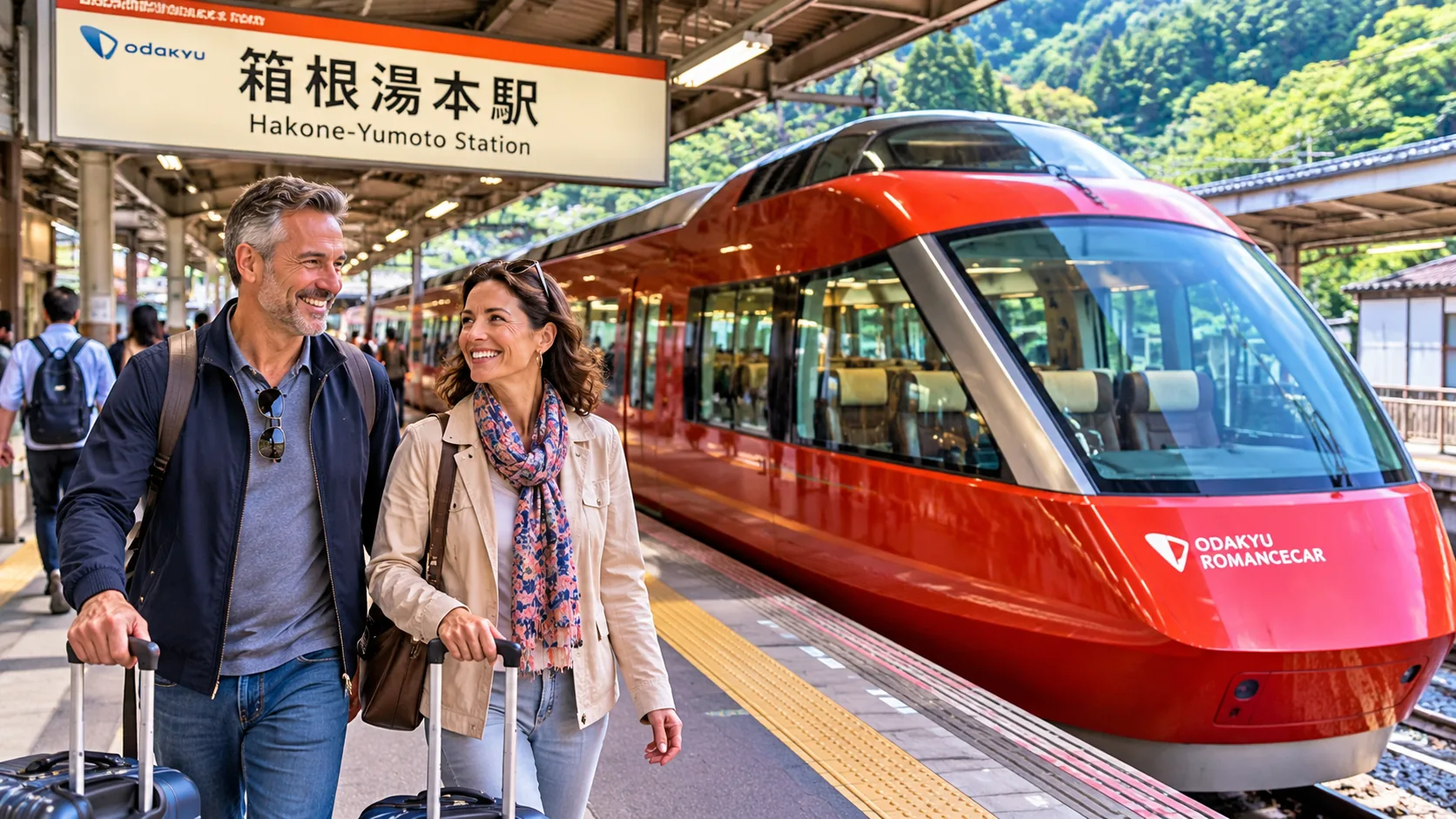
Romancecar to Hakone-Yumoto: the most convenient direct rail option.
Odakyu’s Romancecar runs from Shinjuku to Hakone-Yumoto in approximately 80 minutes on applicable departures, with all seats reserved. It is an enjoyable choice for travelers based in Shinjuku or nearby western Tokyo.
Two things to pay for: the basic fare (or a pass covering that base segment) and the separate Romancecar limited-express seat ticket. Do not assume the Freepass alone gives you a reserved Romancecar seat, and check whether the specific ticket listing covers the entire journey or only one part of it.
Compare Shinjuku–Hakone-Yumoto tickets → · Read the official Romancecar rules →
From Tokyo Station or Shinagawa
When is the Shinkansen to Odawara a better choice?
From Tokyo Station or Shinagawa, travel to Odawara by an eligible Tokaido Shinkansen service and transfer to Hakone-area transportation. Not every Shinkansen departure stops at Odawara, so choose a train that actually serves the station. Odawara is also convenient if you plan to continue onward toward Kyoto rather than return to Tokyo.
Compare door to door: the station you start from, the JR ticket price, onward local transport to Hakone-Yumoto or your hotel, and whether a Hakone-area pass adds value. A faster intercity train is not necessarily a faster trip to Lake Ashi.
Compare trains from Tokyo to Odawara → · Compare Hakone-area pass options →
Interactive Hakone Orientation Map
Where do the train, ropeway, lake cruise and hotel actually meet?
Choose a station or sight on the interactive map. These are approximate destination markers, not a live transit map. Mountain connections can be much slower than distances suggest.
Approximate location pins only. Check actual ticket stops, current local service and resort directions before departure.
Hakone Sightseeing Loop
How do you connect the mountain railway, Owakudani and Lake Ashi?
The classic loop links Hakone-Yumoto with Gora by mountain railway, Gora with Sounzan by cable car, Sounzan with Owakudani and Togendai by ropeway, and Togendai with other Lake Ashi ports by sightseeing ship. Local buses complete different sections of the loop. It is not one direct train or an attraction that begins at Hakone-Yumoto.
Choose the Freepass if you’re using several modes
It simplifies eligible transfers and can be good value when you are riding the ropeway, cruise and local transport. Some optional upgrades and noncovered attractions still cost extra.
Choose an organized excursion if you don’t want to assemble the loop
Look carefully at the tour’s actual stops, meeting point, transport type and attraction inclusions. A guided tour is not identical to a self-guided Freepass journey and may use an altered route because of weather.
Operations matter: The ropeway may be suspended because of high winds, volcanic precautions or maintenance; Lake Ashi cruises may also change because of weather. Verify the live status before setting out and don’t promise yourself a Mount Fuji view.

Highway Bus Alternative
Should you take a bus directly from Shinjuku toward Lake Ashi?
For some travelers, the direct highway bus to the Togendai/Lake Ashi area is more logical than arriving at Hakone-Yumoto and making several connections. It can also suit certain Sengokuhara-area accommodations. Check the exact ticket destination, boarding terminal and travel time because Hakone-area highway routes serve different stops.
Traffic may make a highway bus slower or less predictable than rail. If you plan a full sightseeing loop, compare how this arrival fits your route before assuming it is the cheapest option.
Independent Driving
When is a Tokyo rental car worth using for Hakone?
A rental car can help families, visitors with substantial luggage or travelers planning out-of-the-way stops such as viewpoints, rural restaurants or other mountain areas. It is usually not necessary for a standard Hakone sightseeing loop, which is designed around trains, buses, ropeway and boats.
Compare expressway tolls, fuel, parking, mountain-road conditions and whether your rental includes the appropriate insurance. If you are continuing to Kyoto, check whether a one-way return is permitted and whether the drop-off surcharge defeats any savings. International visitors must have documentation valid for driving in Japan, which depends on their issuing jurisdiction.
Guided and Private Experiences
Would a guided or private Hakone excursion be easier?
A guided tour earns its premium when the itinerary, transfers or local guidance solves a real logistics problem. It is not automatically a better choice if your main plan is taking public transport around the loop independently.

Featured Guided Sightseeing Option
Hakone sightseeing with Lake Ashi and Owakudani
Consider this when you want to see several Hakone highlights without arranging every connection yourself. The selected tour includes a ropeway component; check the current departure point, route, admissions, return arrangements and weather-related substitutions before booking.
Customizable private Hakone excursion
A premium choice for a family or small group that prefers private transportation, pickup arrangements and a more flexible sequence. Confirm which stops are included, whether ropeway or boat tickets cost extra and whether the advertised tour is guided or primarily driver-led.
Return and Onward Travel
Should you return to Tokyo or continue from Hakone to Kyoto?
Returning to Tokyo: For an Odakyu return, check Hakone-Yumoto–Shinjuku Romancecar departures and reserve your actual train seat. A Shinjuku-origin Freepass includes the applicable basic Odakyu round-trip component but not the Romancecar surcharge. Make sure your return timing fits the day’s final local connection.
Compare Hakone-Yumoto to Tokyo return tickets →
Continuing to Kyoto: Travel toward Odawara and connect to a Shinkansen that serves your next stop. A Shinjuku round-trip pass may waste a return segment; compare the Hakone-area version plus separate JR tickets. See Tokyo to Kyoto: train tickets and seat choices for onward booking decisions.
Day Trip or Overnight?
Is one night in Hakone worth it for the onsen experience?
Yes, if hot springs and a slower evening are part of why you’re visiting. Hakone is possible as a long day trip, but one night lets you break up the sightseeing, enjoy the resort and leave time for a second morning. The tradeoff is moving your luggage and adding accommodation cost.

Choose a day trip when…
You want a few specific sights, can leave Tokyo early and prefer not to change hotels. Prioritize a realistic route over completing every leg of the loop.
Choose an overnight when…
You want onsen time, a relaxed dinner, mountain scenery or flexibility for changing weather. Consider how you will reach the ryokan after train arrival.
Featured Overnight Hotel · Onsen Resort

Hakone Kowakien TEN-YU
Best for a dedicated overnight hot-spring resort experience. This Kowakidani property features open-air onsen facilities, including a dramatic infinity-style communal bath, and rooms with private open-air baths. It is not at Hakone-Yumoto Station, so plan your onward transfer before arriving.
Hotel fine print: Confirm the specific room, view, meal plan, private bathing arrangements, tattoo-related onsen rules, check-in time and cancellation policy. Do not assume the photograph shows a private guest-room bath or that Mount Fuji is visible from the property.
The Fine Print That Matters
Seven details that can change your Tokyo–Hakone plan.
Freepass origin and validity
Shinjuku-origin and Hakone-area-only products are different. Choose the pass for your actual route, especially if you are not returning to Tokyo.
Romancecar limited-express fare
The Freepass does not include the Romancecar seat surcharge. Romancecar seats are reserved; verify whether your purchased product includes the basic fare, the limited-express ticket or both.
Ropeway and cruise interruptions
Wind, weather, maintenance or volcanic conditions can interrupt the sightseeing loop. Check the official day’s service notices; a scenic view is never guaranteed.
Odawara is not Lake Ashi
Getting off the Shinkansen at Odawara is only the first leg. Compare the onward connection before declaring the Shinkansen fastest door to door.
Bus route and traffic
Highway buses may stop near Lake Ashi, Togendai or another part of Hakone. Your ticket’s actual stop and road traffic matter more than the route name.
Private tour inclusions
Check pickup geography, time at stops, ropeway and cruise admissions, guiding versus driver-only service and cancellation rules.
Ryokan bathing and dining
Check meal inclusions, arrival cutoff, tattoo policies, privacy of bathing facilities and the exact room category before booking.
My Take
I’d plan Hakone around the experience, not just the fastest ticket.
For a Tokyo day trip starting in Shinjuku, I’d begin with the Romancecar and calculate whether the Freepass covers enough sightseeing to pay off. From Tokyo Station, I’d examine Odawara instead of crossing the city simply to catch the Romancecar.
But if an onsen stay is important, I would favor an overnight over squeezing the train, ropeway, cruise and hot spring into one exhausting day. For a trip continuing to Kyoto, I would avoid paying for a Tokyo return I won’t use.
TFP Recommendation
Choose the journey that fits your Hakone itinerary.
The Recommendation
From Shinjuku: Start with the reserved-seat Romancecar to Hakone-Yumoto.
From Tokyo Station or Shinagawa: Compare Shinkansen tickets to Odawara and include the local transfer.
For a full Hakone sightseeing loop: Compare the correct Freepass version with individual fares; don’t overlook the Romancecar surcharge.
For Lake Ashi-area destinations: Compare the direct highway bus against a multi-transfer rail route.
For an onsen-first trip: Consider staying overnight rather than rushing back to Tokyo.
For Kyoto-bound travelers: Continue via Odawara and check whether a Hakone-area pass is more appropriate.
Your Next Step
Pick your Tokyo departure point, decide whether you want the sightseeing loop or a ryokan stay, and only then choose the transport ticket or pass.
Smarter travel, straight to your inbox
Booking choices, hidden costs and useful fine print—explained clearly.
Before You Go
Make your Hakone excursion work with the rest of your Japan trip.
Your Tokyo hotel location affects which train makes sense, while your next destination affects whether to buy a round-trip pass. Check weather, ropeway service and mobile connectivity before leaving Tokyo.
For a separate Mount Fuji-focused experience, compare our Mount Fuji day-trip guide; a Hakone visit is not the same itinerary.

Where to Stay in Tokyo
Compare neighborhoods for easy Shinjuku departures or Tokyo Station access.
Choose your Tokyo base →Tokyo to Kyoto
Continuing west? Compare Odawara connections and train booking before purchasing a Tokyo return.
Plan onward rail travel →Best eSIM for Japan
Keep maps, tickets and live service updates handy during local transfers.
Compare Japan eSIMs →Travel Insurance for Japan
Review health and eligible cancellation risks for paid tours and overnight accommodations.
Understand coverage options →FAQ
Tokyo to Hakone: common questions
What is the easiest way to travel from Tokyo to Hakone?
From Shinjuku, the reserved-seat Romancecar to Hakone-Yumoto is a convenient direct option, taking about 80 minutes on relevant departures. From Tokyo Station, taking a Shinkansen to Odawara and changing to local Hakone transportation can be easier.
Does the Hakone Freepass include the Romancecar?
The Shinjuku-origin Hakone Freepass includes the applicable basic Odakyu journey, but the Romancecar requires an additional limited-express reserved-seat ticket. The area-only pass does not include the Tokyo–Odawara fare.
Is the Hakone Freepass worth buying for one day?
It can be worthwhile if you use several covered modes, such as the mountain train, cable car, ropeway, sightseeing cruise and buses. Compare actual fares for your itinerary; the minimum pass validity is two days, but you can use it for a one-day visit.
Should I travel to Hakone from Shinjuku or Tokyo Station?
Shinjuku usually suits the direct Romancecar, whereas Tokyo Station or Shinagawa often suits a Shinkansen to Odawara. Your hotel location and final Hakone destination determine which is simpler.
Is there a direct bus from Shinjuku to Lake Ashi?
Some highway buses run toward the Togendai/Lake Ashi area. Check the selected service’s exact stop, departure time, route and traffic expectations rather than assuming every Hakone bus reaches the same location.
Can I visit Hakone as a day trip from Tokyo?
Yes. Start early and choose a realistic subset of the sights. Completing a full loop depends on connections, daylight, weather and whether the ropeway and boats are operating.
Can you see Mount Fuji from Hakone?
Mount Fuji is visible from some Hakone viewpoints in clear weather, including certain ropeway and Lake Ashi locations. Clouds often obscure the mountain; a sighting is not guaranteed.
Is it worth staying overnight in Hakone?
Often yes if you want a traditional onsen experience, more relaxed sightseeing and time for an unhurried dinner. Confirm whether your selected room includes meals and whether the bathing facilities suit your needs.
Can I go from Hakone to Kyoto without returning to Tokyo?
Yes. Travel to Odawara and take an appropriate Shinkansen service toward Kyoto. Compare a Hakone-area pass against any Shinjuku-origin pass whose included return journey you would not use.
Does the Hakone Ropeway run in bad weather?
Not always. Strong wind, maintenance, volcanic safety precautions and other conditions can suspend operations; check official status updates before traveling.
Free Travel Guide
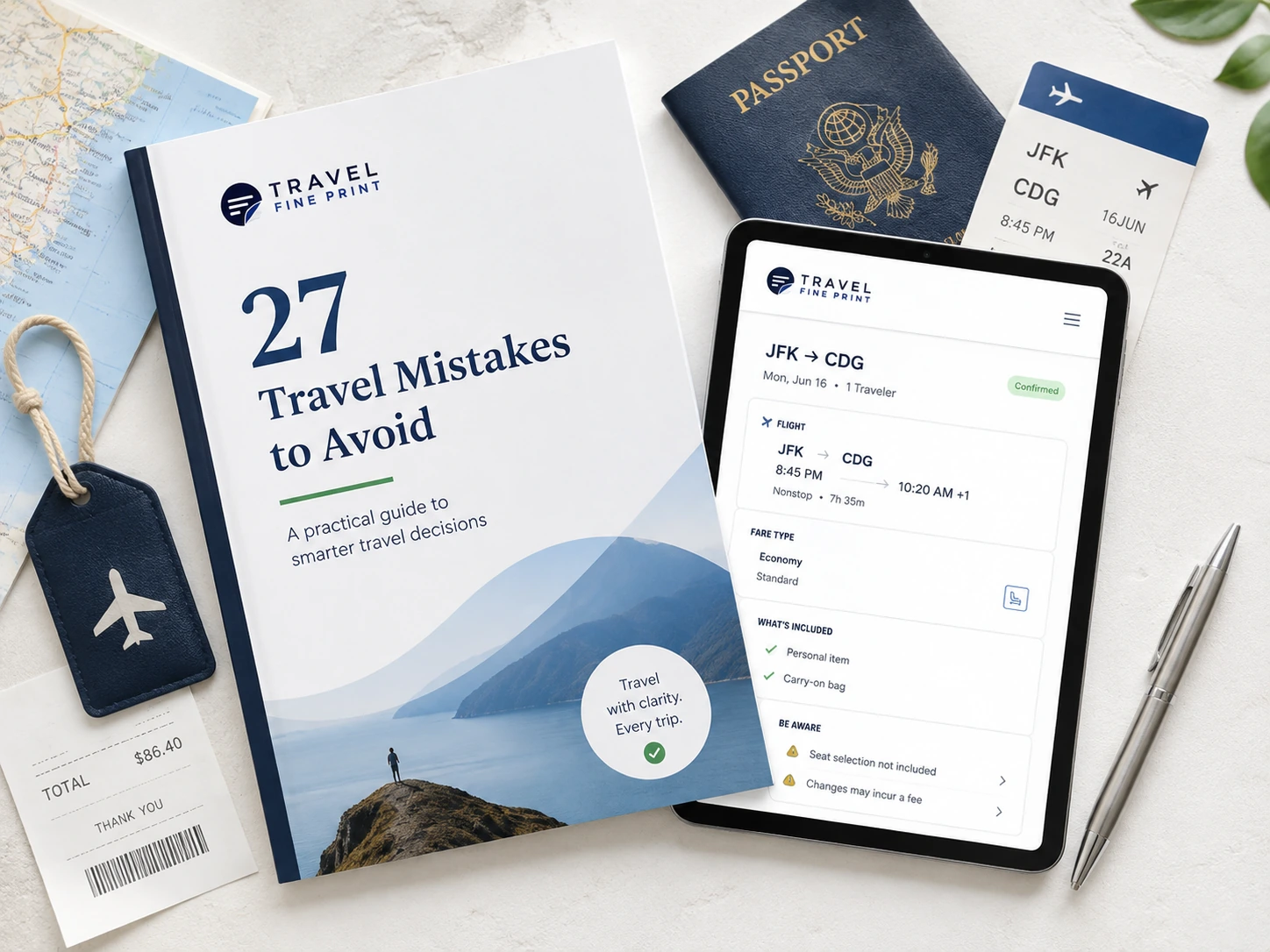
Avoid the travel mistakes that can cost you money, flexibility or time.
Get 27 Travel Mistakes That Cost Travelers Thousands—a practical guide to booking choices, hidden costs and the fine print worth reading.
- Spot booking details that are easy to overlook
- Understand where hidden costs can appear
- Recognize when the cheaper option has a tradeoff
- Make travel decisions with fewer surprises
You’ll receive occasional Travel Fine Print guidance. Unsubscribe anytime.