
Japan Travel Decision Guide
Tokyo to Kyoto: Best Trains, Tickets & Ways to Travel
Traveling from Tokyo to Kyoto? For most visitors, the Tokaido Shinkansen is faster and easier than flying or driving. The real decisions are which train to take, whether reserved seats or Green Car are worth paying for, where to stay after arrival, and whether a nationwide JR Pass makes sense for the rest of your Japan itinerary.
The decision: Book a Nozomi Shinkansen for most Tokyo–Kyoto journeys. Start by comparing a regular reserved-seat ticket against the official SmartEX price; consider a JR Pass only when your entire multi-city itinerary adds up. Choose your Kyoto hotel area before travel day: a hotel connected to Kyoto Station can make the last leg with luggage easier, while Gion suits travelers seeking a more traditional neighborhood.
About This Guidance
Written and reviewed by Brandon Gaither, Travel Fine Print.
Travel Fine Print evaluates Tokyo–Kyoto travel using official rail rules, train options, luggage requirements, booking terms and onward connections. Explore our Trains, Transfers & Getting Around hub for more transportation decision guides.
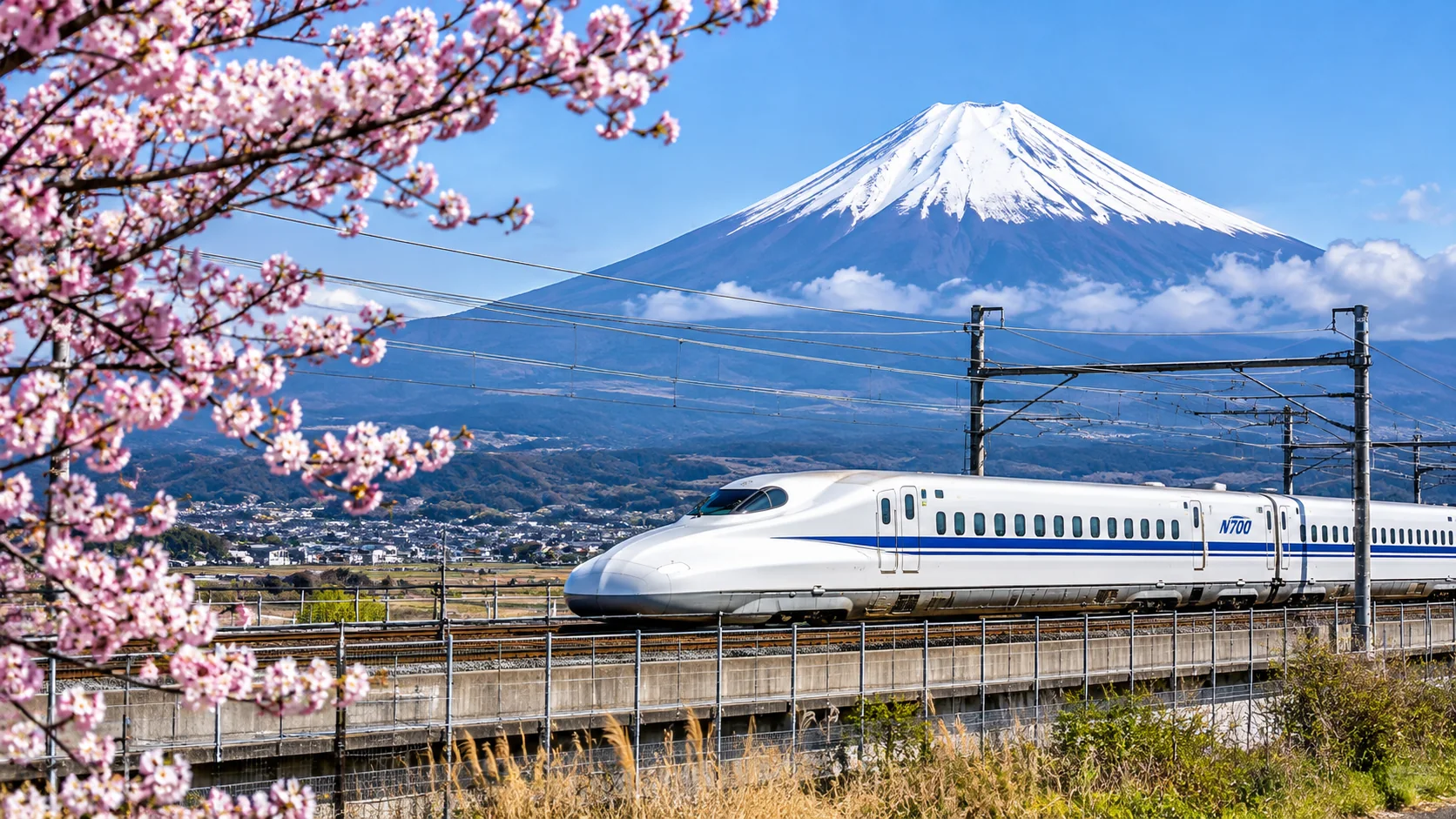
The Shinkansen links Tokyo and Kyoto in roughly two to three hours for most faster services. A glimpse of Mount Fuji depends on weather, visibility and your seat.
Quick Answer
What is the best way to get from Tokyo to Kyoto?
Take the Tokaido Shinkansen—usually the Nozomi—for the simplest city-center-to-city-center journey. The fastest services take roughly 2 hours 10–20 minutes from Tokyo Station to Kyoto Station, with Shinagawa another useful Tokyo departure point. Hikari takes longer, while Kodama stops at every station.
For a regular Tokyo–Kyoto trip, compare individual train tickets rather than buying a nationwide JR Pass automatically. If you are making a return trip, check both directions before committing to a pass or bundled product.
Some third-party booking products add service fees or issue tickets differently from JR. Compare the final payable amount and change rules, not just the first price shown.
The Decision in 30 Seconds
Choose the booking that matches your Japan itinerary.
| Your situation | TFP recommendation and next action |
|---|---|
| Fastest and easiest Tokyo → Kyoto | Choose a reserved-seat Nozomi. Compare Shinkansen tickets → |
| Prefer to compare seat and fare options? | Compare ticket and seating options with JR’s official fare. Compare seat and fare choices → |
| Train plus a day of Kyoto transit | The train-and-transit bundle may be useful, but it uses nonreserved Shinkansen seats and has collection conditions. Review bundle terms → |
| Returning from Kyoto to Tokyo | Check your actual return date and direction separately. Compare return trains → |
| Tokyo, Kyoto, Osaka and Hiroshima | Add up qualifying journeys before purchasing a nationwide pass; a pass is not automatically cheaper. Compare JR Pass products → |
| Staying in Kyoto | Choose Kyoto Station convenience or Gion atmosphere before finalizing your train arrival. |
| Visiting Kyoto only for a day | A guided Shinkansen excursion can simplify logistics, but Kyoto deserves longer if you have the time. |
Your Next Decision
Where should you stay after arriving in Kyoto?
Booking the train is only half the arrival decision. Kyoto Station and historic Gion are different experiences. If you’ll stay several nights, choosing the right base can matter more than shaving a few minutes off the train ride.
Which Shinkansen?
Nozomi vs. Hikari vs. Kodama: does the faster train matter?
Roughly 2 h 10–20 min. Fewest stops; the usual recommendation for time-conscious travelers.
About 2 h 35–45 min. A workable alternative, particularly for eligible Japan Rail Pass holders avoiding Nozomi supplements.
About 3 h 35–45 min. Stops at every station; rarely our first choice for a direct Tokyo–Kyoto trip.
These are approximate typical times, not a timetable or fare guarantee. The actual run varies by service and departure time. Consult JR Central’s published timetable.
TFP Tip: Don’t assume Hikari is dramatically cheaper than Nozomi. The main distinction is often time, frequency and Japan Rail Pass eligibility rather than a transformative fare saving.
Tokyo–Kyoto Route and Station Geography
Which Tokyo station should you leave from—and where will you arrive?
Use the interactive map to understand Tokyo Station, Shinagawa, Kyoto Station and the locations of the two featured hotels. The route line is geographic orientation, not live train tracking or a precise rail alignment.
Approximate location markers and simplified corridor. Check your ticket’s actual station and JR’s official departure platforms.
How to Buy Tickets
Book Tokyo to Kyoto Shinkansen tickets without choosing the wrong product.
Start with your date, departure station, seat preference and luggage. Then compare the total booking price with SmartEX, the official online reservation service. The lowest displayed third-party price isn’t necessarily the best when the product uses a voucher, requires collection, or doesn’t include reserved seating.
Compare individual train tickets
Best if you want to compare Tokyo–Kyoto train options before choosing a departure. Check the final payable fare against the official rail operator. Confirm operator, ticket delivery, service fees and whether you receive an actual seat reservation.
Compare seat and fare selections
Use this alternative to compare ticket products, seat choices and the final price. Verify the departure station, whether you can select a specific seat, and how the ticket is issued or collected.
Train + Local Transit Package
Bullet train ticket with a 1-day Kyoto subway and bus pass
This is independent transportation, not an escorted Kyoto tour. The listed product combines nonreserved Shinkansen travel with a Kyoto local-transit pass, and may offer one-way or round-trip selections. It is most useful only when you genuinely want the transit pass and its specific ticketing conditions suit your schedule.
Check before paying: ticket collection location and hours, eligible trains, date restrictions, exact directions covered and whether Nozomi nonreserved seating is available on your travel date. A nonreserved ticket does not guarantee adjacent seats.
Advance bookings: SmartEX advertises bookings up to a year ahead, but trains and exact seats booked more than a month in advance are not immediately confirmed. Read the confirmation timetable and change conditions for your product.
Seats, Comfort and Views
Is Green Car worth it on the Tokyo–Kyoto Shinkansen?
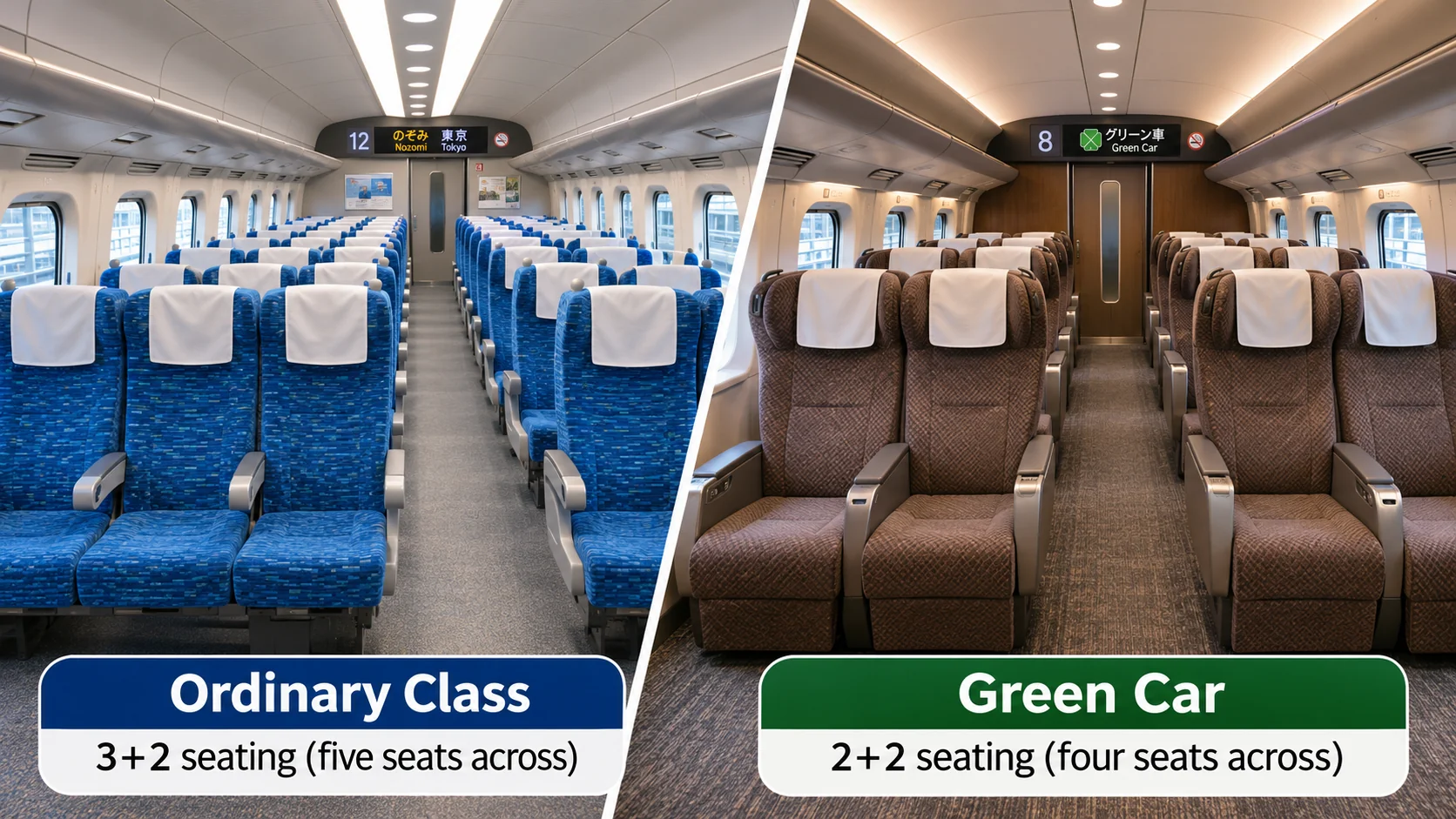
Ordinary Class is comfortable for most travelers. In the standard Shinkansen layout, Ordinary Class has a 3+2 seating arrangement while Green Car generally has 2+2 seating with wider seats and more space. Green Car can be worthwhile for extra comfort, but the relatively short journey doesn’t require an upgrade.
Reserved vs. nonreserved matters more than luxury. If you are traveling together, want a particular Mount Fuji-facing window, have a tight arrival connection or are traveling during a busy period, a reserved seat often adds more practical value than upgrading the cabin.
Mount Fuji side: On standard Tokaido Shinkansen seating, seat E in Ordinary Class and seat D in Green Car are on the usual Fuji-view side in either direction. Weather can obscure the mountain completely. Double-check your particular train’s seat plan.
Arriving in Kyoto
What happens after your Shinkansen reaches Kyoto Station?
Kyoto Station is a transport hub, not the historic Gion neighborhood. It has train and subway connections, buses and taxis, but getting from your platform to your hotel can add meaningful travel time—especially with suitcases.
If you’re staying at Kyoto Station
Hotel Granvia Kyoto is part of the station building. It is a strong practical choice for luggage-heavy arrivals and early onward departures. Check Hotel Granvia Kyoto rooms →
If you’re staying in Gion or Higashiyama
Allow time for the last leg by taxi, bus or rail connection. Confirm your hotel’s luggage-drop arrangements, exact entrance and any shuttle schedule; Kyoto’s historic lanes are not always convenient for rolling luggage. See The Celestine Kyoto Gion →
Would a prebooked transfer make arrival easier?
For a family, a group with several suitcases, or a hotel in Gion or Higashiyama, a prearranged car may be more comfortable than navigating local connections. Compare the total quote with a regular station taxi, and verify the exact pickup point, luggage allowance, waiting time and cancellation terms. Travelers staying at Hotel Granvia Kyoto generally do not need a station-to-hotel transfer. Compare private transfers to your Kyoto hotel →

Other Ways to Travel
Should you fly, take an overnight bus or rent a car instead?
Flying: usually not worth the airport transfers
Kyoto has no major commercial airport in its city center. A flight between the Tokyo and Osaka regions requires transportation to and from airports plus check-in and security; this usually removes any advantage over direct Shinkansen travel. Flying can make more sense when you’re connecting from another flight rather than starting in central Tokyo.
Arriving through Kansai International Airport instead? If Kyoto is your first overnight stop rather than Tokyo, compare airport rail services against a door-to-door vehicle, especially for groups or heavy luggage. Check the pickup terminal and full fare before reserving. Compare airport-to-Kyoto private transfers →
Highway or overnight bus: budget or overnight flexibility
Buses take substantially longer but may cost less and can save a hotel night. Compare the actual overnight comfort, luggage allowance, terminals and arrival time; sleeping on a coach isn’t a free replacement for a proper hotel.
Driving: useful for a road trip, not city-to-city convenience
Tolls, fuel, parking, congestion and navigating Kyoto typically make a rental car poor value for this specific transfer. Only consider it if rural stops between the cities are central to your itinerary. Check whether a Tokyo pickup and Kyoto return are permitted, along with any one-way drop-off charge.
For most travelers, the Shinkansen remains the best balance of time, convenience and predictability.
The Nationwide Rail Pass Decision
Is a Japan Rail Pass worth it for Tokyo, Kyoto, Osaka and Hiroshima?
Not for Tokyo–Kyoto round trip alone. The nationwide 7-day Ordinary Class Japan Rail Pass costs ¥50,000 through the official online channel; agency purchase prices may be higher, and an ordinary Tokyo–Kyoto return is usually substantially less. Adding Osaka rarely changes that conclusion because Kyoto–Osaka travel can be relatively inexpensive.
Hiroshima can make the calculation much closer—but does not automatically make the pass cheaper. If you travel Tokyo → Kyoto → Hiroshima → Tokyo within seven consecutive days, the total cost of qualifying long-distance tickets may approach the pass cost, depending on train choice, routing and dates. If you travel more slowly than seven days, the 7-day pass may expire before your longest segments.
| Example itinerary | Starting recommendation |
|---|---|
| Tokyo → Kyoto → Tokyo | Buy individual tickets, not a nationwide pass by default. |
| Tokyo → Kyoto → Osaka → Tokyo | Usually individual tickets; Kyoto–Osaka does not add much cost. |
| Tokyo → Kyoto → Hiroshima → Tokyo within 7 days | Calculate both totals. Pass value is possible but depends on chosen trains and all costs. |
| Tokyo → Kyoto → Hiroshima → Osaka plus further JR travel | Compare the full seven-day eligible schedule with pass price and Nozomi supplements. |
Important JR Pass catch: Standard nationwide JR Pass coverage does not include Nozomi or Mizuho Shinkansen rides without buying the special additional ticket. From Tokyo to Kyoto, the published Nozomi supplement is ¥4,960 per adult for that segment. Hikari is the usual eligible alternative for a pass holder avoiding the supplement.
Use the pass only after comparing the complete itinerary, including validity dates, eligible services, reserved-seat needs, additional Nozomi/Mizuho charges and non-JR legs. JR passes also have eligibility and exchange rules that require attention before purchase.
Compare nationwide JR Pass options →
Official references: JR Pass prices · Nozomi/Mizuho special tickets. Confirm current rates and pass product terms before booking.
Round Trip and Onward Travel
Returning from Kyoto to Tokyo—or continuing to Osaka and Hiroshima?
If Kyoto is one stop on a round trip, book the return as its own journey unless a clearly priced, flexible round-trip product suits your dates. Travelers who want a Kyoto → Tokyo departure later in the week should compare the correct direction; don’t accidentally purchase two Tokyo → Kyoto tickets.
Compare Kyoto → Tokyo return trains →
Check alternative return ticket options →
For travelers moving on to Osaka, a Shinkansen is not always necessary: ordinary JR services can be more economical, depending on where in Osaka you’re going. For Hiroshima, compare the onward Shinkansen as a separate longer-distance booking and include the return-to-Tokyo leg in your JR Pass calculation.
Avoid the backtrack: If you finish your trip in western Japan, investigate departure flights from Kansai rather than assuming you must return to Tokyo. International flight prices and award availability may change the better itinerary.
Guided Kyoto in One Day
Can you visit Kyoto from Tokyo as a guided Shinkansen day trip?
Yes, but it’s a long, concentrated day. A guided day-trip package can suit travelers keeping their Tokyo hotel and wanting an organized introduction without arranging a separate overnight. Verify round-trip train inclusions, guide time, meeting arrangements, attractions and meals for the exact product and date rather than assuming every part of Kyoto is covered.
Review the guided Kyoto day trip →
TFP’s preference: If your itinerary allows it, stay in Kyoto for at least a night—preferably longer—to enjoy early and evening sightseeing without spending much of the day in transit. A guided Tokyo-based excursion is a time-constrained alternative, not a substitute for a full Kyoto stay.
Staying in Kyoto
Near Kyoto Station or in Gion: where should you book your hotel?
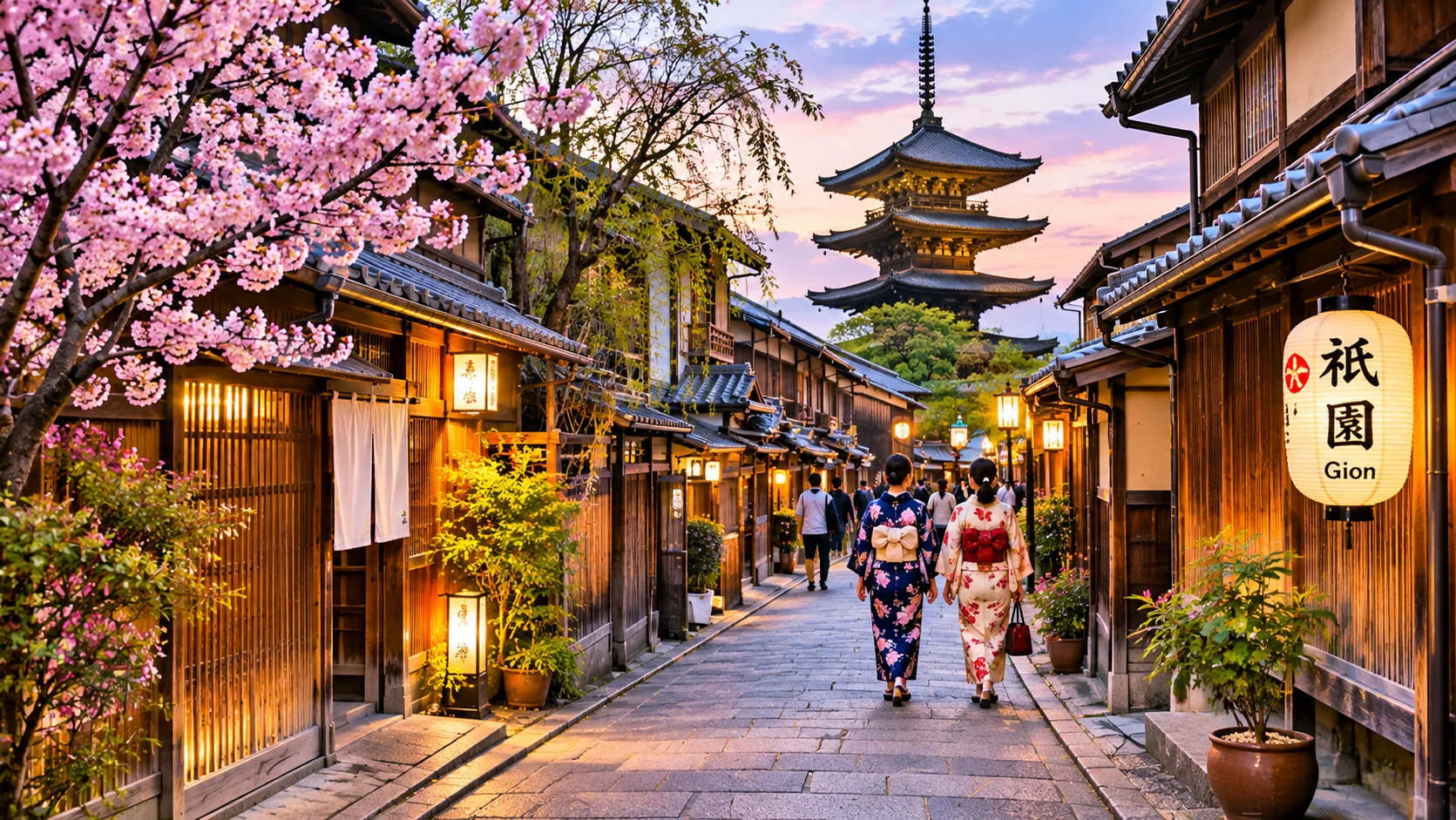
Choose Kyoto Station for convenience; choose Gion/Higashiyama for atmosphere. Neither is universally better. If you have just one night or an early onward train, station access matters. If you are staying multiple nights for temples, restaurants and evening walks, the historic district may be a more memorable base.
Choose Kyoto Station when…
You are arriving late, traveling with large suitcases, connecting to Osaka or Hiroshima, or prioritizing simple railway access over old-town ambience.
Choose Gion when…
Your Kyoto stay is primarily about historic streets, walking and sightseeing. Allow time and cost for transport from Kyoto Station.
Featured Hotel · Best for Station Convenience

Hotel Granvia Kyoto
Best for staying at the arrival station. Integrated into the Kyoto Station Building, it minimizes luggage transfers and works well for short stays or onward train travel. This is about logistical convenience, not a traditional Gion setting.
Hotel fine print: Confirm the exact room category, cancellation terms, check-in time and walking directions from your specific Shinkansen exit.
Featured Hotel · Best for Historic Kyoto Atmosphere

Hotel The Celestine Kyoto Gion
Best for a longer, atmosphere-led Kyoto stay. Its Gion/Higashiyama location trades station-door convenience for access to Kyoto’s older streets. Check the hotel’s current complimentary shuttle timetable and luggage arrangements; service is not a guaranteed connection for every arrival.
Hotel fine print: Confirm station transfer details, selected room category, early-arrival luggage storage and cancellation rules. Not every nearby street is easy with a rolling suitcase.
The Fine Print That Matters
Seven Tokyo–Kyoto details worth checking before you pay.
Oversized baggage
On the Tokaido/Sanyo Shinkansen, baggage with combined height + width + depth over 160 cm and up to 250 cm generally requires a suitable oversized-baggage seat reservation. Spaces are limited. An oversized bag without the required reservation can trigger a fee; bags exceeding the permitted maximum cannot be brought aboard as ordinary carry-on luggage. Official JR baggage policy.
Busy-period Nozomi rules
Nozomi trains operate with all seats reserved during certain peak periods. A third-party nonreserved ticket may not work on Nozomi during those periods; check the exact dates before buying a flexible or packaged ticket. JR Central peak-period rules.
Fare and ticket delivery
Third-party total prices can include additional service charges. Some products use QR/e-tickets, while others require exchange or physical pickup. Check delivery and boarding instructions before leaving for the station.
Departure station
Tokyo and Shinagawa are different Shinkansen stations. Choose the one convenient to your accommodation, then verify your train actually stops there.
Seat vs. train flexibility
A nonreserved ticket is not an assigned seat; sitting together may not be possible. Cancellation and changes depend on the specific fare and seller. Reserved seats are especially helpful with families, luggage or tight schedules.
JR Pass math
A nationwide pass is valid for consecutive days; not all rail companies or train categories are included without extras. Nozomi and Mizuho require a special surcharge ticket. Compare the complete eligible itinerary, not just Tokyo–Kyoto.
Kyoto hotel last mile
A Tokyo–Kyoto rail fare is not hotel-to-hotel transport. Factor in city transit, luggage, hotel access, pickup points, and whether your arrival time matches any available shuttle.
My Take
I’d book the Nozomi and spend more attention on where I stay in Kyoto.
For a straightforward Tokyo–Kyoto transfer, I’d choose a reserved Nozomi unless the price or timetable gave me a compelling reason to do otherwise. I would compare the official SmartEX total with the final price, ticket delivery and change terms of another booking service, and I wouldn’t add Green Car simply because it sounds more luxurious.
I’d put more thought into Kyoto itself: a hotel at the station for a quick stop or one in Gion for a longer, more atmospheric visit. And I would only buy a JR Pass after laying out every long-distance leg—particularly if Hiroshima is included—on the calendar.
TFP Recommendation
Book the train that supports your whole Japan itinerary.
The Recommendation
Most travelers: reserve a Nozomi from Tokyo or Shinagawa to Kyoto, comparing official pricing and trusted ticket partners.
Travelers with large luggage: check the oversized-baggage rule before selecting seats.
Tokyo–Kyoto round-trip travelers: compare separate return fares; a nationwide rail pass is usually unnecessary.
Travelers continuing to Osaka or Hiroshima: calculate all eligible long-distance segments within the actual JR Pass validity window.
Overnight visitors: decide between Kyoto Station efficiency and Gion atmosphere before choosing a hotel.
Your Next Step
Start with the outbound train, check your return or onward leg, then book the Kyoto hotel that suits how long you plan to stay.
Smarter travel, straight to your inbox
Booking choices, hidden costs and useful fine print—explained clearly.
Before You Go
Make your Kyoto train ride work with the rest of your Japan trip.
Choose a Tokyo departure base, consider whether Mount Fuji deserves its own outing, and plan onward sightseeing before you buy a nationwide pass. Confirm your mobile data and travel protection, too.
For a nearby excursion rather than another intercity hotel move, compare our Tokyo to Hakone guide when the Tokyo Ring 1 cluster launches.

Hotels Near Tokyo Station
Stay close to the Shinkansen departure or compare Shinagawa access for your departure morning.
Compare Tokyo station hotels →Mount Fuji Day Trip From Tokyo
Decide whether a dedicated Fuji excursion fits your time better than hoping for a train-window view.
Plan a Mount Fuji excursion →Best eSIM for Japan
Keep directions, bookings and local transit information available between stations and cities.
Compare Japan eSIM choices →Travel Insurance for Japan
Understand medical and eligible trip-cancellation protection before paying for multiple segments.
Review Japan insurance choices →FAQ
Tokyo to Kyoto: questions travelers ask
What is the best way to travel from Tokyo to Kyoto?
For most visitors, the Tokaido Shinkansen—usually a Nozomi service—is the best combination of speed and convenient city-center access. Compare train fares, seat type and your departure station before booking.
How long is the bullet train from Tokyo to Kyoto?
The fastest Nozomi journeys typically take roughly 2 hours 10–20 minutes between Tokyo and Kyoto. Hikari takes longer, while all-stops Kodama can take about 3 hours 40 minutes. Times vary by train.
Is Nozomi or Hikari better from Tokyo to Kyoto?
Nozomi is usually fastest and most frequent. Hikari is a practical alternative, especially for nationwide JR Pass holders who want to avoid paying the special Nozomi supplement.
Is Green Car worth it between Tokyo and Kyoto?
Ordinary Class is comfortable for most passengers. Green Car offers a wider seat and a roomier cabin, which can be worthwhile for extra comfort but is not necessary on this relatively short journey.
Which Shinkansen seat has the best Mount Fuji view?
In standard Tokaido Shinkansen layouts, seat E in Ordinary Class and seat D in Green Car face the Mount Fuji side in either direction. Visibility depends on the weather and the actual train configuration.
Do I need to reserve oversized baggage on the Shinkansen?
Generally yes if your suitcase’s combined height, width and depth exceeds 160 cm and is no more than 250 cm on the Tokaido/Sanyo/Kyushu Shinkansen. Reserve the appropriate oversized-baggage area seat and check the official policy.
Is a JR Pass worth it for Tokyo, Kyoto and Osaka?
A nationwide JR Pass is usually not cost-effective for just Tokyo, Kyoto and Osaka. Compare individual train prices with the pass cost, and consider whether Hiroshima or additional long-distance JR journeys within consecutive pass days change the total.
Can you do Kyoto as a day trip from Tokyo?
Yes, by Shinkansen or organized day tour, but it is a long day with limited sightseeing time. Staying overnight is usually better if your itinerary allows it.
Where should I stay in Kyoto after the Shinkansen?
Hotel Granvia Kyoto offers direct Kyoto Station convenience, while Hotel The Celestine Kyoto Gion offers access to a more historic part of Kyoto. Choose based on luggage, length of stay and your sightseeing priorities.
Can I book a Kyoto to Tokyo return ticket separately?
Yes. Compare Kyoto-to-Tokyo tickets for your specific return date, station and seat type. You do not need a nationwide Japan Rail Pass simply because you are making a round trip.

Free Travel Guide
Avoid the travel mistakes that can cost you money, flexibility or time.
Get 27 Travel Mistakes That Cost Travelers Thousands—a practical guide to booking choices, hidden costs and the fine print worth reading.
- Spot booking details that are easy to overlook
- Understand where hidden costs can appear
- Recognize when the cheaper option has a tradeoff
- Make travel decisions with fewer surprises
You’ll receive occasional Travel Fine Print guidance. Unsubscribe anytime.