
Hotel Rates & Reservation Disputes
Can a Hotel Change the Rate After Booking? What to Do
Your confirmation shows one price, but the hotel now quotes another. Before you pay more, cancel or rebook, find out whether the confirmed nightly rate changed—or whether fees, booking details or a pricing mistake explain the difference.
The decision: Keep the original confirmation, identify exactly what changed, and choose the response that fits the situation rather than accepting a new rate—or canceling—too quickly.
About This Guidance
This guide approaches hotel rate disputes through the reservation itself: confirmed rate, room type, occupancy, payment method, rate rules, source of booking, and the difference between repricing and fees.
On This Page

Quick Answer
Can a hotel change a confirmed rate after booking?
Sometimes a hotel can seek to correct or reprice a reservation, but it cannot assume every confirmed price is freely changeable. The answer depends on the reservation terms, what caused the difference, and applicable law. A genuinely mistaken rate or a guest-requested modification may be different from raising the price of an otherwise unchanged reservation.
First compare the nightly rate, room category, dates, number of guests, and cancellation/payment rules. If the hotel wants a different nightly rate for the same booking, ask for a written explanation and the original rate-rule language before accepting it.
Decision in 30 Seconds
Which situation matches your booking?
The correct next step depends on why the amount changed—not merely whether the new number is higher or lower.
| What happened | Best first action | Fine-print distinction |
|---|---|---|
| Confirmed room rate increased | Compare identical room, dates, guests and terms; request written basis. | Do not assume an automatic right to reprice. |
| Total went up, nightly rate did not | Review taxes, resort or destination fees, extra guests and amounts due at property. | A fee or disclosure question may be more relevant. |
| Hotel says the original price was an error | Ask what failed, which terms apply and what remedy is offered. | A claimed pricing error is not automatically permission to change the contract. |
| A lower rate is available now | Compare cancellation penalties and all replacement terms before switching. | A cheaper headline price may not mean better value. |
Start With the Number
Did the nightly rate change, or only the total?
Suppose your email confirms $189 a night for a particular room and the hotel now asks $249 a night for those same dates, guests and terms. That is a potential confirmed-rate dispute.
By contrast, the nightly room rate could remain $189 while the amount shown as due grows because of taxes, mandatory property fees, parking or additional guests. A separate deposit or pending card authorization can also affect available funds without necessarily increasing the final cost. For a posted amount higher than the confirmation, see why a hotel may charge more than the booking confirmation.
Required charges should not become acceptable simply because they are called “fees.” Ask where they appeared before you booked and whether they are included in the total you agreed to.
Gather the Evidence
Six booking details to compare before challenging a higher rate
Nightly rate and stay total
Separate the base nightly price from taxes, mandatory fees and amounts due at the property.
Room, dates and guests
Confirm that the room category, check-in and checkout dates, occupancy and stay length are identical.
Payment path
Check whether payment was collected online, charged in advance, or due at the hotel; do not confuse a card hold with a completed bill.
Rate conditions
Review cancellation deadlines, special eligibility conditions, promotional codes, included breakfast or credits, and any change policy.
Booking channel
Keep the email or app confirmation from the party that issued the reservation and note who is collecting payment.
Written changes
Save the original confirmation, screenshots, revised quote and every explanation before authorizing a new amount or cancellation.
A practical question is: “Can you show me what changed from my confirmation—the nightly rate, required fees, room type, dates, occupancy, or payment terms?”

If the Hotel Says It Was a Mistake
A pricing error deserves explanation, not an automatic yes or no.
A rate may have been loaded incorrectly, attached to the wrong room category, displayed in the wrong currency, or transmitted incorrectly through a booking channel. A rate of $19 where similar rooms sell for $190 may raise a different contractual question from a modest discrepancy between two plausible prices.
But a claim of “system error” does not by itself determine the hotel’s rights. Booking terms, applicable law, the nature of the mistake and your reliance on the confirmation can all matter. Request the hotel’s explanation and proposed remedy in writing.
If you booked flights or other nonrefundable plans relying on the confirmation, explain that respectfully. Ask whether the property or booking site will honor the price, reduce the difference, waive fees, offer a room upgrade or credit, or arrange comparable lodging. An upgrade is a possible goodwill offer—not equivalent to fixing an unaffordable room-rate increase.
If your stay is imminent, ask whether the manager can preserve the room while you and the booking platform resolve the discrepancy; do not assume that will be possible.
Booked Through a Travel Site?
Make sure the hotel and booking platform are reviewing the same reservation.
The price in a booking app may not match the rate code, room category or payment instruction received by the property. Ask the hotel to read back its reservation details. Then contact the company that issued your booking confirmation and request that it coordinate with the property.
Confirm whether you paid the booking platform or will pay the hotel, and whether an amount shown as “due at property” was disclosed before checkout. If you booked through a platform, do not assume the front desk can modify or refund what that platform collected.
Before canceling, obtain a written answer about whether the original booking can be reinstated or corrected. If the platform cannot resolve the mismatch and you need to consider alternatives, you can compare other hotels and current available rates—but preserve the original reservation until you understand any penalty or refund implications.
Reservation Changes
Can adding a night or changing the room reprice your stay?
Yes. Adding a night, shifting dates, changing occupancy or upgrading the room can cause a reservation system to recalculate some or all nights under current rates and restrictions. Ask for a full before-and-after nightly breakdown before approving the modification.
In some cases, a separate back-to-back reservation preserves the original booking while adding a night at a new rate. That may require checking out and checking back in, and the hotel may not guarantee the same room.
If you are comparing the cost of changing a reservation versus booking an adjacent stay, check comparable room prices for the extra night. Verify with the property how multiple reservations would be handled.

If You Find a Lower Price
Should you cancel and rebook at the cheaper hotel rate?
A hotel generally does not reduce your existing price simply because a cheaper rate appears later. A refundable booking might offer a way to save, but a new listing may be prepaid, nonrefundable, missing breakfast, subject to different fees, or available only for another room category.
Compare the total payable and the rules—not just the nightly headline. Before doing anything to your current reservation, compare currently available hotel offers and verify the same hotel, dates, room, occupancy, taxes and fees, included benefits, payment timing, and cancellation deadline. Ensure the replacement is actually available for booking.
If the new booking is clearly better and you can safely hold both briefly, secure the replacement and verify its confirmation before canceling the original within its permitted window. Avoid creating a second nonrefundable obligation. Preserve both confirmations. If the existing reservation is nonrefundable, ask about a goodwill adjustment or any applicable price-match policy rather than assuming you can cancel without penalty.
One more tradeoff
Rebooking through a different channel can change loyalty benefits, point earning, upgrade eligibility or who handles a future cancellation. A few dollars in apparent savings may not outweigh those differences.
At the Front Desk
What to say before agreeing to a higher rate
Stay specific and ask the staff member or manager to work from your exact confirmation. You might say:
“My confirmation shows this room and these dates at $189 per night. You’re now quoting $249. Can you show me why the nightly rate changed, and what options are available to honor or resolve the confirmed booking?”
If the hotel proposes a correction, ask for the total amount including fees, the replacement room, and any compensation or cancellation option in writing. For an immediate stay, weigh the cost and availability of an alternative before rejecting the room outright.
When the Price Still Does Not Match
Escalation, documentation and card disputes
If the hotel and booking channel cannot reconcile the confirmation, ask for a manager and a documented final decision. Keep the original confirmation, screenshots of rate rules, correspondence, revised quote, receipts and the eventual folio.
If the property cancels the booking instead of honoring it, see what to do when a hotel cancels your reservation. If money has already posted to your card and you believe it breaches the agreed terms, contact the party that took payment and your card issuer promptly. Applicable billing-dispute deadlines can be shorter than your conversations with the property; procedures depend on jurisdiction and payment method.
If you need alternate accommodation immediately, compare replacement hotel availability and conditions. Document the replacement rate and any added costs if you intend to ask for reimbursement or goodwill consideration; coverage is not guaranteed.
The Fine Print
Five distinctions that change your hotel-rate decision.
A confirmed rate is not the same as every quoted total.
Look for taxes and fees, deposits and payment collected by different parties.
An error claim is not an automatic override.
The relevant terms and local consumer protections still matter.
Changing a booking can trigger new pricing.
Ask for the full recalculated rate before approving changes.
Cheaper does not always mean equivalent.
Room type, cancellation rules and benefits affect the real comparison.
Canceling can weaken your practical position.
Understand remedies, penalties and replacement availability before giving up the original reservation.
My Take
I would not agree to a higher nightly rate without an explanation.
What matters most to me is whether the property changed the agreement itself or just presented costs the original booking did not make obvious. I would keep the confirmation in front of me, ask the hotel to identify the discrepancy, and give the property and booking channel an opportunity to fix it.
If it were an obvious system error, I would still document the plans made in reliance on the confirmation and pursue a reasonable accommodation. If a cheaper room appeared later, I would compare total cost and flexibility before sacrificing an existing booking.
TFP Recommendation
Protect your confirmed booking while you establish the real difference.
The Recommendation
Verify first. Request a written remedy second. Rebook only when the comparison genuinely works.
The strongest position is a complete record of the same hotel, room, dates, occupancy and terms—and a clear statement of what the hotel proposes to change.
Your Next Step
Choose the action that corresponds to your situation.
Smarter travel, straight to your inbox
Booking choices, hidden costs, travel rules and useful fine print — explained clearly.
Before You Go
Know which hotel terms could change the final deal.
These related guides help when a hotel price dispute intersects with fees, payment timing, reservation cancellation or card authorizations.
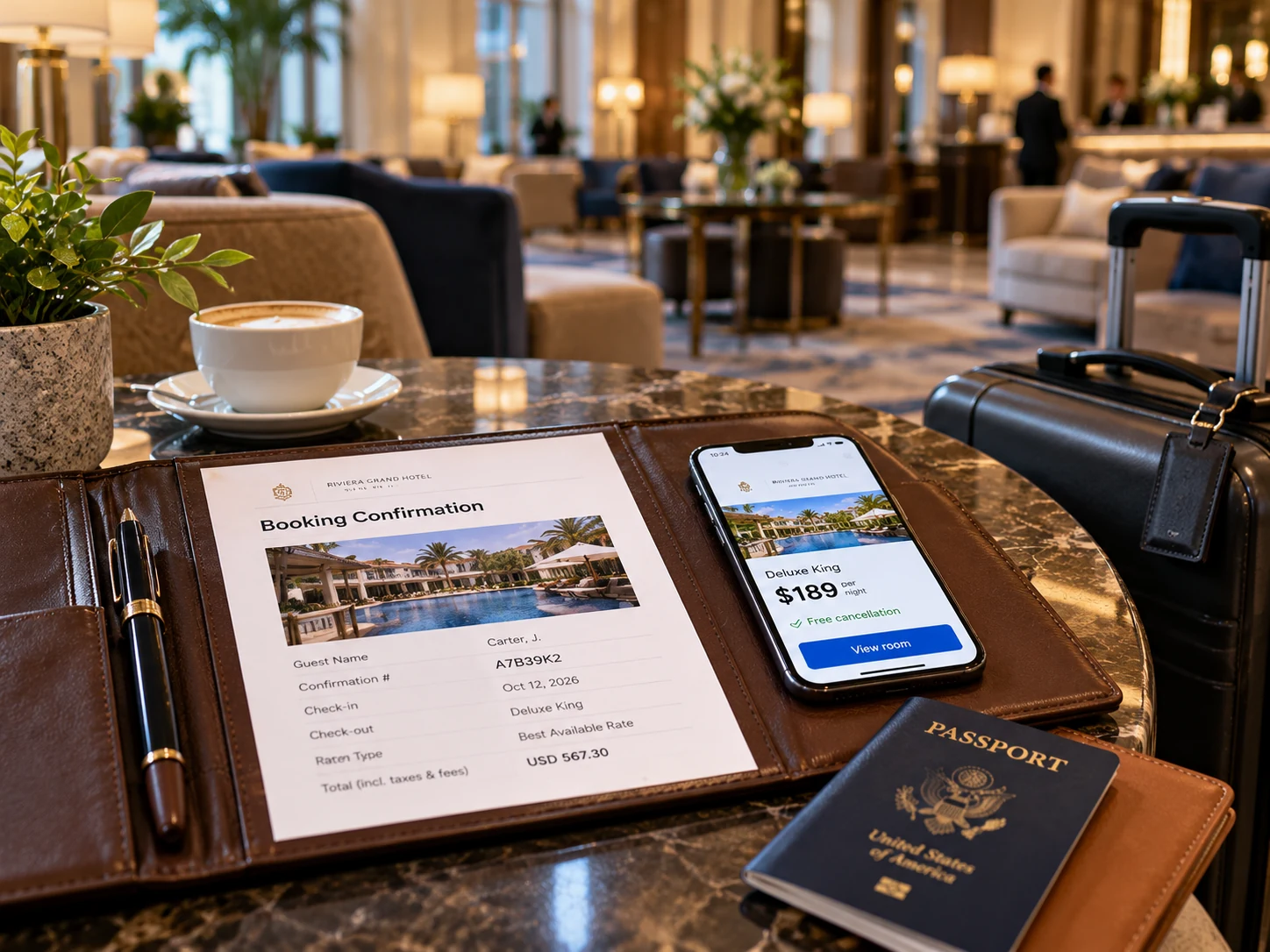
Hotel Charged More Than Confirmed
Identify fees, deposits, pending holds and posted amounts that affect the final total.
Check the price breakdown →Pay Now vs. Pay at Hotel
See how prepayment, cancellation rules and who collects payment change your options.
Compare payment terms →Can a Hotel Cancel a Booking?
Understand reinstatement, replacement lodging and refund questions if the stay is canceled.
Know your options →Why Hotel Charges Stay Pending
Tell temporary card authorizations apart from final payments and possible overcharges.
Understand authorization holds →FAQ
Hotel rate changes after booking: common questions
Can a hotel change the rate after booking?
A hotel may seek to correct a confirmed rate because of a genuine pricing error, reservation modification, booking-channel mismatch, or contract term. That does not automatically make the change permissible. Compare the confirmation and terms, ask for the explanation in writing, and check any applicable consumer protections.
Can a hotel raise my confirmed room rate at check-in?
If the hotel quotes a higher nightly rate for the identical room, dates, occupancy, and terms, show the original confirmation and request the reason and any applicable rate-rule clause. Ask a manager or booking platform to review it before agreeing to a revised amount.
What if the hotel says the original price was a mistake?
Request written details of the error and the hotel’s proposed correction. A genuine, obvious pricing error may be treated differently under the booking terms and applicable law from a routine price increase. If you relied on the reservation, ask about honoring it, a reduced difference, comparable lodging, or another accommodation.
Is a higher final hotel total the same as a rate change?
No. Taxes, resort or destination fees, parking, deposits, guest changes, currency conversion, and charges due at the property may affect the amount paid without changing the nightly room rate. Check which items were disclosed and whether the final charge matches the agreed terms.
What if the booking site and hotel show different rates?
Keep the booking-site confirmation, including rate, room type, occupancy, dates, payment and cancellation rules. Ask the hotel what reservation details it received, and contact the booking platform that issued your confirmation. Request a documented resolution before canceling.
Can I cancel and rebook if the hotel price drops?
Possibly, if your original reservation permits cancellation without unacceptable penalties and the replacement offer is available. Compare room category, total after taxes and fees, included benefits, payment timing and cancellation terms. If practical, verify the replacement confirmation before canceling the original, without creating an unwanted second nonrefundable obligation.
Must a hotel match a lower rate found after booking?
Not necessarily. Hotels typically do not automatically reduce an existing reservation when their current rate drops. A flexible booking or an applicable rate guarantee may offer options, but read eligibility rules and deadlines first.
Should I dispute a hotel charge after a rate change?
If the amount has posted and differs from a valid confirmed agreement, preserve your confirmation, final folio, card record and correspondence, then raise the discrepancy promptly with the merchant and card issuer as appropriate. Do not allow conversations with the hotel to consume applicable dispute deadlines.
Can adding one more night change my original hotel rate?
Yes. Modifying an existing booking can trigger a repricing under current inventory and rate rules. Ask for the revised nightly breakdown before approving changes. A separate adjacent reservation might preserve the original booking but does not guarantee that you can remain in the same room.
Free Travel Guide
Avoid the travel mistakes that can cost you money, flexibility, or time.
Get 27 Travel Mistakes That Cost Travelers Thousands — a practical guide to booking mistakes, hidden costs, travel rules and decisions worth understanding before they become a problem.
- Spot booking details that are easy to overlook
- Understand where hidden costs can appear
- Recognize when a cheaper option comes with a tradeoff
- Make travel decisions with fewer surprises
You’ll also receive occasional practical guidance from Travel Fine Print on booking choices, hidden costs, travel rules and the fine print worth understanding. Unsubscribe anytime.