
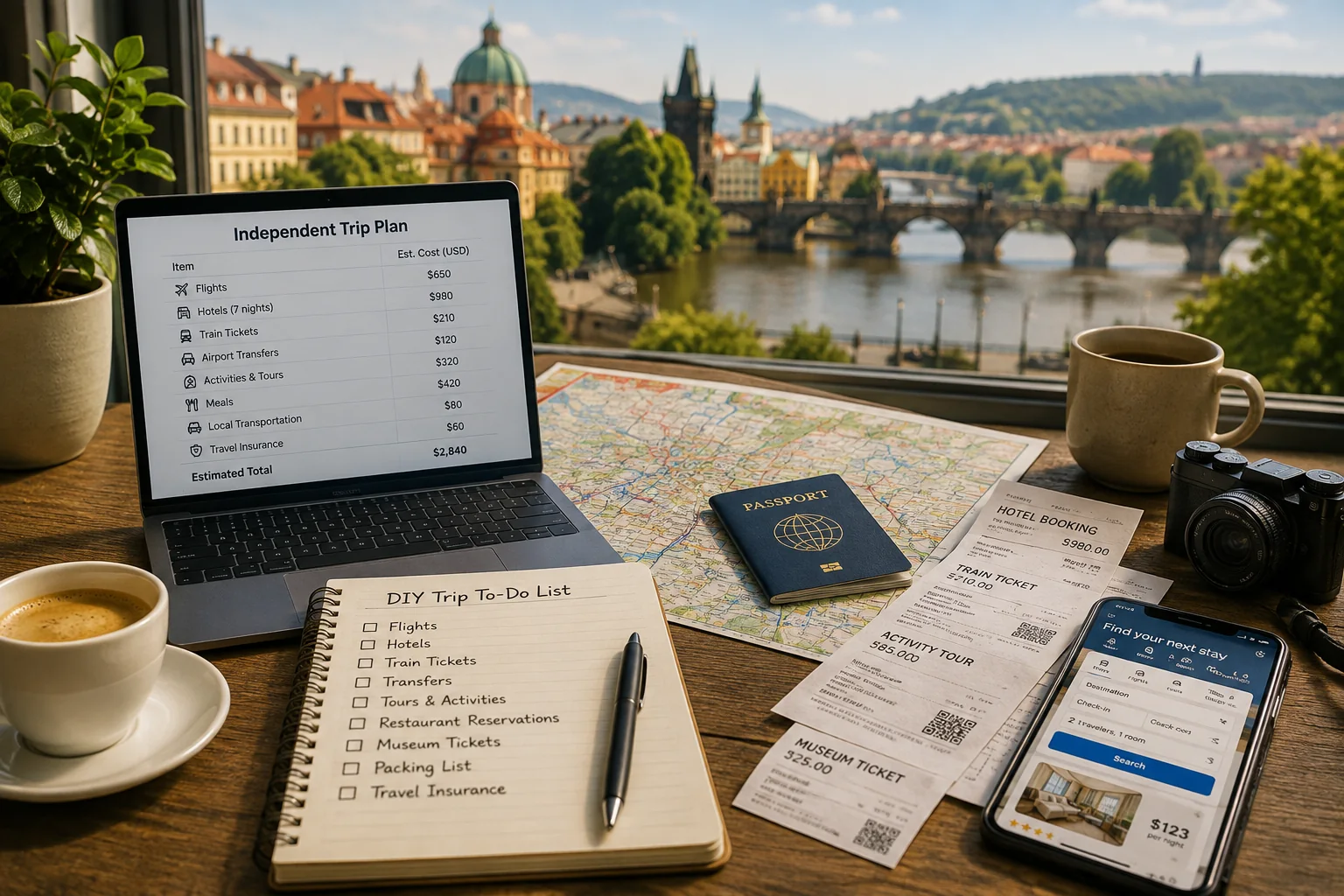
Travel Cost Guide
Guided Tour vs Independent Travel Cost: Which Is Actually Cheaper?
Independent travel often looks cheaper because you see its costs one booking at a time. A guided tour puts much more of the trip into one visible price.
Quick Answer
Independent travel is often cheaper — but not always by as much as it first appears.
DIY travel usually wins on price when the itinerary is simple, you are comfortable planning it yourself and you can keep hotels, transportation and activities under control. Guided tours become more competitive when the trip involves several destinations, difficult transfers, expensive sightseeing or a lot of coordination.
The biggest mistake is comparing a bundled tour price with only one or two independent costs. A fair comparison includes hotels, transportation, transfers, activities, some meals, fees and the time required to organize the trip yourself.
Cost Snapshot
The cheaper option depends on which costs are actually in the comparison.
DIY travel usually starts with a lower headline number. Guided travel often starts higher, but may already include several expenses you would otherwise book separately.
Independent Travel Often Costs Less When…
You can keep the itinerary simple and control the major expenses yourself.
- You stay in one or two destinations
- Public transportation is easy to use
- You find good-value hotels independently
- You do not need many paid guided experiences
- You are comfortable doing the planning yourself
Typical advantage: more control over where to save.
Guided Travel Gets More Competitive When…
The trip requires more coordination and several costly components are bundled.
- The itinerary includes several cities or regions
- Intercity transportation is already included
- Multiple sightseeing experiences are bundled
- Transfers or local guides would otherwise add cost
- You place value on having the trip coordinated for you
Typical advantage: fewer separate expenses and less planning.
Affiliate Disclosure: Travel Fine Print may earn a commission when you book through links on this page, at no additional cost to you. This does not affect our recommendations.
About This Guidance: Travel Fine Print compares guided and independent travel by looking beyond advertised prices to the underlying costs travelers actually face, including accommodations, transportation, transfers, activities, meals, optional expenses, booking effort and the tradeoffs between convenience and flexibility.
Why Guided Tours Can Look More Expensive Up Front
A guided tour puts a large portion of the trip into one visible price. Independent travel usually does the opposite: the total is split across hotel bookings, train or air tickets, transfers, sightseeing, local transportation, meals and other purchases made at different times.
That creates a psychological disadvantage for the tour. A traveler may see a $3,000 organized itinerary and compare it with a $1,400 hotel total, even though the tour may also include intercity transportation, several activities, some meals and other services that have not yet been added to the DIY estimate.
The bigger the itinerary, the more important this becomes. A simple three-night city break is usually easy to compare. A nine-day trip through several cities can involve a much longer list of individual costs that are easy to overlook when estimating the independent version.
That does not mean guided travel is cheaper. It means the tour price should be compared with the fully assembled independent trip, not with only the most obvious DIY expenses.
Why Independent Travel Can Still Be Much Cheaper
Independent travel has one major cost advantage: you control almost every component. You can choose a less expensive hotel, take public transportation instead of private transfers, skip paid excursions, eat where locals eat and stay longer in fewer places.
That flexibility matters most when the trip is simple. If you are visiting one or two cities, transportation is easy and most of what you want to do does not require organized sightseeing, the DIY version may come in well below the price of a guided itinerary.
Independent travelers can also avoid paying for inclusions they do not value. A tour might bundle a hotel standard, group meal or activity you would not have chosen on your own. Building the trip yourself lets you redirect that money toward the parts of the vacation that matter more to you.
The tradeoff is that lower cost usually comes with more responsibility. You are doing the research, comparing bookings, coordinating arrival times and solving problems if one piece of the itinerary no longer works as planned.
Hidden Costs on Both Sides
The biggest pricing mistakes happen when one side of the comparison is incomplete.
Independent travelers often underestimate scattered expenses. Tour buyers can make the opposite mistake and assume the advertised package price covers more than it actually does.
DIY Costs Travelers Commonly Forget
These expenses may be small individually, but they can materially change the total on a multi-city trip.
- Airport transfers and local transportation
- Train or flight seat reservations and baggage fees
- Admission tickets and guided experiences
- Transportation to attractions outside city centers
- Booking fees, taxes or resort charges
- Extra hotel nights caused by transportation timing
- The cost of mistakes, changes or missed connections
Tour Costs Travelers Commonly Overlook
A guided package can simplify the trip without necessarily covering every expense you will incur.
- International airfare to and from the tour
- Optional excursions and upgrades
- Meals not listed as included
- Gratuities for guides and drivers
- Pre- or post-tour hotel nights
- Airport transfers not included in the itinerary
- Travel insurance and personal expenses
TFP takeaway: the cheaper trip is the one with the lower final comparable cost — not the one with the lower first number you see. Some charges appear later in the booking process, so it is also worth checking our guide to hidden travel fees before treating either headline price as final.
Trip Math
What a comparable nine-day trip can look like on both sides
Consider an illustrative nine-day, three-city international trip for one traveler. The point is not to price a specific itinerary, but to show how the comparison changes once both sides include similar accommodations, transportation and sightseeing.
Organized Guided Tour
Many of the major trip components are bundled into one package.
Independent Trip
The same trip is assembled across multiple separate bookings.
Illustrative example only. Actual pricing varies significantly by destination, dates, hotel level, tour operator, transportation choices and included experiences. Compare current prices for the specific trip you are considering.
The Cost Question Changes for Solo Travelers
Solo travelers often face higher per-person DIY costs because hotel rooms, rental cars and private transfers cannot be split with another traveler. Guided tours can narrow that gap by spreading transportation and logistics across a group—but a single supplement can quickly change the math.
Before assuming either option is cheaper, compare the tour’s solo-room policy with the full cost of booking the same trip independently.
Solo vs Couple Economics
Who you’re traveling with can change which option is cheaper.
The same itinerary can produce very different per-person costs depending on whether the biggest fixed expenses are shared.
Solo Traveler
You absorb the full cost of hotel rooms, rental cars and private transfers, which can make independent travel more expensive per person.
Organized travel may become more competitive when transportation, guides and other logistics are spread across the group.
Watch for: single supplements, shared-room options and tours that reduce or waive solo surcharges.
Couple or Two Travelers
Sharing a hotel room, rental car or transfer can reduce the per-person cost of an independent trip substantially.
That often strengthens the DIY price advantage, particularly on simple trips with easy transportation and fewer paid guided experiences.
Watch for: whether tour prices are quoted per person and how much of the independent trip can genuinely be shared.
What to Compare Line by Line Before Calling One Option Cheaper
The most useful way to compare guided and independent travel is to reconstruct the same trip on both sides. That means matching the major components as closely as possible instead of comparing a bundled package with a loosely estimated DIY version.
Hotel quality and location
A cheaper independent hotel is not necessarily equivalent if it is farther from the places you want to visit, requires more local transportation or is at a substantially different quality level from the accommodations included in the tour.
The booking channel can also change the terms attached to the room. Our guide to booking hotels through third-party sites explains how payment, cancellation, refund and support rules can differ from booking directly with the hotel.
Transportation between destinations
Compare trains, domestic flights, private transfers, rental cars and baggage costs against whatever intercity transportation is included in the organized itinerary.
Sightseeing and admissions
Make sure the DIY total includes the attractions, guides and experiences you would actually want to book. A self-planned trip can look artificially cheap if the comparison leaves out several paid experiences that are included in the tour.
Meals and daily spending
If the tour includes breakfasts or selected group meals, add a reasonable equivalent to the independent trip. At the same time, do not treat a few included meals as though the tour covers your full food budget.
Transfers and local transportation
Airport transfers, taxis, rideshares, metro tickets and transportation to outlying attractions can become meaningful expenses on a multi-city trip.
Optional costs
On the guided side, include optional excursions, gratuities, extra meals, pre- or post-tour nights and any transportation that sits outside the official itinerary.
Also remember that a price you see while researching is not always held until payment. Live inventory can change before checkout, which is why our guide to travel prices changing before checkout is useful when you are comparing several bookings over time.
TFP takeaway: if the two versions of the trip are not genuinely comparable, the price difference does not tell you much.

Frequently Asked Questions
Guided Tour vs Independent Travel Cost
Is independent travel always cheaper than a guided tour?
No. Independent travel is often cheaper, especially on simple itineraries, but the difference can shrink once comparable hotels, transportation, sightseeing, transfers and other trip costs are included.
Why do guided tours sometimes look more expensive than they really are?
Guided tours often bundle several major trip costs into one visible price. Independent trips spread those expenses across many separate bookings, which can make the DIY version look cheaper before the full cost is added together.
Are guided tours better value for solo travelers?
Sometimes. Solo travelers cannot split hotel rooms, cars or private transfers with another person, so organized travel can become more competitive. Single supplements can change the calculation, so they should be checked carefully.
What costs should I include when comparing the two options?
Compare hotels, transportation, transfers, sightseeing, meals, optional excursions, baggage or booking fees, local transportation and any other costs needed to make the trips genuinely comparable.
How do I know if paying more for a guided tour is worth it?
Look at the final price difference after building a comparable independent itinerary. If the gap is modest and the tour removes substantial planning or logistical work, the higher price may still represent better overall value.
Bottom Line
The cheaper trip is not always the one with the lower starting price.
Independent travel often costs less, especially when the itinerary is simple, major expenses can be shared and you are comfortable planning the trip yourself.
Guided travel becomes more competitive when the itinerary involves several destinations, expensive transportation, bundled sightseeing or logistical complexity that would otherwise require more separate bookings and coordination.
The most useful comparison is the final cost of taking a genuinely similar trip both ways. If the DIY version remains meaningfully cheaper after all comparable expenses are included, independent travel usually wins on price. If the gap becomes modest, the convenience and structure of the guided option may be worth paying for.
Your Next Step
Price the same trip both ways.
Compare the organized option with the hotels, transportation and experiences you would actually book independently.
Check Guided Tour Prices
Compare current itineraries, operators and included experiences to see what the organized version really costs.
Check Guided Tour PricesPrice the Independent Trip
Compare hotels, flights and other trip components separately to see what the DIY version would cost.
Price the DIY Trip