
Travel Decision Guide · Spain
Barcelona vs. Madrid: Which City Is Better for Your Trip?
Barcelona offers Gaudí architecture, sea air, and neighborhoods that spill toward the Mediterranean. Madrid offers magnificent art museums, inviting plazas, long lunches, and evenings that seem to get started when other cities are winding down. Neither is universally better. The right choice depends on what you want your days to feel like—and how much time you have.
The decision: Choose Barcelona for extraordinary Modernista architecture, a Mediterranean waterfront and a city-and-beach combination. Choose Madrid for major art museums, royal heritage, neighborhood dining and the rhythms of Spain’s capital. With roughly seven nights or more, consider both: direct high-speed rail makes the two-city itinerary practical, but moving hotels still takes time.

About This Guidance
We compare the experiences and booking tradeoffs that most influence this decision: sightseeing, neighborhoods, seasonal conditions, hotel value, day trips and travel between the cities. This is editorial research and practical judgment—not a claim of having personally tested every hotel, ticket or train service.
Quick Decision
Barcelona or Madrid: which should you visit first?
Barcelona is the stronger choice if your ideal first trip to Spain combines Gaudí’s architecture, walkable historic neighborhoods and time by the Mediterranean. The Sagrada Família, modernist streets around Eixample and waterfront give a short city break a distinctive mix of sightseeing and seaside atmosphere. Choose it when the architecture and coastal setting are themselves reasons to travel.
Madrid is the stronger choice if you would rather build your days around the Prado and Royal Palace, relaxed afternoons in Retiro Park, and dinners that stretch into lively evenings. Spain’s capital has no beach, but its museums, monumental center, tapas neighborhoods and historic day trips deliver an exceptional urban itinerary.
Have seven nights or more? You may not need to choose. Direct high-speed trains commonly connect the two city centers in roughly 2½–3½ hours, depending on service. A three-night/four-night split can work well, provided you account for hotel check-in and the transfer day. With only three to five days, choosing one city usually gives you a richer trip.
Two Distinct Travel Experiences
Two cities that can create very different vacations.
The better choice is not necessarily the city with the longer list of famous sights. It is the place where you can picture enjoying breakfast, getting pleasantly lost for an hour, and looking forward to your evening even after the museums close.
Picture a morning in Barcelona: an early coffee, a walk past imaginative Modernista facades, and a day that might end by the waterfront. The city has an unmistakable identity of its own. Its Catalan culture, architecture, and seaside location are not interchangeable with Madrid’s.
Now picture Madrid. You spend the morning in an art museum, take a break beneath the trees in Retiro Park, wander into a lively neighborhood, and realize dinner can be the start of the evening rather than the end of it. Madrid rewards travelers who like to explore one street, bar, or plaza beyond their original plan.
The difference isn’t simply “beach versus museums.” Barcelona also has excellent museums, restaurants, and nightlife; Madrid is rich in architecture and outdoor spaces. The question is which mix feels more like your vacation.
The Decision in 30 Seconds
Which city fits the trip you actually want?
Start with the difference that matters most to you. This is a decision table, not a winner-takes-all scorecard.
| What matters most | Barcelona | Madrid |
|---|---|---|
| The headline experience | Gaudí landmarks, modernist streets, Gothic Quarter and Mediterranean waterfront | Prado and other major art museums, Royal Palace, monumental plazas and grand parks |
| Food and evening atmosphere | Catalan cooking, seafood, vermouth and waterfront evenings | Tapas neighborhoods, long dinners and late-night city energy |
| Getting around | Walkable sightseeing areas connected by metro; Gaudí landmarks spread across neighborhoods | Walkable central districts and metro; museums and royal sights require a realistic plan |
| Hotel decision | Match Eixample, El Born or waterfront access to your actual priorities | Choose between Sol/Gran Vía convenience, historic neighborhoods and museum access |
| Beach time | Yes—urban beaches, though not every stay is a beach holiday | No coast; choose Retiro Park, rooftop pools and urban outdoor spaces instead |
| A memorable day outside the city | Montserrat’s mountain setting or Costa Brava’s coastline | Toledo’s historic hilltop city and monuments |
| Seven or more nights | Consider both: divide nights between Barcelona and Madrid, using direct high-speed rail in whichever direction fits your flights. | |
Your Next Decision
What will make this Spain trip feel like yours?
The next choice is less about which city wins on paper and more about what you’ll look forward to after the main attraction of the day. Choose your starting path, then use our deeper guides to avoid booking a hotel in the wrong neighborhood or building a schedule that leaves no time to enjoy it.
Architecture & Culture
Architecture, landmarks, museums and history: where will you spend your time?
Once the overall atmosphere appeals to you, the next question is what you would actually reserve, visit and build your days around. These highlights can influence both your city choice and your advance-booking priorities.
Barcelona: architecture you can experience outdoors
Barcelona’s appeal often starts before you enter an attraction. A walk through the Eixample can become a design tour, with Gaudí’s work giving ordinary city blocks a sense of theatrical surprise. The Sagrada Família is a centerpiece for many travelers, while the Gothic Quarter adds a different architectural era and a maze of atmospheric streets.
If the basilica is a must-see, don’t assume you can choose any entry time at the last minute. Compare Sagrada Família ticket options before finalizing your sightseeing day. For travelers considering several paid sights, our Barcelona City Pass guide explains the bigger-ticket decision.
Madrid: major collections and royal-scale landmarks
Madrid’s cultural strength is not limited to individual sights. The Prado anchors a remarkable museum district; the Royal Palace brings a different dimension of Spanish history; and historic plazas give the city a sense of grandeur without requiring a museum ticket for every experience.
Art-focused travelers can review Prado Museum ticket options. Those drawn to royal history may also compare Royal Palace admission options. If you’re deciding whether a sightseeing product is worthwhile, start with our Madrid City Pass guide.
After the Sightseeing
Food, Wine & Nightlife: Two Different Kinds of Evenings
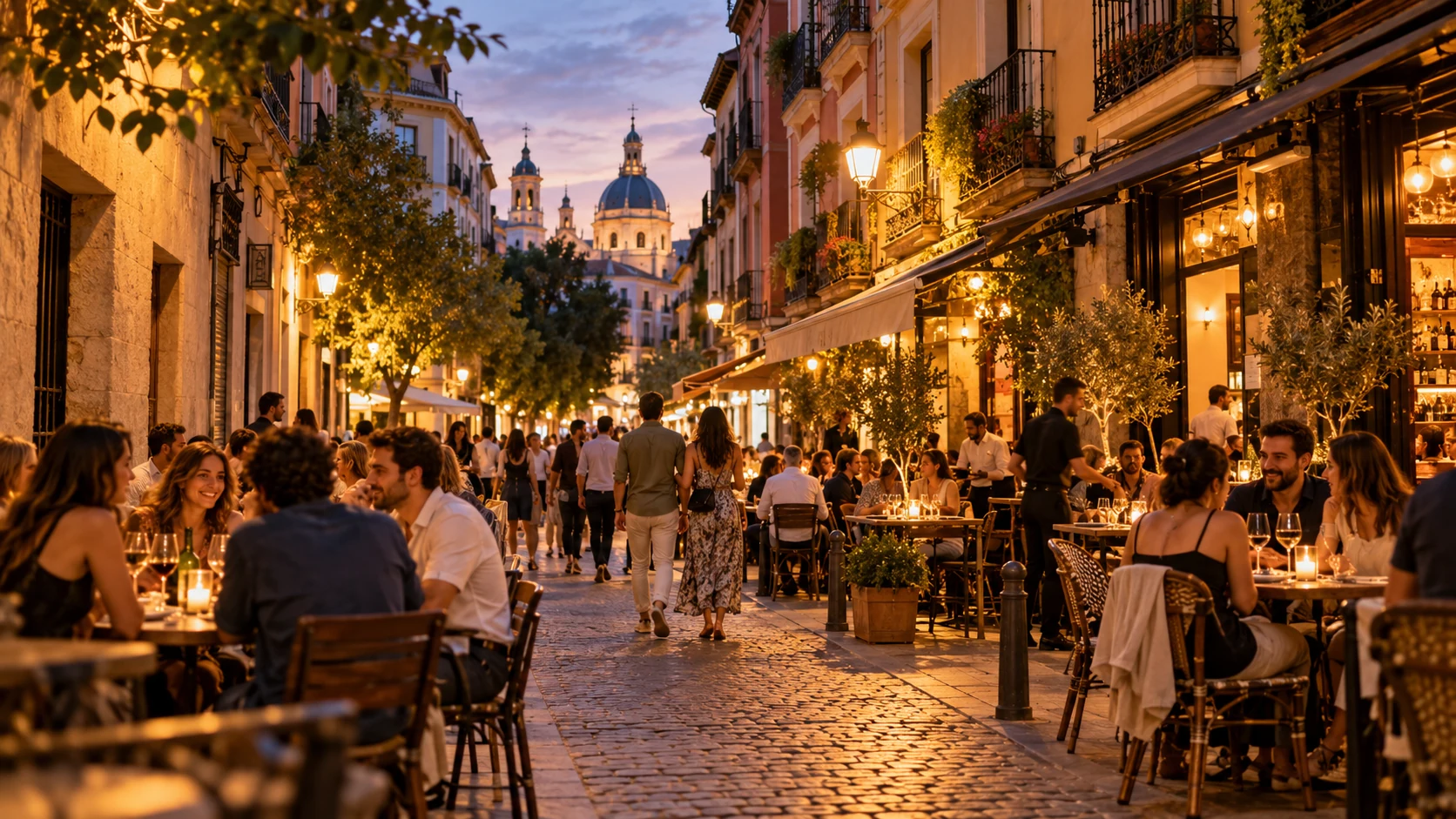
In Barcelona, a memorable evening might mean seafood, Catalan dishes, vermouth, and a stroll through El Born or along the coast. In Madrid, it might mean moving from one tapas stop to another before settling into a longer dinner. Both cities have excellent food and international restaurant scenes; the better fit depends on whether you favor a Mediterranean mood or an energetic capital-city rhythm.
For nightlife: neither city lacks options. Madrid is particularly appealing if you enjoy an evening that starts late and keeps unfolding across neighborhoods. Barcelona adds the draw of warm evenings near the water.
Where to Stay
Hotels & Neighborhoods: Where the Decision Becomes Real
After choosing the experiences that excite you, decide where you want to return each evening. City character matters, but the neighborhood you book can shape the trip just as much. In Barcelona, travelers often weigh Eixample’s broad avenues and architectural sights against the intimacy of the Gothic Quarter or El Born. In Madrid, central areas near Gran Vía, Sol, and the literary quarter appeal for walkability, while other neighborhoods offer a different pace.
Our neighborhood-first guides are the best place to begin: where to stay in Barcelona and where to stay in Madrid. If historic central accommodation in Madrid is a priority, see hotels near Plaza Mayor.
If you already know which city you want, compare properties for your dates directly:
Hotel prices vary by season, events, cancellation conditions, and room type. Compare the full stay cost and location rather than relying on a generic claim that one city is always cheaper. Well-located properties and preferred room categories can disappear on popular dates.
Everyday Logistics
Beaches, Parks, Walkability & Transportation
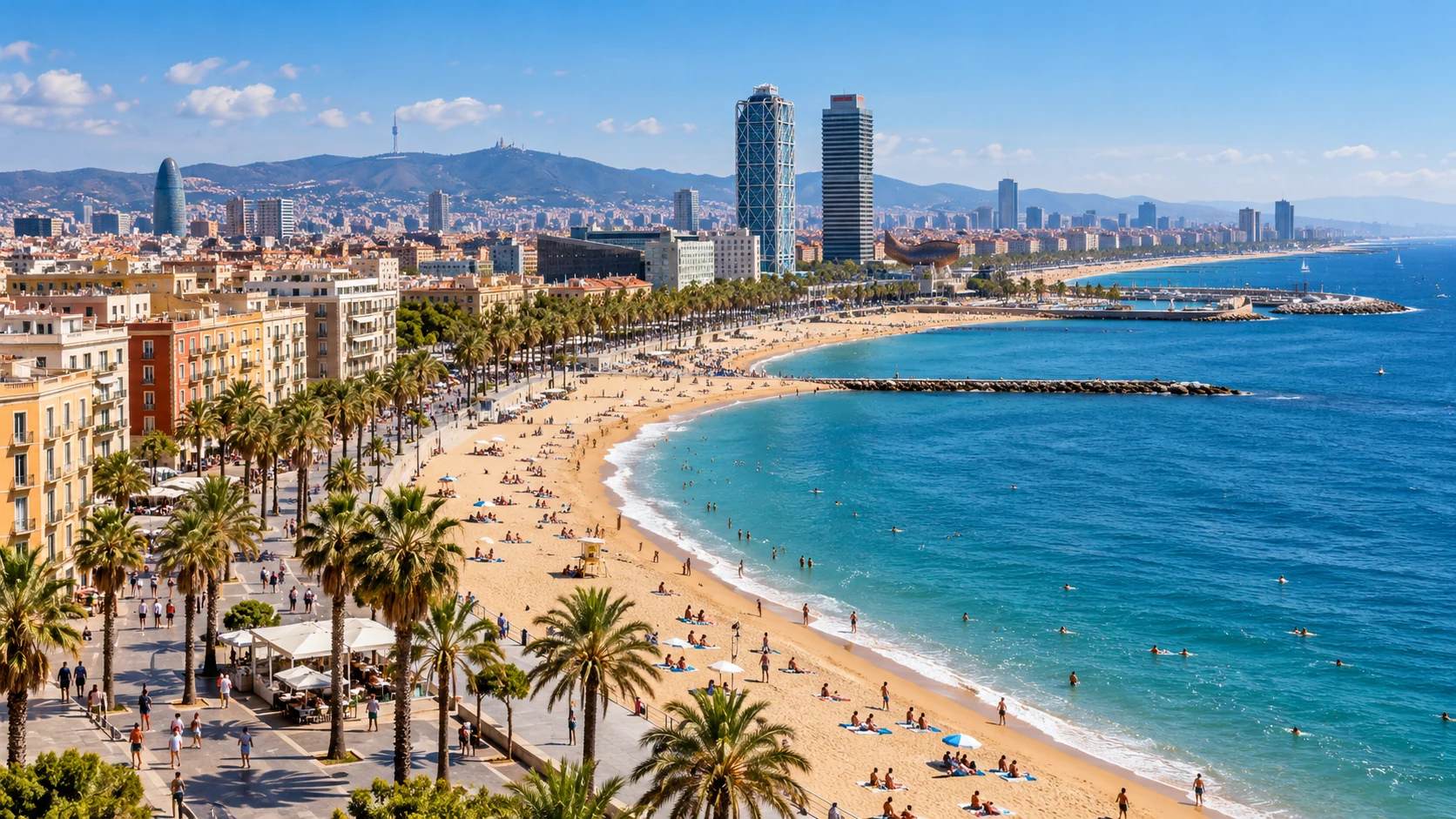
Barcelona’s clear advantage is its coastal setting. You can combine city sights with a walk along the waterfront or time at an urban beach. That does not mean a beach day is guaranteed year-round—or that the city feels like a quiet resort town.
Madrid’s outdoor advantage is urban green space and plazas. Retiro Park, broad boulevards, and outdoor terraces give you room to slow down between cultural visits, but Madrid is inland and has no Mediterranean waterfront.
Both cities reward walking, though neither is a single compact walking district. Choose a hotel near the sights you care about, and use metro or other public transport for longer hops. Attractions are spread across multiple neighborhoods in both places.
Seasonal Tradeoffs
Barcelona vs. Madrid: Which Has Better Weather?
Barcelona’s Mediterranean location generally brings milder winters and humid summer conditions. Madrid’s inland climate means more pronounced seasons, including hot, dry summer afternoons and colder winter nights. Official Spanish tourism climate summaries show Madrid’s typical July–September maximum temperatures above Barcelona’s. That is a useful planning distinction—not a guarantee about the weather on your dates.
Spring and fall are appealing for walking and sightseeing in either city. Summer favors visitors who value Barcelona’s access to the coast, although both can be crowded and hot. Winter can be rewarding for museums, restaurants, and seasonal city experiences; dress for cooler weather, especially in Madrid.
Beyond Each City
The Best Day Trips: Coast and Mountains or Historic Spain?
Barcelona makes an excellent base for two contrasting excursions. Montserrat offers mountain scenery and a remarkable monastery setting; Costa Brava opens up coastal towns, coves, and a very different pace from the city.
Madrid’s standout nearby excursion is Toledo, where medieval streets and layered cultural history make an exceptionally rich day out. If that kind of old-world atmosphere is high on your list, it may tip the balance toward Madrid.
Don’t automatically schedule a full-day excursion when you have only two or three days in the city. A rewarding side trip should enrich your vacation, not leave you racing through its main destination.
Value and Cost
Is Barcelona or Madrid Cheaper?
There is no reliable universal winner. Lodging often makes the largest difference, and the outcome can reverse depending on your dates, how centrally you stay, local events, and the cancellation policy you choose. Attractions and guided experiences also change the equation: a Barcelona trip built around several landmark admissions can cost more than a Madrid visit centered on public spaces, while a museum-heavy Madrid itinerary can add up quickly too.
For a meaningful comparison, price the same number of nights, equivalent hotel locations and standards, the attractions you genuinely plan to visit, and transportation to and from your actual arrival/departure points. For a two-city trip, add rail fare plus the practical cost of switching hotels.
Trip Length
Three, five or seven nights: how much can you realistically see?
Three days: stay in one city
Give your chosen city time for its landmark sights and neighborhoods. A second hotel check-in would consume too much of a short break.
Five days: add an excursion, not necessarily another city
Barcelona offers Montserrat or Costa Brava; Madrid offers Toledo. A day trip creates variety without packing up your hotel room.
Seven nights or more: consider both
Allow three nights in one city and four in the other, including a partial transfer day. Seven nights in Spain are different from seven calendar days that include long international flights. Here’s how the two-city journey works.
Why Not Both?
Barcelona and Madrid make a compelling two-city vacation.
With roughly seven nights or more, you don’t necessarily have to choose. Begin with Gaudí architecture, markets and an evening near the Mediterranean; then take a daytime train to Madrid for museums, historic plazas and a leisurely dinner. You gain two distinct sides of Spain without building a trip around airports.

Why we usually choose high-speed rail
Direct Barcelona–Madrid trains commonly take approximately 2½–3½ hours, depending on the service. That’s time on the train, not a door-to-door promise. Barcelona Sants and Madrid’s high-speed terminals connect with urban transport, but check the exact Madrid station on your ticket; services may use different terminals. Flying means adding airport transfers, check-in, security, boarding and possible baggage claim to the flight time.
Rail can also mean fewer transitions, comfortable seats and luggage close by or in designated racks. But trains still have station procedures, and the lowest fares aren’t always the best value. Compare Renfe AVE, iryo and OUIGO for departure station, total trip duration, luggage rules, refund conditions and price. Flying can make sense when combined with another flight or if rail schedules don’t suit your travel day.
Barcelona–Madrid Rail Map
See the rail link, and the strongest side trips from each city.
Use the city dots to compare high-speed trains in the correct direction. The smaller colored pins highlight one signature day trip from each base: Toledo from Madrid and Costa Brava from Barcelona.
Map tiles © OpenStreetMap contributors. Route line is schematic and shown for trip-planning orientation, not exact railway geometry.
City dots open the relevant Omio booking direction. The Toledo and Costa Brava markers link to our detailed day-trip guides.
An easy starting point for seven nights
Barcelona: three nights. Give Gaudí sights, neighborhoods and a Mediterranean evening time to breathe. Travel day: take a late-morning or midday direct train and check into your Madrid hotel. Madrid: four nights. Explore the Prado, Royal Palace and parks, with Toledo as an optional day trip. Reverse the itinerary when flight schedules or the attractions you most want to see make that smarter.
One practical tie-breaker: check open-jaw international airfare (arrive in one city, depart from the other) against a round trip plus an extra train. Book timed-entry attractions around the dates you can actually be there—not just the route that sounds cheapest.
The Fine Print That Matters
Seven details that can change the better choice for your trip.
Popular attraction tickets
Book must-sees such as Sagrada Família with a realistic time slot. Availability at a favorite attraction can affect the order of your days.
Rail booking conditions
Renfe AVE, iryo and OUIGO differ in fare rules, luggage allowances and flexibility. Check the exact station, operator and total journey time before choosing the lowest headline fare.
Hotel neighborhood
A lower nightly rate may be false economy if every attraction requires a lengthy transfer. Compare the total stay, cancellation conditions, room type and walking or metro access.
Arrival and departure days
These rarely count as full sightseeing days, especially with international flights. A seven-day trip is not necessarily seven usable days in Spain.
Moving between hotels
Allow for checkout, travel to the station, arrival and check-in. If you’ll sightsee between stays, consult our Barcelona and Madrid luggage-storage guides.
Seasonal expectations
Barcelona’s beach is an appealing addition, not a guarantee of swimming weather. Madrid’s summer afternoons can be very hot, and winter nights may feel considerably cooler.
Connectivity and protection
Keep tickets and navigation available using our Spain eSIM guide. For prepaid bookings and medical needs, compare coverage terms rather than assuming every travel-insurance policy works alike.
My Take
Choose based on the hours between the landmarks.
Barcelona is striking from the outset: the individuality of its architecture, Catalan neighborhoods and proximity to the water make it easy to build a visually memorable trip. Madrid can be more of a slow reveal. The appeal is often in a museum visit followed by a shaded park, an unplanned plaza stop and a long, sociable evening.
For me, the better city is the one whose ordinary hours sound appealing—not simply the one with more attractions to check off. If both experiences appeal and the vacation allows it, I would much rather combine them comfortably by train than force a winner.
TFP Recommendation
Choose the city that makes the ordinary moments of your trip more enjoyable.
The Recommendation
Choose Barcelona if architecture, a Mediterranean setting and the option of beach time are central to your visit. Choose Madrid if museums, royal history, restaurant neighborhoods and an inland capital-city experience feel more rewarding. Visit both when you can give each city several nights instead of treating a train ride as a substitute for time there.
Your Next Step
First choose your city—or decide that you have enough nights for both. Next compare well-located hotels for your dates, reserve any must-see timed entries, and check train fares in the direction that matches your flights. Booking in that order helps avoid a hotel or train reservation that works against your sightseeing plans.
Find the right Barcelona neighborhood · Find the right Madrid neighborhood · Plan both cities by train
Smarter travel, straight to your inbox
Booking choices, hidden costs, travel rules and useful fine print—explained clearly.
Before You Go
Turn your city choice into a smoother Spain itinerary.
A destination decision is only the beginning. Work out where to stay, which tickets truly need advance reservations, and how your arrival and departure days affect your plans.

Choose a neighborhood that fits Gaudí sightseeing, walks and the waterfront.
Compare Barcelona areasWhere to Stay in MadridCompare central neighborhoods, museums and evening atmosphere.
Compare Madrid areasBest eSIM for SpainStay connected for tickets, maps and changing train plans.
Plan connectivityMadrid Luggage StorageHandle the hours between train arrival and hotel check-in.
Plan luggage timingFrequently Asked Questions
Barcelona vs. Madrid: common questions
Is Barcelona or Madrid better for a first-time visitor?
Barcelona often appeals to visitors seeking famous architecture and the Mediterranean; Madrid may be the better choice for major art museums, historic civic spaces, and late-night dining. Neither is universally better. Match the city to your priorities.
Is Barcelona more expensive than Madrid?
Not consistently. Hotel dates, location, standards, and attraction plans matter more than a blanket ranking. Compare your full itinerary and booking terms.
Can you visit Barcelona and Madrid in one week?
Yes, particularly with seven nights on the ground. A three-night/four-night split is realistic if you accept one partial day for the rail transfer. Seven calendar days including flights will be tighter.
How long is the high-speed train between Barcelona and Madrid?
Many direct trains take roughly 2½ to 3½ hours, depending on the operator, stops, and departure. Check the specific service for your dates.
Is it better to take the train or fly between Barcelona and Madrid?
For many city-center itineraries, high-speed rail is a convenient default because it avoids airport transfers at both ends. But compare door-to-door times, fares, luggage rules and your actual onward travel before deciding.
Does Madrid have beaches?
Madrid is inland and has no Mediterranean beach. Barcelona has urban beaches and a coastal setting; Madrid offers parks, plazas and other outdoor spaces.
Which city is better for day trips?
Barcelona is a strong base for Montserrat and Costa Brava; Madrid offers Toledo and other historic inland cities. Pick according to the experiences you want.

Free Travel Guide
Avoid the travel mistakes that cost you money, time or flexibility.
Get 27 Travel Mistakes That Cost Travelers Thousands—practical guidance on bookings and the details worth checking before you pay.
- Spot booking rules easy to overlook
- Understand when advertised savings conceal tradeoffs
- Check reservations, cancellation rules and hidden costs
- Make travel decisions with fewer surprises
Occasional travel guidance. Unsubscribe anytime.