
Hotel Billing & Payment Holds
Why Is My Hotel Charge Still Pending? Holds, Timing & What to Do
A hotel charge can remain pending after checkout—or vanish from your statement entirely. Usually, that involves a temporary card authorization, but the next step depends on whether the transaction is still pending, disappeared, or has posted.
The decision: Identify the transaction status first. A pending hold needs release or timing clarification; a posted charge needs to match the final hotel folio.
About This Guidance
This guide distinguishes hotel authorization holds from settled payments, explains why transactions disappear, and shows when to contact the hotel, bank, or booking platform.

Quick Answer
Why is my hotel charge still pending?
Usually because the hotel placed an authorization hold that has not yet settled or expired. The hold may cover the expected room cost, taxes, deposits, parking, and incidentals. While pending, it can reduce your available credit or bank balance—even if no final charge has posted.
After checkout the hold may be released, expire, or be replaced by the hotel’s final payment. If the hotel confirms release but you still see it, the card issuer may be the next place to check.
Decision in 30 Seconds
Which hotel transaction are you seeing?
These situations look similar in a banking app, but they call for different actions.
| What you see | What to do | What it means |
|---|---|---|
| Still pending | Ask the hotel whether the authorization is active or has been released; ask your bank when it will clear. | Do not assume it is an extra settled charge. |
| Disappeared | Check whether the authorization was released or replaced by a posted payment; watch the final statement. | Disappearing does not necessarily equal a refund. |
| Higher than expected | Request the hotel’s authorization calculation, including taxes and daily incidentals. | A hold can exceed the final bill. |
| Now posted | Compare the final amount with the itemized folio; investigate discrepancies promptly. | A posted charge is no longer merely a hold. |
Start Here
A pending authorization is not the same as a final hotel payment.
At check-in, hotels commonly authorize a payment card to verify available funds. The authorization may reduce the amount you can spend without the hotel yet receiving a final settled payment.
Pending: the transaction is not fully settled. Posted: the payment has finalized and should be supported by your folio or another documented charge.
The distinction that matters
One pending amount and one posted amount do not necessarily mean you paid twice. Two distinct posted amounts require a closer look. See Hotel Charged Me Twice if both amounts have settled.
Why Hotels Hold Funds
What do hotel pending charges usually cover?
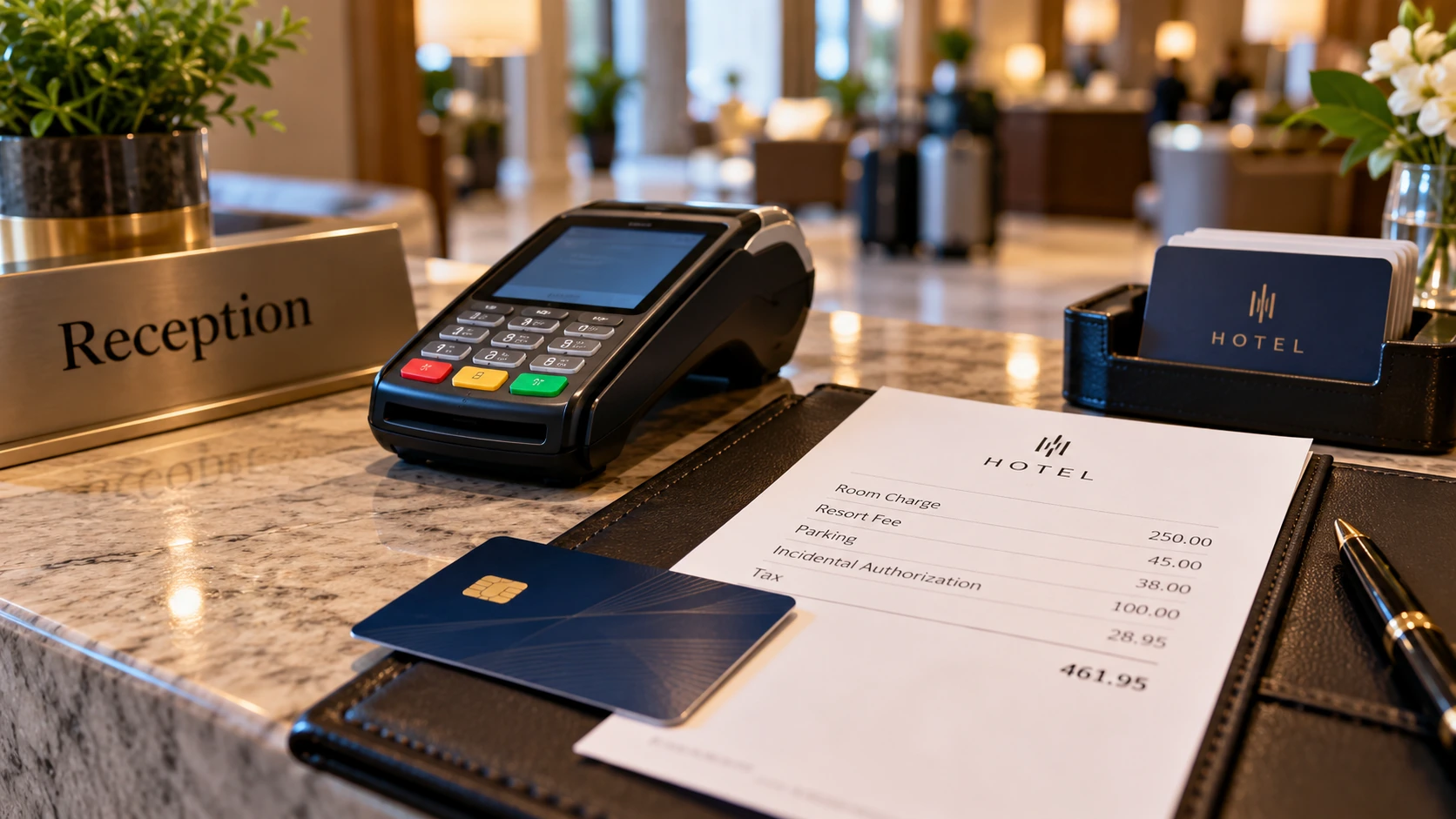
A hotel may authorize more than the advertised room rate. The total can reflect several expected and potential charges, depending on the booking and property policy.
Room and taxes
If you have not prepaid, the property may authorize all or part of the room balance plus taxes and required fees.
Daily incidentals
A per-night cushion may cover food, minibar use, room service, parking, or other extras—even if you do not ultimately use them.
Deposits and security
Some properties use a separate authorization for security, pet-related amounts, or possible room damage.
Before the next stay, compare hotel booking terms and payment options and confirm which charges are collected now versus held at the property.
Disappearing Transactions
Why did my hotel charge disappear from my credit or debit card?
A hotel pending charge may vanish when its authorization expires, the property releases unused funds, or the bank replaces it with the final posted hotel charge.
A disappearing hold is not automatically a refund, a canceled reservation, or a promise that no charge will follow. A legitimate final hotel bill can still post later through the merchant’s settlement process.
Compare the final hotel folio with the following card activity. If nothing posts when you expected to pay, verify the balance with the hotel rather than assuming the stay was free.
Release Timing
How long do hotel pending charges last after checkout?
Many hotel authorization holds clear within a few business days after checkout, but there is no universal hotel-hold deadline. The precise timing can depend on the hotel’s release, payment network, card issuer, type of card, and how the original authorization was processed.
Weekends and holidays can complicate the appearance of transactions. Debit-card and international travel holds can be especially inconvenient. If a hold lingers, ask the hotel whether it sent a release and ask your card issuer when it will restore the available funds.
Ask two different questions
Hotel: “Has the authorization been released, and can you confirm the amount and date?” Card issuer: “Do you still see an active hotel authorization, and when is it expected to expire or clear?”
Available Funds
A debit-card hotel hold can be more disruptive than a credit-card hold.
A pending authorization generally reduces available credit on a credit card. On a debit card, it can reduce spendable funds in your checking account. That difference matters if you need money for meals, transportation, or another hotel while traveling.
For a future stay, review property payment policies before booking and ask how much incidental authorization the property requires. Using a credit card may help preserve checking-account liquidity if it fits your financial circumstances and the property accepts it.
Higher Than Expected
Why is the hotel pending amount higher than the room rate?
The hold may combine the room balance with taxes, fees, parking, and incidental allowances. For example, on a three-night stay a $75 nightly incidental authorization adds $225 to the amount temporarily held, even if you never spend that money.
Request the hotel’s exact authorization breakdown and distinguish money temporarily reserved from amounts actually charged. A hold exceeding the room rate is not, by itself, evidence of overbilling.
For a later trip, compare hotel rates and payment terms, then confirm the property’s incidental-hold amount directly. A lower advertised rate does not necessarily mean less money will be tied up at check-in.
If the Hold Persists
What should you do if a hotel hold will not drop off?
1. Check its status
Confirm whether the transaction is pending, posted, or gone; capture a screenshot before it changes.
2. Contact the hotel
Request written confirmation of the release, the authorization amount, and the date. Ask whether the final bill was settled separately.
3. Contact the card issuer
If the property says it released the hold, ask the bank or issuer to verify its status and expected expiration.
4. Protect essential funds
If the hold is disrupting necessary spending, explain that to your bank promptly and ask about available options; do not rely on a promised automatic date.

Posted Hotel Charges
What if the pending hotel charge becomes a posted payment?
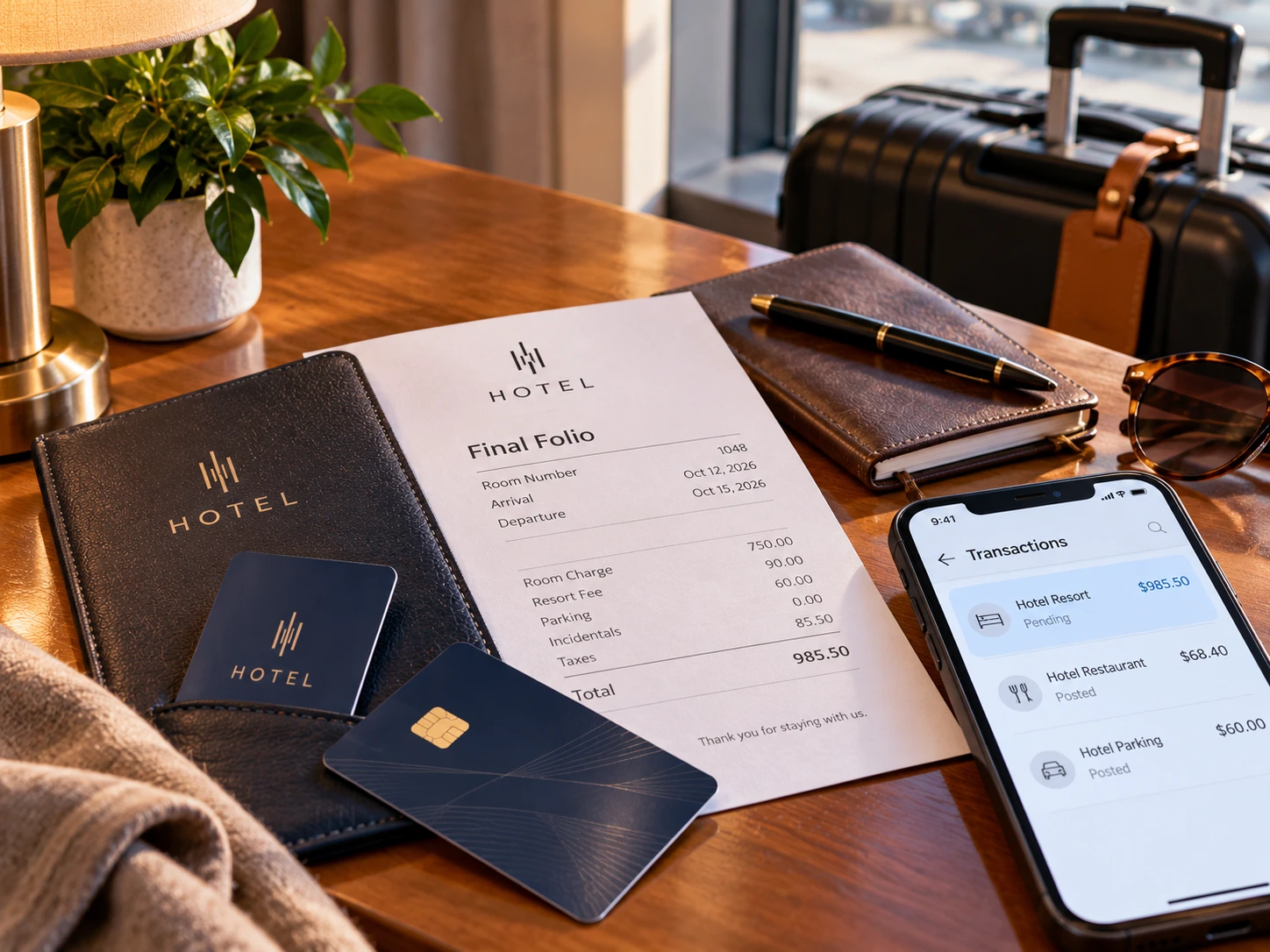
Compare the final posted amount with the hotel folio. If it matches, the pending authorization may simply have become the settled stay payment. If it does not match—or appears twice after both transactions post—ask the hotel or the company that collected the payment for an updated itemized explanation.
For an after-checkout fee or a disputed adjustment, use our post-checkout hotel charges guide. Do not let an unresolved hotel response cause you to miss applicable card-dispute deadlines; qualifying U.S. credit-card billing errors may require a timely written notice to the issuer at its designated billing-disputes address.
Keep a Paper Trail
What evidence should you save before the pending transaction changes?
Save the booking confirmation, the property’s deposit or incidental-hold policy, a screenshot of the pending amount, the final folio, any later posted transaction, and messages with the hotel or card issuer.
This record shows what was authorized, what the hotel actually charged, and what should have been released—without assuming a mistake occurred.
The Fine Print That Matters
Five distinctions travelers should know about hotel holds.
Pending does not equal settled
A hold reduces available spending power but may never become a posted payment.
Released does not always mean immediately invisible
The hotel may release a hold before the card issuer removes it from your account display.
Disappeared does not mean refunded
An authorization can vanish without any settled payment having been refunded.
Incidental allowance is not an incidental purchase
A hotel can reserve funds for potential extras without billing those extras.
Card type changes the impact
Credit holds affect available credit; debit holds can tie up checking-account funds.
My Take
I would check the hold amount before handing over a debit card.
I understand why a disappearing hotel charge feels like a billing mistake, and why a hold that refuses to drop off is frustrating. But the first thing I would establish is whether the amount was authorized or actually collected.
For a long stay or a trip with several hotels, I would ask about the incidental hold at check-in and use a card that leaves sufficient money available for the rest of the trip. If the property says a hold was released but it still reduces my balance, I would follow up with the issuer rather than repeatedly asking the front desk to do something it may have already done.
TFP Recommendation
Confirm the authorization status before treating it as an overcharge.
The Recommendation
Pending: verify the release. Disappeared: check for the final settlement. Posted: match it to the folio.
That sequence usually identifies the right person to contact and avoids confusing a temporary hold with an actual duplicate charge.
Your Next Step
Choose the action that matches what is happening in your account.
Smarter travel, straight to your inbox
Booking choices, hidden costs, travel rules and useful fine print — explained clearly.
Before You Go
Keep hotel payment surprises from becoming trip problems.
These guides explain duplicate charges, post-checkout billing, booking payment timing, and unexpected totals.
Hotel Charged Me Twice
Separate a second posted payment from a temporary authorization.
Check for a duplicate →Can a Hotel Charge You After Checkout?
Learn when delayed charges are legitimate and what documentation to request.
Understand later charges →When Do Hotels Charge Your Card?
Understand pre-arrival, check-in and checkout payment timing.
Check payment timing →Hotel Charged More Than Confirmed
Compare taxes, fees, deposits and incidentals against your confirmed total.
Review the final price →FAQ
Hotel pending charges: common questions
Why is my hotel charge still pending?
Most often, the charge is a temporary authorization that has not settled or expired. It may cover the room, taxes, deposit, parking, or incidentals. Ask the hotel whether the authorization remains active and check with the card issuer if the hotel says it was released.
How long do hotel pending charges last?
Many holds clear within a few business days after checkout, but no single deadline applies. Timing varies with the card issuer, debit versus credit card, hotel processing, and the authorization terms. Ask both the hotel and the issuer for the status rather than relying on a universal number of days.
Why did my hotel charge disappear from my credit card?
An authorization may have expired, been released, or been replaced with the final settled payment. A vanished pending transaction does not necessarily mean the hotel canceled its bill or that you received a refund.
Why did a hotel charge disappear from my debit card?
The bank may have released the temporary hold, restoring available funds. The hotel may still submit the legitimate final bill later; compare your folio and subsequent statements.
Is a pending hotel charge the same as a completed charge?
No. An authorization generally reserves available credit or funds without being a settled purchase. A posted charge is a completed transaction. A hold can nevertheless limit spendable funds, especially on a debit card.
Why is my hotel pending charge higher than the room rate?
The authorization may include room charges, taxes, resort or destination fees, deposits, parking, and a daily incidental allowance. Ask the property for its exact hold calculation and the amount it expects to settle.
What do I do if a hotel authorization hold will not drop off?
Verify that the charge is still pending. Request the hotel’s authorization release confirmation, then ask your card issuer when the hold will be removed. Keep screenshots and emails, especially if the hold affects essential funds.
What if my hotel pending charge becomes a posted charge?
Compare the posted transaction to the final itemized folio. If the amount differs or duplicates another posted transaction, ask the correct merchant to explain or correct it promptly. Preserve applicable card-dispute deadlines while you investigate.
Can a hotel charge me again after a pending hold disappears?
A hotel can still submit a final charge it is entitled to collect, even if an earlier authorization disappears. Whether a particular charge is proper depends on the reservation terms, folio, services, and applicable law.
Free Travel Guide
Avoid the travel mistakes that can cost you money, flexibility, or time.
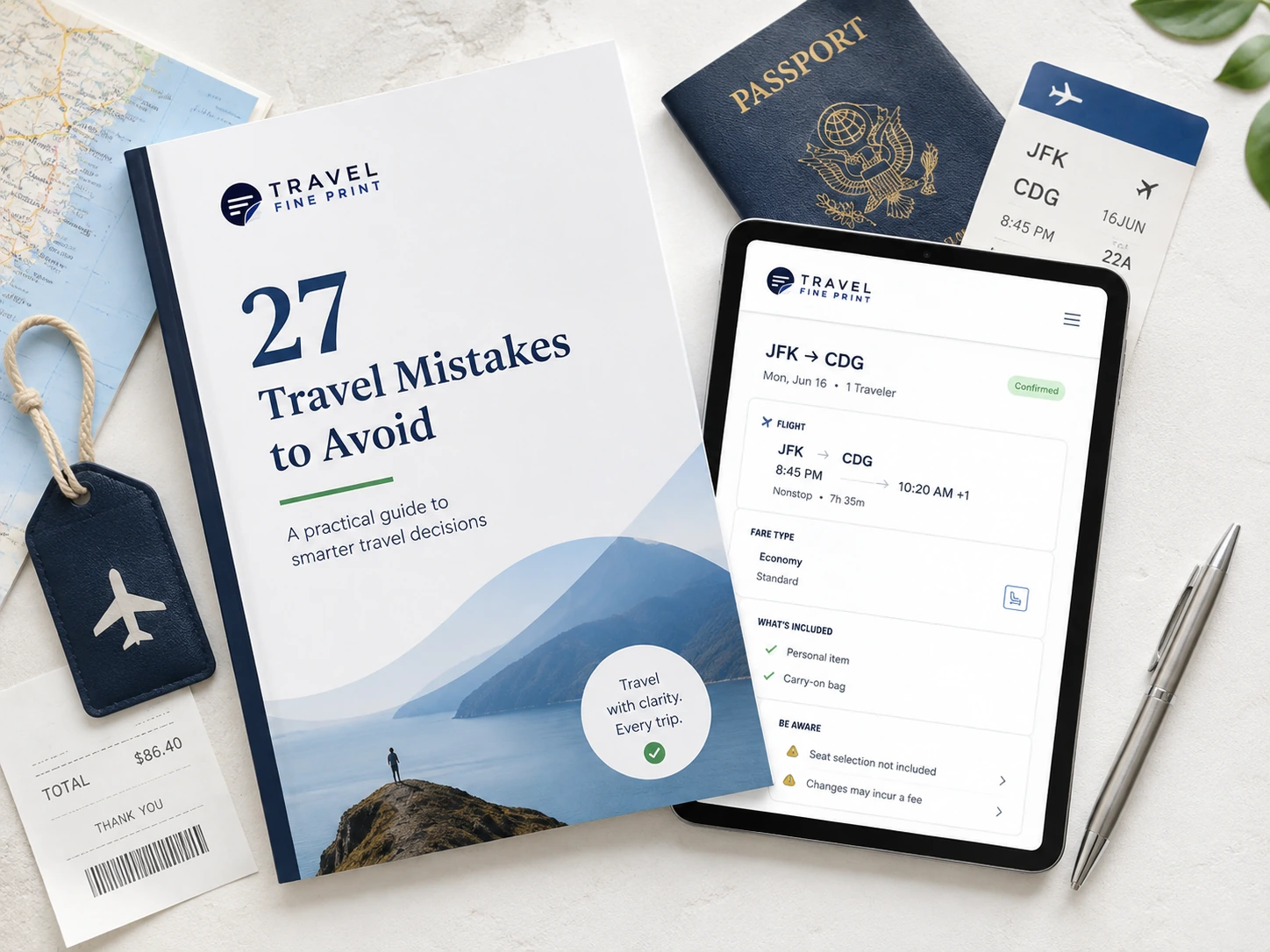
Get 27 Travel Mistakes That Cost Travelers Thousands — a practical guide to booking mistakes, hidden costs, travel rules and decisions worth understanding before they become a problem.
- Spot booking details that are easy to overlook
- Understand where hidden costs can appear
- Recognize when a cheaper option comes with a tradeoff
- Make travel decisions with fewer surprises
You’ll also receive occasional practical guidance from Travel Fine Print on booking choices, hidden costs, travel rules and the fine print worth understanding. Unsubscribe anytime.