
Japan Travel Decision Guide
Mount Fuji Day Trip From Tokyo: Best Tours, Trains & Ways to Go
Is Mount Fuji worth a day trip from Tokyo? Compare a small-group excursion, private driver, independent rail and highway buses, and rental cars—then decide which Fuji-area viewpoints can realistically fit into a single day.
The decision: For a first-time visitor who wants several scattered viewpoints without managing local connections, start with an organized small-group excursion. Travel independently for a slower Lake Kawaguchiko day; choose a private tour or rental car for custom stops; stay overnight if a second opportunity for mountain views matters more than returning to Tokyo immediately.
About This Guidance
Written and reviewed by Brandon Gaither, Travel Fine Print.
This researched guide compares published transport information, sightseeing geography, tour descriptions, and booking fine print. Explore our Day Trips, Tours & Attractions guidance for more trip-planning decisions.
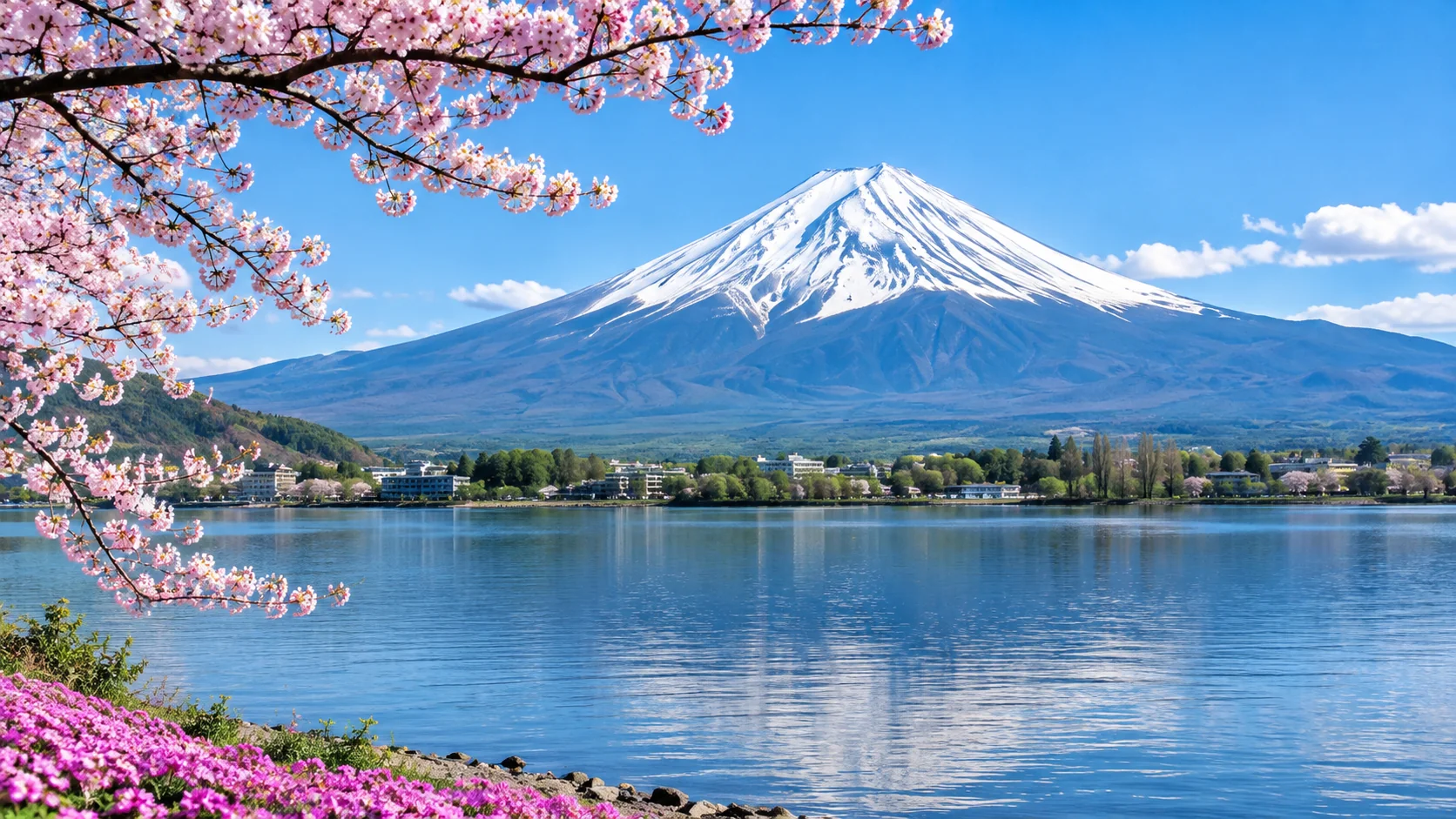
A clear view of Mount Fuji is the reward—but the weather, travel method and exact stops determine whether a day trip delivers it.
Quick Decision
Is a Mount Fuji day trip from Tokyo worth it?
Yes, if you have a full day and keep your expectations flexible. The Lake Kawaguchiko and Fujiyoshida area offers dramatic views, villages, gardens and the famous Chureito Pagoda viewpoint. Yet Mount Fuji can disappear behind clouds even when skies elsewhere in Tokyo are clear.
For several separate stops, a guided excursion reduces the effort of coordinating local buses and trains. For a relaxed lakeside visit, taking the Fuji Excursion train or a highway bus to Kawaguchiko and exploring independently can be more satisfying than racing through every landmark.
Our starting point is a maximum-15-traveler group excursion; compare its current itinerary, meeting point, walking demands and cancellation policy before buying. A private tour is a separate choice when customizable routing outweighs the price premium.
Ready to compare options? Check small-group tour dates →Compare Tokyo–Kawaguchiko travel →
Why Mount Fuji Is Worth the Journey
What makes this more than a mountain photo stop?
A Fuji-area excursion is most rewarding when its scenery and local experiences match your interests—not when you simply collect five photo stops.
Lake Kawaguchiko scenery
The shoreline, lakeside parks and changing seasons create different perspectives on the same mountain.
Chureito Pagoda viewpoint
The pagoda-and-mountain composition is famous for a reason, but it requires a substantial stair climb and favorable visibility.
Oshino Hakkai spring ponds
A traditional village setting with clear spring-fed ponds. It is separate from the main Kawaguchiko lakeside bus circuit.
Room to slow down
Lakeside walks, cafés and local attractions can make the trip worthwhile even if Mount Fuji remains partly hidden.
Who might skip it? If you have only two days in Tokyo, dislike long travel days, or require guaranteed mountain visibility, compare less weather-dependent options in Best Day Trips From Tokyo.
The Decision in 30 Seconds
Choose your Mount Fuji trip by what you want to see and manage.
| Your priority | Best starting point |
|---|---|
| Multiple highlights, fewer transfers | Small-group guided tour. Compare the listed stops and meeting point; logistics are organized.Check tour dates → |
| Flexible stops for a couple or family | Private excursion. Agree on your exact route and all-in private-party price.See private tour options → |
| Lakeside day at your own pace | Train or highway bus. Plan local transport and reserve the return trip.Compare travel options → |
| Remote viewpoints and regional flexibility | Rental car. Confirm Japanese driving-document requirements before booking.Compare rental cars → |
| More time and another weather window | Overnight at Kawaguchiko. Choose the exact room/view category.Check hotel rooms → |
Compare complete costs: a DIY day involves the Tokyo–Kawaguchiko return journey, local buses or taxis, any attraction admissions, and food. A guided tour replaces many transfers but does not guarantee clear weather or every advertised stop under all conditions.
Your Next Decision
How many Fuji viewpoints do you really need in one day?
Deciding on the stops before choosing transport prevents the common mistake of buying a rail ticket and assuming every famous viewpoint is nearby.
Mount Fuji Orientation Map
See why Kawaguchiko, Chureito and Oshino Hakkai are separate stops.
Use the pins or right-hand guide to understand the geography before buying a train ticket, tour or pass. Locations are for orientation, not live journey guidance.
Approximate orientation points; no route or transit time is implied. Map data © OpenStreetMap contributors.
Independent Travel · Train or Highway Bus
Tokyo to Kawaguchiko independently: straightforward arrival, separate local sightseeing.
Direct rail: Fujikyu Railway’s published March 2026 timetable shows four regular daily Fuji Excursion round trips between Shinjuku and Kawaguchiko, with some seasonal extras. Journey times are roughly two hours, depending on the service. Reserve the desired train and return seat where possible; alternative itineraries change at Otsuki.
Highway bus: Direct services operate from the Shinjuku Expressway Bus Terminal to Kawaguchiko and selected Fuji-area stops. Buses can be practical, but road traffic and the exact arrival stop matter. Check the operator’s current availability before assuming the bus is faster or cheaper.
The local-transport catch: Oishi Park is served by Kawaguchiko-area sightseeing buses; Chureito Pagoda usually involves reaching Shimoyoshida and walking uphill; Oshino Hakkai requires a different bus route. You cannot treat all three as station-adjacent attractions.
Compare Japan transport options (enter Shinjuku and Kawaguchiko) →
For actual seat availability and routes, also check the official Fuji Excursion timetable, highway-bus information and Fujikyu local sightseeing buses. Omio’s linked page may require manually entering your route rather than opening a prefilled booking.
The Fuji Excursion train reaches Kawaguchiko Station, not Mount Fuji’s summit or every viewpoint. The mountain’s climbing season is a different travel decision.
Independent Travel · Rental Car
Renting a car for Mount Fuji: best for multiple stops, not always the easiest day.
A car can make dispersed Fuji Five Lakes viewpoints, a longer meal stop and a flexible return feasible without waiting for local buses. The counterweight is driving from Tokyo, tolls, parking, navigation and traffic—especially on busy weekends and foliage or cherry-blossom dates.
Compare the complete rental cost, including pickup hours, insurance excess, fuel, expressway tolls, parking and any one-way fee. If possible, evaluate whether renting locally after arriving by train would fit better than driving out of Tokyo.
License fine print: Japan generally recognizes qualifying international driving permits issued under the 1949 Geneva Convention; certain designated foreign licenses have a separate official-Japanese-translation pathway. A generic “international driver’s license” website purchase is not proof of eligibility. Check JNTO’s driving guidance and your rental operator’s document rules.
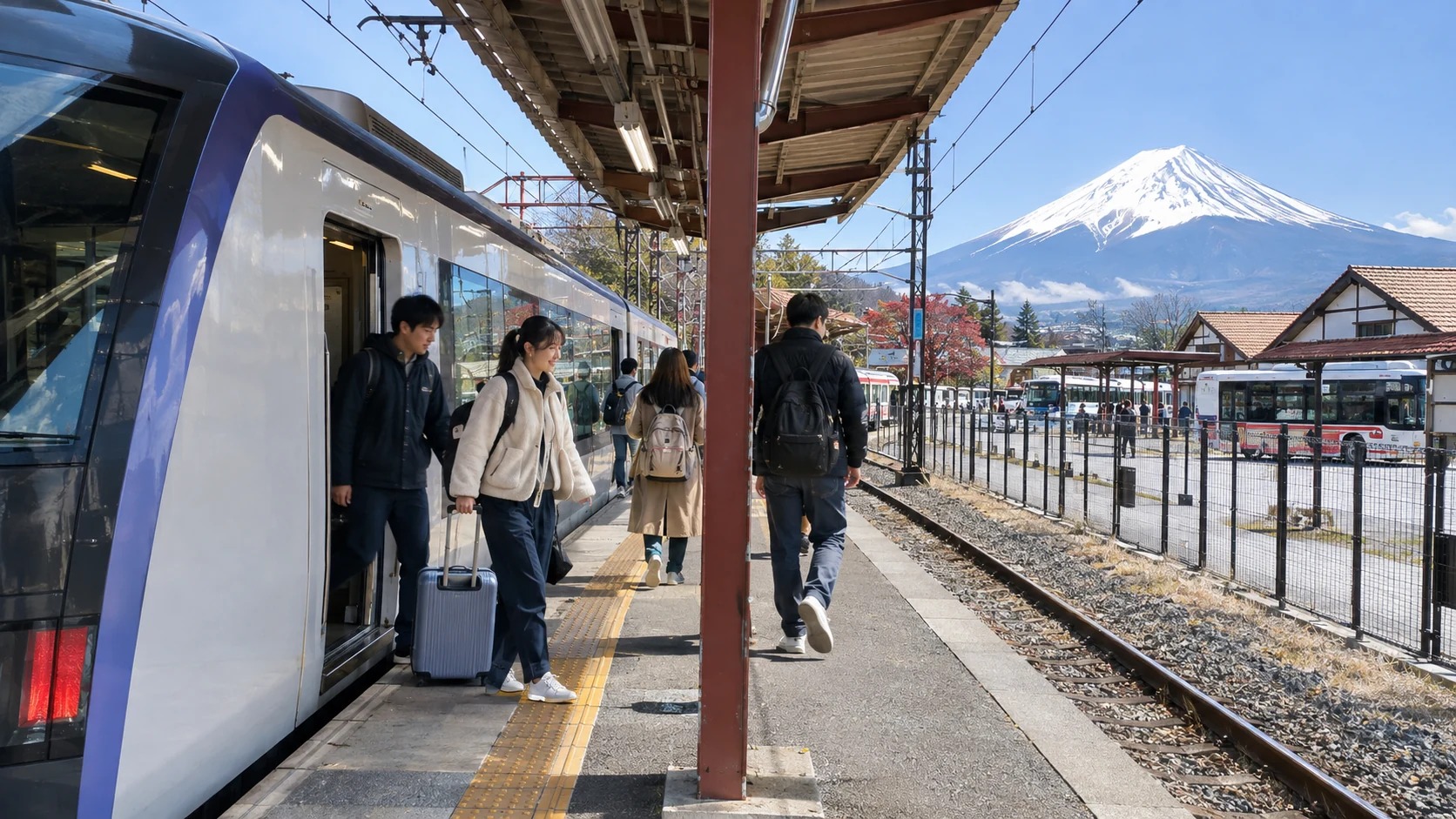
Reaching Kawaguchiko by train is one part of the day; lakeside viewpoints and the more distant stops may require additional buses, trains or taxis.
Guided Experiences
Which Mount Fuji day tour is worth booking from Tokyo?
Compare group size, exact stops, departure location and available time at each viewpoint before you compare headline prices. Tour operators may change the sequence or substitute stops because of weather, road conditions or operational constraints.
Traveling independently means coordinating:
Prefer fewer connections? A guided excursion can combine widely separated stops in a day, but a clear view of Mount Fuji is never guaranteed.
Featured Experience · Small-Group Excursion
Small-Group Mount Fuji and Lake Kawaguchiko Tour From Tokyo
Our starting point for travelers who want several classic viewpoints without handling every transfer. The selected Viator listing has been presented as a maximum-15-person excursion, with a Tokyo meeting point and Fuji-area sightseeing including the popular Kawaguchiko and Fujiyoshida region. Check the actual offered itinerary for your travel date; a named photo stop is not guaranteed merely because it appears in editorial imagery.
How we chose: We prioritized a published small-group cap and a route oriented toward distinct Fuji-area viewpoints, rather than treating a conventional bus outing as equivalent. Reconfirm the operator’s current cap, guide language and confirmed stops.

Customizable private Mount Fuji excursion
Best when your party values route input, pickup arrangements and fewer compromises. Ask which Chureito, Oshino Hakkai and lake-area stops are feasible together; private transport does not automatically include a specialist guide or every admission.
Conventional larger-group Fuji coach trip
A useful price comparison for travelers happy with a scheduled bus itinerary and more fellow passengers. This option has been described with a group maximum around 49, not as a small-group tour. Check inclusions and meeting-point rules.
Tiqets guided tour with different scenic stops
Consider this itinerary when Shiraito Waterfall and Obuchi Sasaba appeal more than a conventional Kawaguchiko-focused loop. The listed route also visits the Arakurayama area and Oishi Park. Tiqets lists a maximum of 49 travelers and departure from Tokyo Station; allow for substantial road time.
Prioritize Your Time
Which Mount Fuji viewpoints can you realistically visit?
Choose two or three compatible stops, not a checklist of every photo online. The lakefront attractions cluster differently from Chureito and Oshino Hakkai.
Lake Kawaguchiko and Oishi Park
Ideal for a slower independent visit. Oishi Park sits along the north shore, served by local lake-area sightseeing buses; garden conditions and Fuji visibility change by season.
Chureito Pagoda / Arakurayama Sengen Park
The signature mountain-and-pagoda view requires climbing roughly 400 steps from the lower park area. Crowds can make the ascent and photography slower than expected. No Fuji view is guaranteed.
Oshino Hakkai
Spring-fed ponds and traditional village streets are east of the main lake circuit. Treat it as a separate transport leg unless your tour or private driver includes it.
Shiraito Waterfall and Obuchi Sasaba
These are more dispersed scenic stops featured in the Tiqets option. They are not casual add-ons to a relaxed Oishi Park day using only local lake buses.
Mount Fuji fifth station
This is a different mountain-side approach and should not be assumed to be part of a Kawaguchiko-and-pagoda tour. Seasonal road access, weather and altitude conditions matter.
Weather and Timing
How do you improve your chances of seeing Mount Fuji?
Give yourself a flexible day if clear mountain views are your main objective. Forecasts can change quickly, and a sunny Tokyo morning does not ensure unobstructed views around the mountain. Earlier views are often preferable, but no season or departure time guarantees visibility.
Booking tradeoff: Reserving a popular small-group tour early can secure a place, while a cancellable option or independent day may preserve weather flexibility. Compare the exact refund cutoff with the forecast window; do not assume cloudy conditions qualify for a refund.
For the Fuji Excursion, check seat availability and the final return train before arranging local stops. For guided tours, confirm pickup instructions and walking demands. For autumn or cherry blossom travel, allow extra time for crowds.
The image of Mount Fuji framed by cherry blossoms is a seasonal editorial illustration, not a promise of blooms or clear skies on your travel date.
Should You Stay Overnight?
Is one night at Lake Kawaguchiko worth it?
A Tokyo day trip works for most visitors with limited time. Staying overnight is more compelling for photographers, travelers wanting a slower lakeside stay, or anyone who values an additional morning for mountain visibility.
Keep it a day trip when…
Your Tokyo hotel is already booked, you have limited days and you’re comfortable choosing one tour or a manageable independent itinerary.
Stay overnight when…
You want an evening on the lake, time to enjoy the hotel, or another possible morning for mountain views without immediately returning to Tokyo.
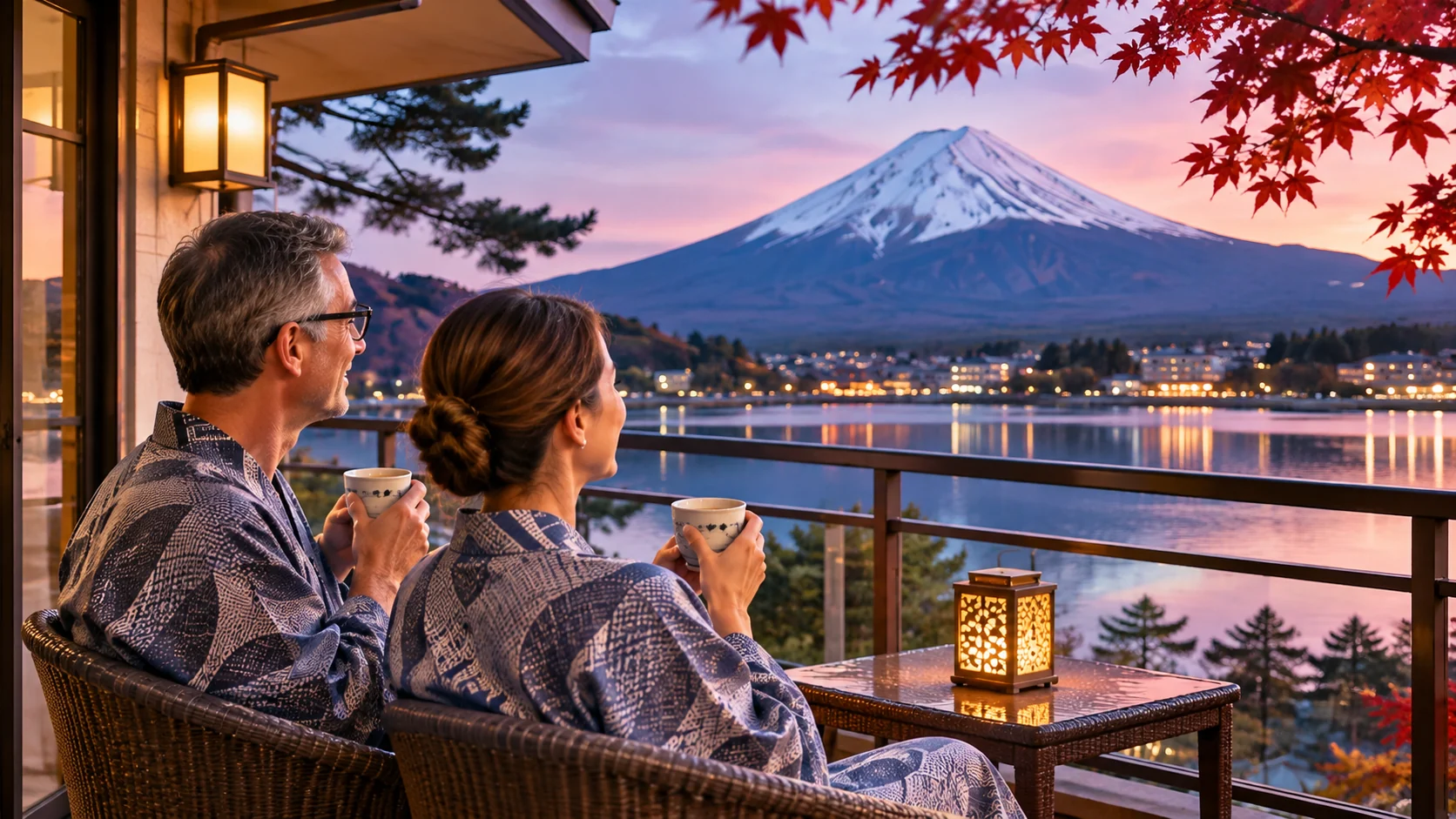
Featured Overnight Hotel
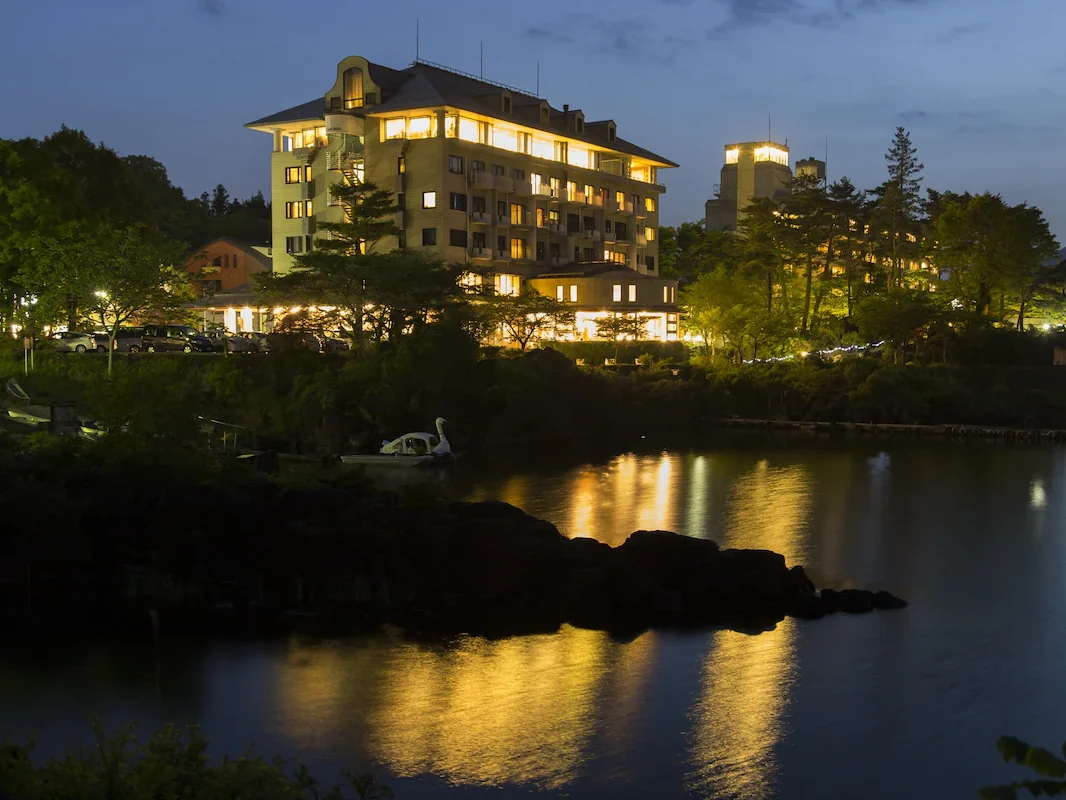
Fuji Lake Hotel
Best for a relaxed lakeside overnight rather than another long Tokyo return journey. This established Lake Kawaguchiko property is an appealing base for a two-day Fuji-area visit. Compare the actual booked room location, amenities and view rather than relying on the exterior image.
Room and access fine print: Lakefront does not mean every room faces the mountain. Compare lake view versus Fuji view room descriptions, exact bedding, breakfast, cancellation and any station shuttle terms for your dates.
The Fine Print That Matters
Six details that can change your Mount Fuji day trip.
Mount Fuji visibility is not guaranteed
Clouds can obscure the summit for an entire visit. A photographed clear-sky viewpoint and seasonal blossoms do not guarantee the conditions you’ll encounter.
Published stops can change
Confirm the actual itinerary variant and meeting point. Traffic, weather, local restrictions and operator discretion can change the order or availability of stops.
Fuji Excursion has a finite schedule
The 2026 published timetable lists four regular daily direct round trips, with some seasonal extras. Confirm seat rules and your return train before taking buses to distant viewpoints.
Chureito has a significant stair climb
The famous pagoda view requires roughly 400 uphill steps. Ask about accessibility and group pacing if mobility or stamina is a concern.
Driving documentation matters
Japan’s accepted license/permit arrangements are specific. Check whether a 1949 Geneva Convention IDP or a designated-license translation pathway applies before paying for a rental.
Regional passes are not interchangeable
The Tiqets Fuji–Hakone / Hakone–Kamakura pass listing contains different variants with different coverage. A Hakone–Kamakura selection does not automatically cover Shinjuku–Kawaguchiko. Compare pass validity, included lines and reservation supplements; it is usually unnecessary for a simple one-day lakeside visit. See Tokyo to Hakone for that separate decision.
My Take
I’d choose fewer Fuji-area stops and a better travel day over an ambitious checklist.
If I had one free day from Tokyo and wanted the Chureito view, Oshino Hakkai and lakeside scenery, I’d start with an organized tour rather than assemble every bus and railway connection myself. I would still read the itinerary carefully: a group size and an attractive photo are not substitutes for a clearly listed stop and adequate time there.
On the other hand, if I mostly wanted to spend time beside Lake Kawaguchiko, I’d seriously consider taking the direct train and leaving the day relatively open. That lets the lake and the atmosphere take priority over covering miles between viewpoints.
For a couple who wants particular stops, private transport can be worthwhile. And if the weather forecast is the biggest concern, an overnight gives you a second possible window without promising that the clouds will cooperate.
TFP Recommendation
Book a small-group excursion for multiple stops; travel independently for the lake.
Our Recommendation
First-time visitors seeking several viewpoints: compare the featured small-group guided excursion; verify that its current route includes the specific sights you care about.
Travelers prioritizing Kawaguchiko: consider the Fuji Excursion or highway bus and schedule a realistic lakeside day with a confirmed return.
Travelers wanting flexibility or another morning: compare a private trip, eligible rental car or an overnight at Fuji Lake Hotel.
Your Next Step
Check the Fuji-area forecast, the true departure point, walking demands, full booking cost and the actual cancellation deadline before committing.
Smarter travel, straight to your inbox
Booking choices, hidden costs, travel rules and practical fine print—explained clearly.
Before You Go
Make your Mount Fuji excursion fit the rest of your Tokyo trip.
Check where your Tokyo hotel sits relative to your departure point, whether you need mobile data for pickup updates, and whether you’ve left enough flexibility for weather and onward travel.
A day trip to Lake Kawaguchiko and a multi-day Hakone itinerary are not the same travel decision. Don’t buy an overlapping regional pass without first checking your plans.

Where to Stay in Tokyo
Choose a base that works with your early pickup or train departure.
Compare Tokyo neighborhoods →Tokyo to Hakone
Compare a different mountain-region trip, rail passes and overnight plans.
Compare Hakone transport →Best eSIM for Japan
Keep pickup instructions, route updates and navigation accessible.
Compare Japan eSIMs →Travel Insurance for Japan
Review coverage rules for eligible medical events and prepaid losses.
Explore Japan travel coverage →FAQ
Mount Fuji day trip from Tokyo: common questions
Is a Mount Fuji day trip from Tokyo worth it?
Yes if you allow a full day and are flexible about visibility. A guided tour makes combining scattered viewpoints easier; independent transport works well for a slower Kawaguchiko visit. Compare the small-group excursion →
How long does a Mount Fuji day trip from Tokyo take?
Plan most of a day. Direct rail between Shinjuku and Kawaguchiko takes roughly two hours each way on many services, before local transport or sightseeing. Organized tours often occupy around ten hours.
Can you see Mount Fuji year-round?
Mount Fuji can be seen in different seasons, but weather and clouds determine visibility on any particular day. A clear view is never guaranteed.
Is the Fuji Excursion train better than a tour?
Choose the direct train if your main goal is the Kawaguchiko area and you are happy arranging local buses. A tour is often more practical for several scattered viewpoints. Compare Japan transport options →
Does a Mount Fuji tour always include Chureito Pagoda?
No. Chureito is a distinct viewpoint, and tour routes vary. Check the operator’s current named stops and any weather or operational substitution rules.
How many steps are there at Chureito Pagoda?
Allow for approximately 400 uphill steps to the classic viewpoint, plus walking. Confirm access and suitability for your party.
Is the Fuji–Hakone transport pass useful for a Kawaguchiko day trip?
Not automatically. Variants have different coverage, and a Hakone–Kamakura pass does not by itself replace Kawaguchiko train tickets. Compare the exact pass selected with the travel days and lines you will use.
Should I stay overnight near Lake Kawaguchiko?
An overnight is worthwhile when you want a quieter lakeside evening, more time to explore, or another possible morning for views. Confirm your precise room view and cancellation rules before booking. Check Fuji Lake Hotel availability →

Free Travel Guide
Avoid the travel mistakes that can cost you money, flexibility or time.
Get 27 Travel Mistakes That Cost Travelers Thousands—a practical guide to booking decisions and easily missed rules.
- Spot easily overlooked booking details
- Understand where hidden costs appear
- Recognize tradeoffs behind cheaper options
- Make travel decisions with fewer surprises
You’ll also receive occasional practical travel guidance. Unsubscribe any time.
Official planning references: Fujikyu Fuji Excursion timetable; Fujikyu sightseeing bus routes; Shinjuku highway bus; JNTO driving requirements. Tour listings, passes and hotel rates must be confirmed for the intended date.