
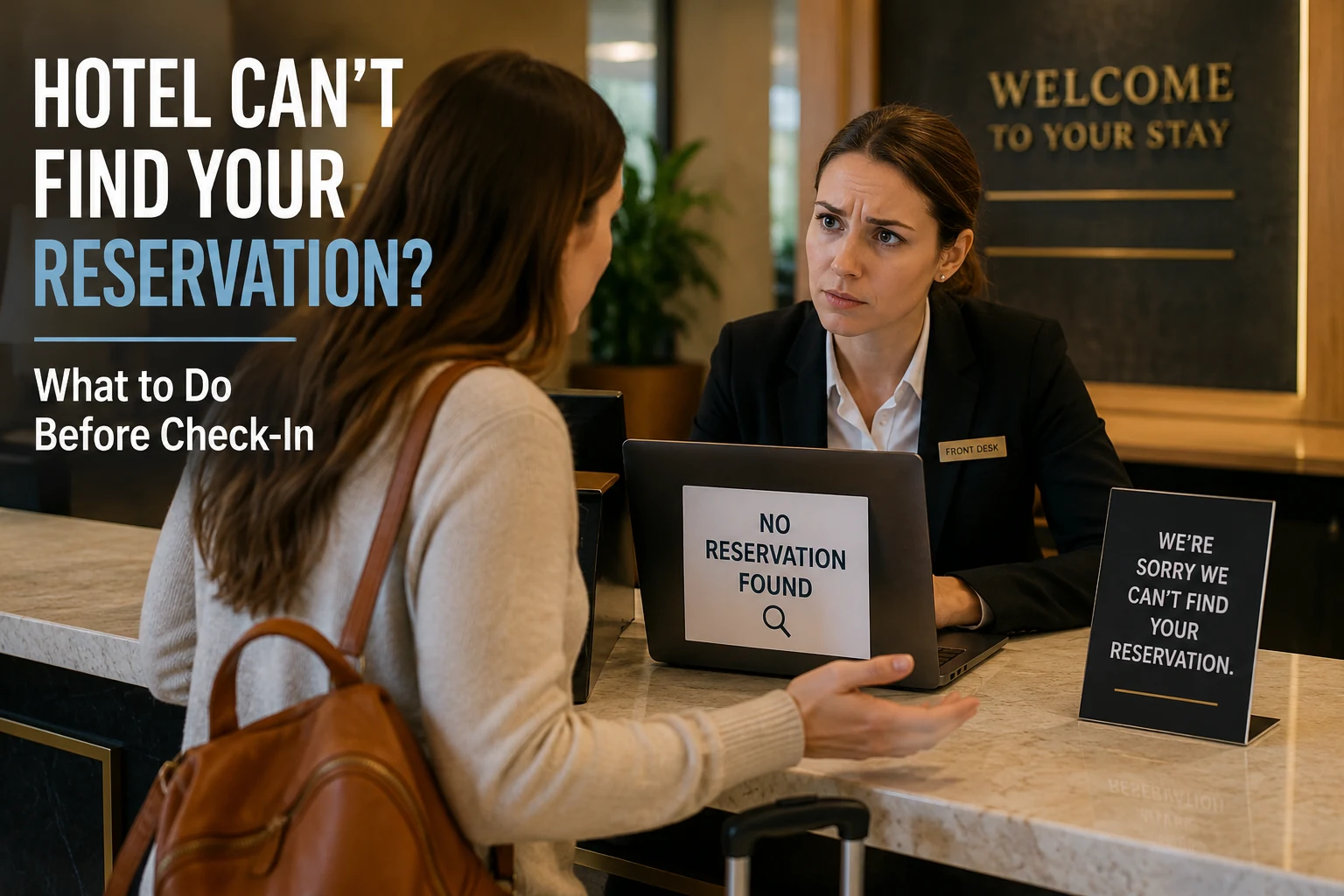
You contact the hotel or reservation center before your trip, provide your confirmation number, and are told that no reservation can be found. Yet the booking still appears active in your confirmation email, travel app, or tour operator account.
That does not always mean the reservation failed. The booking may exist with the seller but not yet be visible to the hotel, or the person helping you may only have access to certain reservation channels.
A central reservation center may be able to view and modify direct bookings but have no access to reservations made through an online travel agency, tour operator, group organizer, or other third party. Even when the guest or booking site contacts the reservation center directly, the agent may have to refer the request to the hotel because the booking sits outside the systems they can access.
Some tour operators also hold reservations in their own systems and transmit them to the hotel closer to the arrival date. Until that happens, the hotel may genuinely have nothing to find—even though the traveler has already paid and received a valid confirmation.
Group travel can create similar confusion. A hotel may have a room block reserved for a wedding, conference, or tour, but the individual guest names may not have been submitted or attached to specific rooms yet.
The key is to determine who currently controls the booking, whether the hotel has received it, and what proof you should obtain before traveling.
Why Can’t the Hotel Find Your Reservation?
A confirmation email proves that a seller accepted your booking. It does not always prove that the hotel has received a named reservation in the system its staff can search.
Several things may be happening:
The booking was made through a different channel.
A hotel reservation center may only be able to view direct bookings. Reservations made through an online travel agency, tour operator, wholesale partner, group organizer, or vacation package provider may sit in a separate system that the reservation agent cannot access or modify.
The third party has not transmitted the reservation yet.
Some booking partners send reservations to the hotel immediately. Others, particularly certain tour operators and wholesalers, may transmit the guest details closer to arrival. Until that happens, the hotel may have no reservation under your name even though the seller considers the booking confirmed.
The reservation is stored under another name or reference number.
The hotel may need the lead guest’s exact name, the seller’s name, a hotel confirmation number, or a supplier reference that differs from the number shown in your confirmation email.
The booking is part of a group block.
A wedding, conference, tour, or other group may have rooms reserved without individual guest names. In some cases, the block exists but your specific room has not yet been created or attached to your name.
The wrong property or dates are being searched.
Hotels with similar names, multiple buildings, resort complexes, and nearby sister properties can create confusion. A date change, time-zone difference, or booking that begins after midnight may also cause the reservation to be searched under the wrong arrival date.
The important distinction is whether the booking is merely not visible yet or whether it was never successfully delivered to the hotel. The next step is to identify which party currently controls the reservation.
How It Works
How a Third-Party Booking Becomes a Hotel Reservation
The process depends on whether the booking channel is connected directly to the hotel or sends reservations later through a tour operator, wholesaler, group organizer, or other partner.
Seller Creates a Record
The booking site or operator records the guest, dates, room selection, payment terms, and its own seller confirmation number.
Transmission Varies
Connected channels may send the booking immediately. Other operators, wholesalers, or group organizers may transmit the reservation later or in batches.
Hotel Confirms Receipt
When the hotel receives and accepts the booking, its system creates a property confirmation number that may be returned to the seller.
Two Numbers May Exist
The seller’s reference identifies the booking in its system. The hotel confirmation identifies the reservation in the property’s system, and the numbers are often different.
Why this matters: A hotel may have received the reservation but still be unable to locate it using only the seller’s confirmation number. Ask whether a separate hotel confirmation number was issued and, for nonconnected channels, whether the named booking has actually been transmitted.
Why the Reservation Center May Not Be Able to Help
Calling the hotel brand’s reservation center may seem like the obvious next step, but that team may only be able to access bookings made directly through the hotel’s website, call center, or approved direct channels.
Third-party reservations can sit outside that system. Even when the booking has reached the property, the central reservation agent may be unable to:
- Locate it using the seller’s confirmation number
- Change the guest name or travel dates
- Modify the room type
- Add special requests
- Confirm payment details
- Explain the third party’s cancellation or refund rules
In that situation, the agent may refer you to the hotel directly or back to the original seller. That does not necessarily mean the reservation is invalid. It may simply mean that the person you contacted does not have access to the system or contract controlling the booking.
Online travel agencies sometimes contact the reservation center on the guest’s behalf and encounter the same limitation. The seller may need to communicate directly with the property, especially when requesting a change, confirming that the reservation was transmitted, or resolving a mismatch between the seller’s record and the hotel’s record.
This is one reason booking directly usually provides greater visibility and flexibility. The reservation center can generally see the booking, explain the hotel’s terms, and make permitted changes without relying on another company to relay the request.
Booking Channel Guide
Who Should You Contact First?
The right contact depends on how the reservation was made and which company currently controls the booking record.
Booked Directly
The hotel brand, reservation center, or property should usually be able to locate the booking, explain the terms, and make permitted changes.
Contact first: The hotel reservation center or property.
Booked Through an Online Travel Agency
A connected booking may already be in the hotel system, but the seller and hotel may use different confirmation numbers and control different parts of the reservation.
Contact first: The seller for changes; the hotel to confirm receipt.
Booked Through a Tour, Group, or Wholesaler
The named reservation may not reach the hotel until closer to arrival, or it may still sit inside a room block or supplier allocation.
Contact first: The operator, organizer, or travel advisor that issued the booking.
What Should You Ask the Hotel to Search?
Before assuming the reservation is missing, ask the hotel to search beyond the confirmation number you received from the seller.
Provide:
- The lead guest’s full name exactly as booked
- The arrival and departure dates
- The room type
- The name of the booking site, tour operator, group, or travel advisor
- The seller’s confirmation number
- Any separate hotel confirmation number
- The email address and phone number used for the booking
- The name of the group, wedding, conference, or tour, when applicable
Also ask whether the hotel can search by the booking channel, supplier, wholesaler, group, or tour operator name. A third-party reservation may appear under the name of an online travel agency, wholesaler, tour operator, or group organizer rather than under the brand shown to the traveler.
For a group stay, confirm whether the hotel has received a rooming list and whether your name has been attached to an individual reservation. A room block alone does not always mean a room has already been assigned to you.
If the hotel still cannot find the booking, ask one direct question:
“Has the hotel received a named reservation for me from this seller?”
That is more useful than simply asking whether the confirmation number is valid.
What Should You Ask the Booking Site or Tour Operator?
If the hotel cannot locate the reservation, contact the company that issued your confirmation. Do not ask only whether the booking is “confirmed.” Ask whether it has actually been transmitted to the property.
Request:
- The name of the company that supplied the hotel inventory
- The date and method used to send the reservation
- The hotel confirmation number, if one was returned
- The exact guest name, dates, room type, and occupancy sent to the hotel
- Whether payment or a payment guarantee was sent with the booking
- The expected date the hotel should be able to see it
- Written confirmation that the seller will correct the issue or arrange an alternative if the hotel cannot honor the booking
For a connected booking channel, the seller may already have received a hotel confirmation number but may display only its own reference in the app or email. Ask the seller to provide both numbers.
For a tour operator, wholesaler, or group booking, the answer may be that the reservation will not be transmitted until closer to arrival. In that case, ask for the expected transmission date and follow up with the hotel after that date.
Do not accept “the booking is confirmed in our system” as the complete answer. The more important question is whether the hotel has received a named reservation it can identify and honor.
Traveler Risk
Booking Another Room Too Soon Can Leave You Paying Twice
When the hotel cannot find your reservation, booking a replacement room may feel like the safest solution. But the original reservation may still be transmitted later, remain active with the seller, or carry its own cancellation penalty.
The hotel may also be unable to refund money collected by an online travel agency, tour operator, or other third party. Unless the seller authorizes the replacement or confirms that the original booking failed, you could end up with two active reservations and no automatic right to recover either charge.
Before paying again, ask the original seller for written instructions, a case number, and confirmation of who will cover the replacement cost if the hotel still cannot honor the booking.
Check the Fine Print
Not Sure Whether Your Missing Reservation Is a Real Booking Risk?
Use the Travel Fine Print Risk Checker to review who issued the confirmation, who collected the payment, whether the hotel has received the booking, and what could happen before you cancel, dispute the charge, or pay for another room.
How Close to Check-In Should You Be Concerned?
A hotel being unable to find the reservation months before arrival is not the same as discovering the problem the day before check-in.
For some tour-operator, wholesale, group, or package bookings, the named reservation may not be transmitted until closer to the stay. The seller should be able to explain when that normally happens and give you a specific date to check again.
As arrival approaches, the booking deserves more attention if:
- The seller cannot say when the reservation will be transmitted
- The hotel still has no record after the expected transmission date
- The guest name, dates, room type, or occupancy do not match
- The seller cannot provide a hotel confirmation number for a connected booking
- The property is sold out or nearly sold out
- The booking is prepaid and no party will confirm who holds the payment
- The hotel and seller continue referring you back to each other without opening a case
If the seller’s stated transmission date has passed—or arrival is close and the hotel still has no named reservation—ask the seller to contact the property while you remain on the call or to send written confirmation directly to the hotel. Request a case number and the name of the department responsible for resolving the booking.
The closer you are to arrival, the less useful a general assurance becomes. You need confirmation that the hotel has received your name, dates, room type, occupancy, and payment or guarantee details—not simply that the booking remains active in the seller’s system.
Action Step
Verify the Reservation Before You Travel
Do not rely on one confirmation screen. Build a clear record showing what was booked, whether the hotel received it, and which company is responsible if the reservation cannot be honored.
Can Travel Insurance Help If the Hotel Can’t Find Your Reservation?
Travel insurance does not automatically reimburse a replacement room simply because the hotel cannot locate the original booking. A transmission error, confirmation-number mismatch, or dispute between the seller and hotel may not be a covered event by itself.
Coverage may become relevant when the missing reservation is connected to a specific benefit or covered reason. For example, some policies may reimburse eligible lodging or transportation expenses during a covered travel delay, while trip interruption benefits may cover certain unused arrangements or additional transportation after the trip has begun. The exact trigger, waiting period, covered reason, expense limit, and reimbursement rules depend on the policy.
Supplier financial default is different from a hotel being unable to find one reservation. That coverage generally applies only when an eligible travel supplier stops operating because of its financial condition and the policy includes supplier-default protection.
Before paying for another hotel, contact the original seller and the insurer’s assistance team when practical. Ask whether the situation may qualify, what documentation is required, and whether you need approval before incurring a large replacement expense.
Travel Fine Print: Assistance services may help contact the hotel or seller, but help arranging a room does not necessarily mean the replacement cost will be reimbursed. Save the original confirmation, payment record, hotel response, seller communications, replacement receipt, and proof of any refund or credit.
Before Check-In
Save the proof before the reservation problem gets harder to untangle.
Missing-reservation disputes can depend on the original confirmation, seller and hotel reference numbers, payment record, booking terms, room details, case numbers, emails, chat transcripts, and any promise to arrange or reimburse a replacement. Use the Travel Documents Checklist to keep the evidence together before you arrive.
Travel Fine Print Takeaway
A seller confirmation and a hotel-visible reservation are not always the same thing. Verify who controls the booking, whether the named reservation has reached the property, and whether a separate hotel confirmation number exists. The closer you are to arrival, the more important it becomes to get those answers in writing before canceling, disputing the charge, or paying for another room.
❓Frequently Asked Questions
These questions explain why a confirmed booking may not appear in the hotel’s system, which company may control the reservation, and what to verify before paying for another room.
Why can’t the hotel find my reservation if I have a confirmation?
The confirmation may have been issued by the seller rather than the hotel. A connected booking may already exist under a separate hotel confirmation number, while a tour operator, wholesaler, or group organizer may not have transmitted the named reservation yet.
How long does it take for a third-party hotel booking to appear?
It depends on the booking channel. Connected online travel agencies may transmit the reservation almost immediately. Some tour operators, wholesalers, vacation-package providers, and group organizers may send guest details later or closer to arrival.
Is the booking-site confirmation number the same as the hotel confirmation number?
Often it is not. The seller may issue a reference number used in its own booking engine, while the hotel creates a separate confirmation number after receiving the reservation. Ask the seller whether both numbers are available.
Can the hotel reservation center change a third-party booking?
Not always. A central reservation center may only be able to access direct bookings. Changes to dates, guest names, room types, payment terms, or cancellation details may need to be handled by the original seller or the hotel property.
Why can’t the hotel find my group reservation?
The hotel may have a room block without individual guest names, or your organizer may not have submitted the final rooming list. Confirm whether an individual reservation has been created under your name rather than relying only on the existence of the group block.
Should I book another room if the hotel cannot find my reservation?
Avoid paying again until you know whether the original booking is still active and who will cover the replacement. Ask the seller for written instructions, a case number, and confirmation of whether it will reimburse or arrange another room if the hotel cannot honor the booking.
Can travel insurance cover a hotel reservation that cannot be found?
Not automatically. A booking transmission problem may not be a covered event by itself. Coverage may depend on whether the situation fits a specific benefit, covered reason, waiting period, and expense rule in the policy.
Bottom Line
A hotel may be unable to find your reservation even when the seller considers it confirmed. The booking may not have been transmitted yet, may use a different hotel confirmation number, or may still sit within a third-party, tour operator, or group system.
Identify who controls the booking, confirm whether the hotel has received a named reservation, and get the answer in writing before arrival. Do not cancel, dispute the charge, or pay for another room until you understand what will happen to the original booking and who is responsible for resolving it.
Booking directly usually provides the greatest visibility and flexibility, but every reservation should be checked when the hotel cannot locate it.
Related Guides
If the hotel cannot locate your reservation, these guides can help you determine whether the problem involves the booking channel, payment path, cancellation, refund, or unavailable inventory.
Booking Channel and Payment
- Booking Direct vs Third-Party Hotel Sites: What Changes
Learn how the booking channel can affect visibility, changes, requests, payments, refunds, and who can help. - Pay Now vs Pay at Hotel: Which Option Is Safer?
Compare prepaid and hotel-collect bookings, including who controls the payment and refund process. - Are Hotel Reservations Refundable? What to Check
Review how the rate, cancellation deadline, payment path, and booking channel affect refund options.
Cancellations and Room Availability
- Can a Hotel Cancel Your Reservation After You Book?
Use this if the booking is later canceled, rejected, or cannot be reinstated by the hotel or seller. - What Happens If a Hotel Is Overbooked and Has No Room for You?
Helpful when the reservation exists, but the hotel cannot provide any room when you arrive. - Hotel Cancellation Policies Explained
Understand cancellation deadlines, penalties, no-show rules, and what happens when a booking must be changed or canceled.