
You book a flight and then notice the problem.
One letter is wrong. Your first and last name are reversed. A middle name is missing. Your married name, passport name, or legal name does not match exactly. Or maybe the ticket was booked under a nickname instead of the name on your government ID.
It feels like a small mistake.
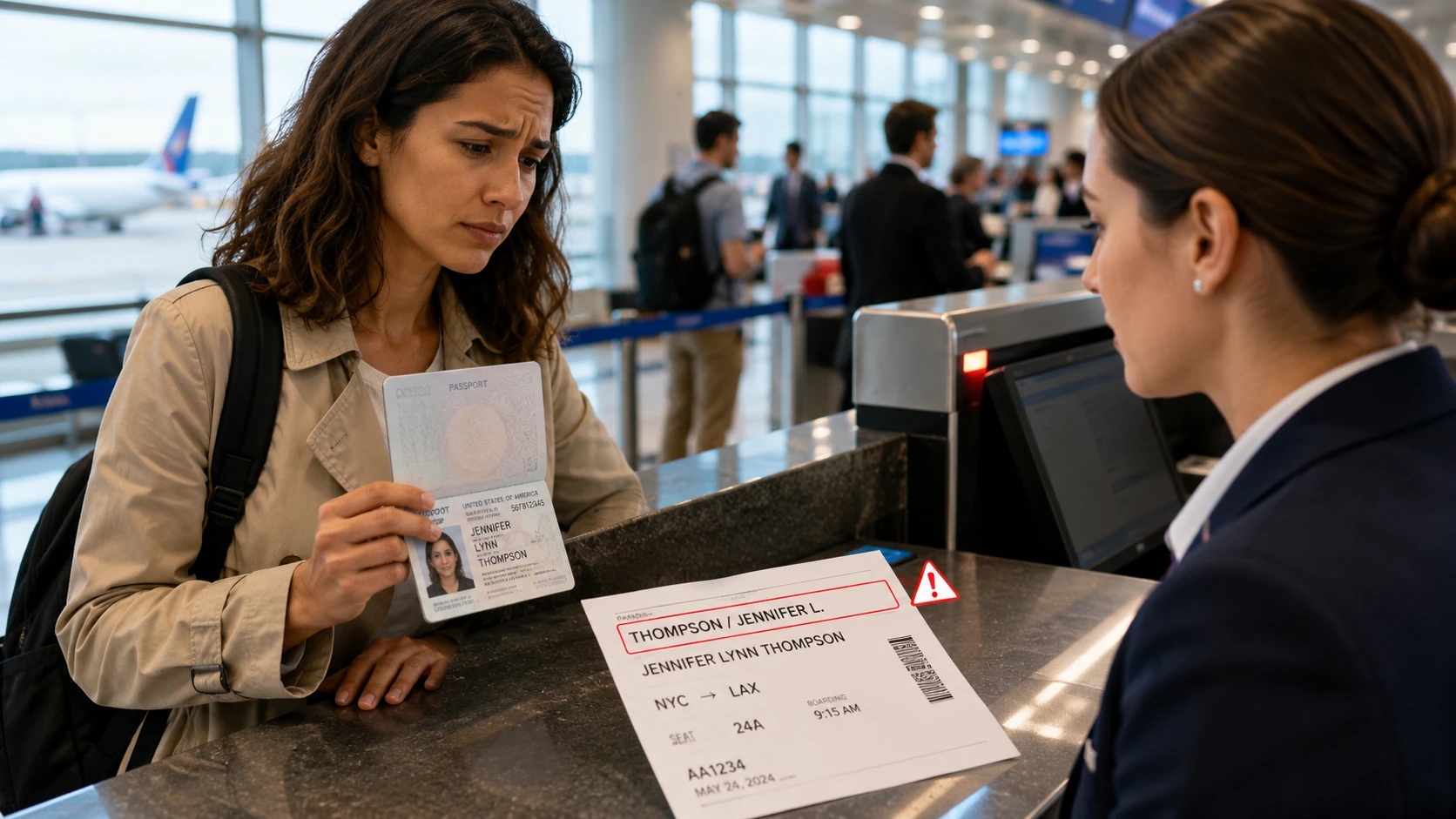
But with airline tickets, name mistakes can become a much bigger problem because the name on the ticket usually has to match the traveler’s identification closely enough for check-in, security screening, and international travel document review.
The hard part is that airlines do not treat every name issue the same way. A minor typo may be correctable. A missing middle name may not matter. But changing the ticket to a different person is usually not allowed, and some corrections may depend on the airline, fare rules, ticketing source, timing, and whether the ticket was booked directly or through a third party.
The real question is not just:
“Can the airline fix my name?”
It is:
“Is this a minor correction, a legal-name issue, a ticket reissue problem, or something the airline may treat as a prohibited name change?”
This guide explains what usually happens when there is a name mistake on an airline ticket, why airlines may not be able to fix every issue, and what to check before you pay a fee, cancel, rebook, or show up at the airport hoping it will be fine.
Quick Answer
Can an Airline Fix a Name Mistake on a Ticket?
An airline may fix a minor name mistake, but it may not fix every ticket-name problem. Small spelling errors, missing middle names, or reversed first and last names may be correctable depending on the airline, route, ticketing source, and timing. But changing the ticket to a different traveler is usually not allowed.
Before you travel, compare the ticket name to your government ID or passport. Then contact the airline or the company that issued the ticket as early as possible. The earlier you catch the issue, the more options you may have to correct, reissue, cancel, or rebook before airport check-in becomes the problem.
System Insight
Airlines separate name corrections from name changes.
- Name corrections usually fix the same traveler’s name so it better matches the traveler’s ID or passport.
- Name changes can look like replacing the traveler on the ticket, which airlines usually do not allow.
- A typo, missing letter, reversed name order, or legal-name issue may require review, documentation, or ticket reissue.
- The safest move is to ask whether the airline treats the issue as a correction, reissue, cancellation, or prohibited name change.
Many travelers assume small name mistakes can be fixed quickly — especially at the airport.
But airline tickets are tied to identity verification and strict fare rules, which means even minor changes can be restricted or treated as a full ticket change.
Here’s why these corrections are often more complicated than they appear.
Why Name Accuracy Matters on Airline Tickets
Airline tickets must match government-issued identification exactly. Even small differences — such as missing letters, reversed names, or formatting issues — can create problems during check-in or security screening.
Similar compliance rules apply to travel documents, including cases where airlines deny boarding for passport expiration rules, even when the passport itself has not yet expired.
Because of this, airlines treat the name on a ticket as part of the traveler’s verified identity, not just booking information.
Why Airlines Restrict Name Changes
Airlines limit name changes to prevent tickets from being transferred between travelers.
If unrestricted, tickets could be reassigned or resold, which would interfere with pricing models and inventory control. As a result, most airlines only allow minor corrections under specific conditions.
Important Distinction
Minor name corrections are not the same as name changes.
Airlines may allow limited corrections, such as fixing a typo, adjusting a missing or extra letter, correcting formatting, or making the same traveler’s name better match the ID or passport.
But changes that alter the identity of the traveler — such as replacing one passenger with another — are usually treated differently. That may require canceling, rebooking, paying a fare difference, or starting over under the airline’s ticket rules.
When a Name Correction Becomes a Ticket Change
Not all name corrections are treated the same.
Changes that go beyond minor fixes may trigger change fees, fare differences, or a full ticket reissue. In some cases, the original booking must be canceled and rebooked under the correct name.
The distinction between a correction and a change is where many travelers run into unexpected costs.
NAME CHANGE COMPARISSON
Minor Correction vs. Major Name Change
Not all name changes are treated the same. The difference determines whether your ticket can be corrected — or must be replaced.
Minor Correction
- Fixing small typos
- Adjusting one or two letters
- Formatting corrections
- Often allowed within limits
- Usually handled through support
Major Name Change
- Replacing one traveler with another
- Changing first or last name entirely
- Transferring a ticket to someone else
- Typically not allowed
- Often requires full rebooking
Understanding this distinction is key — it determines whether your ticket can be fixed or must be replaced.
Why Airline Tickets Are Difficult to Modify
Once a ticket is issued, it becomes part of a controlled record that includes fare rules, taxes, security data, and reservation history.
Because of this, changing a name is not the same as correcting a simple typo. In many cases, it requires canceling the original ticket and issuing a new one, which may involve fees, fare differences, or purchasing a new ticket entirely.
This rigidity reflects how airline pricing and inventory systems are structured — not a lack of willingness to help. These same systems enforce strict sequencing rules, which is why missing one segment of a ticket can sometimes cancel the remaining flights automatically.
Why Fixing It at the Airport Rarely Works
Many travelers assume the airport is the best place to resolve a name issue because staff are physically present.
In reality, airport agents often have less flexibility than customer support teams. By the time you arrive, the flight is close to departure, security timelines are active, and system changes carry operational risk.
As a result, agents are more likely to reprice or rebook the ticket rather than modify it.
Traveler Risk
Waiting until the airport can turn a small name mistake into a much bigger problem.
The risky assumption is thinking a ticket-name mistake can always be fixed at check-in. Airlines may have limited ability to correct names once the ticket is issued, especially if the change requires reissuing the ticket, involves a third-party booking, or looks like transferring the ticket to another traveler.
If the name does not match your ID or passport closely enough, the issue can become a denied boarding problem instead of a simple customer-service correction.
Check the Fine Print
Not Sure How Serious the Ticket Name Mistake Is?
Use the Travel Fine Print Risk Checker to narrow whether the issue is a minor name correction, ID mismatch, passport-name problem, third-party booking issue, ticket reissue risk, or a mistake that needs urgent attention before travel.
What to Do If You Made a Name Mistake
If you notice an error on your ticket, acting quickly can make a significant difference in your options.
- Contact the airline as soon as possible
- Check your ticket’s fare rules and restrictions
- Confirm whether the change qualifies as a minor correction
- Avoid waiting until check-in or arrival at the airport
- Make sure your name matches your ID exactly before traveling
Many name-related issues can be avoided entirely with a quick review before booking.
Action Step
Check the ticket name before you finish booking.
Before paying for an airline ticket, compare the passenger name against the government ID or passport the traveler will use at the airport. Catching the issue before ticketing is usually easier than correcting it later.
Quick win: Use the exact name shown on the ID or passport the traveler will present, not a nickname, shortcut, or saved profile that may be outdated.
Before You Fly
Check the Name, ID, and Booking Details Before the Airport
Use the Travel Fine Print checklist to review ticket names, passport details, ID matching, booking confirmations, travel documents, deadlines, and other trip details before a small error becomes harder to fix.
❓Frequently Asked Questions
Why do airlines apply rules so strictly, even for small issues?
Airlines apply rules strictly because ticketing systems are built around fixed fare rules, passenger identity, routing, and segment order. Even small changes can affect pricing, security checks, immigration compliance, or whether the ticket is still valid. Agents may want to help, but they usually have to follow what the system and fare rules allow.
👉 Read more: The Biggest Travel Mistake People Make: Assuming the Rules Are Flexible
Can a name mistake affect travel insurance coverage?
Yes. A name mistake can affect travel insurance coverage if it creates a mismatch between your policy, booking, ID, or travel documents. A minor typo may be fixable, but a larger mismatch can delay a claim or create questions about whether the insured traveler is the same person listed on the reservation. Fix the name issue before travel whenever possible.
👉 Read more: Why Travel Insurance Claims Get Denied
Can I fix a name mistake at the airport?
Airport agents often have limited flexibility, especially close to departure when systems are locked and operational timelines are active. Most name corrections must be handled before arriving at the airport. Waiting until check-in significantly reduces available options.
What happens if my ticket name doesn’t match my ID?
If the name on your ticket does not match your government-issued ID, you may be denied boarding.
Even small discrepancies can trigger issues during check-in or security screening, depending on the airline and situation.
Why are travel rules applied so strictly, even for small issues?
Travel policies are often enforced exactly as written, regardless of intent. This approach is consistent across the industry, from airline ticket rules to hotel pricing structures.
👉 Read more: Why Non-Refundable Hotel Rates Are Riskier Than They Seem
Bottom Line
Airlines don’t treat name corrections as simple edits because tickets are tied to identity verification, security requirements, and pricing controls.
What appears to be a minor mistake can require fees, restrictions, or even a full rebooking depending on the situation.
Checking your details carefully — and correcting errors early — can help avoid unnecessary costs and travel disruptions.
Related Travel Rules & Restrictions
Many travel issues follow the same pattern — strict rules applied exactly as written. These guides explain how it works:
The Biggest Travel Mistake People Make: Assuming the Rules Are Flexible
Learn why travel policies are often enforced exactly as written and what that means before you book, cancel, or change plans.
Why Travel Insurance Claims Get Denied
See how small details, booking errors, exclusions, documentation gaps, and timing issues can affect whether a travel insurance claim is approved.
What “Non-Refundable” Really Means
Understand why “non-refundable” does not always mean what travelers expect and what limited options may still exist.
Does Travel Insurance Cover Passport Problems?
Understand why travel insurance usually is not the best backup for preventable document issues, including ticket-name mismatches, passport validity problems, and missing entry requirements.